
 Home » Child Protection »
Important
Child abuse and neglect can be a difficult topic to learn. If you find the topic difficult at any time or experience strong emotions or feelings, please seek assistance from the following services.

LIFELINE 13 11 14
KIDS HELPLINE (13–25-YEAR-OLDS) 1800 55 1800
BEYOND BLUE 1300 22 4636
Section 1: Introduction
Program Title: CHCPRT001: Identify and respond to children and young people at risk
- The attitudes and values participants have and the impact of these when considering whether behaviour is abusive and/or neglectful
- The definitions and context for what constitutes abuse and neglect of children
- A child-focused approach and the impact of this when considering the abuse and neglect of children
- The legislative context in Australia for reporting abuse and neglect including the responsibilities and ethical obligations of individuals
- The importance of collaborative practices in responding to the abuse and neglect of children
Learning Objectives
By satisfactorily completing this topic it is expected that you will be able to:
- Identify children and young people at risk of abuse or neglect by observing indicators, asking open and non-leading questions, being aware of protective issues and using child protection policy and procedures where appropriate
- Respond to disclosure and indicators of abuse, neglect, or harm, in accordance with state legislative responsibilities and the service policies and procedures
- Routinely employ child-focused work practices to uphold the rights of the child and encourage them to participate in age-appropriate decision making
- Employ communication and information gathering techniques with children and young people in accordance with current recognised practice
- Ensure decisions and actions taken are within own level of responsibility, work role, state legislation and service policies and procedures
- Understand the role of trauma and trauma-informed care in early childhood education and care- no covered and no questions added
Entry Competencies/Pre-Requisites
There are no entry level competencies or pre-requisites for the training as part of the Australian Quality Training Framework. Individual agencies can determine as part of their overall training plan whether this work-specific training is required as a pre- requisite. Unit/s of competency covered in this Program: CHCPRT001 – Identify and respond to children and young people at risk. Qualification/s relevant to this unit: This unit comes from the Community Services Training Package (CHC21) and is nominally judged to be at the Australian Qualification Framework Level 4. It applies to a broad range of occupations involved in delivering services to children including community services, health, policing, juvenile justice, recreation, family services, education, religious services and mental health. This unit may form an elective from a wide range of qualifications within the Community Services Training Package. Check with your Trainer for further information.
Assessment Strategy
The assessment is designed to confirm participants’ understanding of the knowledge and practices that support child-safe environments and the reporting of abuse and neglect. The three assessments consist of a series of:
- short written answers
- true and false questions
- Using the Keep Them Safe website
The assessment strategy has been designed to meet the requirements of the Australian Quality Training Framework is linked to elements from the unit of competency; CHCPRT001 Identify and respond to children and young people at risk.
Key Messages
- Anger commonly arises in groups when the issue of child abuse is
- It is common and understandable that people experience a range of emotions including anger when a group comes together to discuss the issues of
- Anger can happen however it is inappropriate to project anger on to other members of the Be aware of this.
- If discussing cases from workplace, ensure use of other names to respect client information, and also out of respect for other
- 1 in 3 people have encountered abuse – either of themselves or of someone they know – and it is important to remember this in group
- Participants may have been exposed to some form of child abuse or neglect and therefore may disclose this during the course of this For this reason, it is important that the group agrees to confidentiality concerning personal issues discussed at any point during this training.
- This training looks at Child-Safe Environments from a number of levels:
- Individual – personal perspectives, values and attitudes, and reasons we may discount our views at times
- The responsibilities of organisations we are a part of
- The broad perspective of community responsibility to children – works through to the individual’s legal responsibility to children and personal response within the broad
Safety Statements
- Ensure personal stories and experiences add to the learning Respect the confidential nature of these personal stories.
- Be responsible for your own emotional health and reactions, in particular
- Acknowledge that we come to training not just as workers, but as parents and we were all once children
- Recognise the value of hearing all points of view – and agreeing to
- The focus of this training is not on the perpetrators of abuse and neglect, but on children and it is vital to maintain a child
Key Messages
- Anger commonly arises in groups when the issue of child abuse is
- It is common and understandable that people experience a range of emotions including anger when a group comes together to discuss the issues of
- Anger can happen however it is inappropriate to project anger on to other members of the Be aware of this.
- If discussing cases from workplace, ensure use of other names to respect client information, and also out of respect for other
- 1 in 3 people have encountered abuse – either of themselves or of someone they know – and it is important to remember this in group
- Participants may have been exposed to some form of child abuse or neglect and therefore may disclose this during the course of this For this reason, it is important that the group agrees to confidentiality concerning personal issues discussed at any point during this training.
- This training looks at Child-Safe Environments from a number of levels:
- Individual – personal perspectives, values and attitudes, and reasons we may discount our views at times
- The responsibilities of organisations we are a part of
- The broad perspective of community responsibility to children – works through to the individual’s legal responsibility to children and personal response within the broad
Aims of the Program
- Be aware of how values, attitudes and experiences impact on our understanding of child abuse and neglect, and how we respond to these
- Recognise the importance of maintaining a child focus and perspective when considering the possibility of child abuse and
- Be able to identify a range of indicators concerning child abuse and
- Understand the concept of Child-Safe Environments, the shared responsibility for caring for all children and recognising and supporting those who are
- Fully understand the legal responsibility to notify disclosure or suspicion on reasonable
Knowledge of the key principles of reporting to the Child Protection Hotline 132 111 (24 hours/7 days) or e-reporting
Why are we here? Rationale for the Program.
Child abuse happens every day in our community and the effects of child abuse can be deep and long lasting. Children have rights.
The Children and Young Persons (Care and Protection) Act 1998 requires certain individuals to report suspicion of child abuse and/or neglect.
The protection of children requires a holistic approach and is a whole of community responsibility.
National Framework for Protecting Australia’s Children
In line with Australia’s obligations to the UN Convention on the Rights of the Child, the framework is underpinned by the following:
- All children have a right to grow up in an environment free from neglect and
- Children and families have a right to participate in decisions affecting them.
- Improving the safety and well-being of children is primarily the responsibility of their families, who should be supported by their communities and
- Children’s rights are upheld by systems and
https://www.ohchr.org/en/instruments-mechanisms/instruments/convention-rights-child
Under the National Regulations (s 168), children’s services must have policies and procedures in relation to providing a child safe environment, including the promotion of a culture of child safety and well-being and the safe use of online environments. They must also have policies and procedures for dealing with complaints, including how they provide a child focused complaint handling system and manage a complaint that alleges a child is exhibiting harmful sexual behaviours.
Child protection and child safe policies and procedures must include, for example:
- A Statement of Commitment to Child Safety
- Practices and principles for keeping children safe, both in the physical and online environment
- Code of Conduct which includes practices protecting children from harm
- Recruitment, Selection and Training Procedures to ensure and promote children’s safety
- Procedures for managing incidents, disclosures and suspicions of harm, abuse and neglect
- Procedures for reporting and documenting incidents, disclosures and suspicions of Harm, Abuse and Neglect
- Procedures for managing breaches of policies and procedures
- Risk Management plans and processes
- Communication strategies to ensure families, employees, volunteers and children are aware of child safe policies and procedures.
The policies must require all employees who believe on reasonable grounds (see above) that a child has been harmed, or is at risk of significant harm, to report abuse and neglect to Child Protection in line with documented reporting procedure.
The policies must also ensure there are training and governance practices that ensure all employees understand the current child protection law, the indicators of harm, abuse and neglect, their role and responsibilities to keep children safe, and can confidently take the required action. These practices will include regular training in child protection, and ensuring all employees and visitors have clear/not prohibited Working with Children Checks (unless exempt under the law.)
Individual trauma results from an event, series of events or set of circumstances that is experienced by an individual as physically or emotionally harmful or life threatening and that has lasting adverse effects on the individual’s functioning and mental, physical, social, emotional or spiritual wellbeing. This includes trauma resulting from harm, abuse and neglect, or the risk of harm, abuse and neglect.
Traumatic events experienced early in life can be extremely damaging to the developing brain. Research suggests exposure to adverse, potentially traumatic events in childhood is not uncommon. A 2015 study found childhood trauma affected an estimated five million Australian adults. Multiple studies have reported negative effects associated with experiencing trauma across all parts of life. Mental ill-health, physical illness, social and relational difficulties, and poor academic and employment outcomes have all been linked to previous traumatic experiences.
It’s been proposed that trauma-informed care requires implementation of the following four key assumptions (the four “R”s):
- Realisation – at all levels of organisation or system about trauma and its impacts on individuals, families and communities
- Recognition – of the signs of trauma
- Response – program, organisation or system responds by applying the principles of a trauma-informed approach (see below)
- Resist re-traumatisation – of staff and children.
Source: Trauma-informed care in child/family welfare services: AIFS February 2016
9 Principles of Trauma Informed Care suggested by the Australian Childhood Foundation are:
- Trauma significantly alters baseline physiological arousal levels in children.
Children are likely to benefit from environments of care which pay attention to their mood, focus on adjusting their sensory stimulation to help them stay physically present feel safe to connect with others, and engage predictable strategies from carers that reduce reactivity and minimise volatile responses.
- Trauma reduces cortical capacity to regulate subcortical activation in children.
Carers may benefit from understanding that traumatised children are likely to find it difficult to utilise reasoning and logic to modify their behaviour or reactions.
- Trauma disrupts memory functioning in children.
Children are likely to benefit from strategies which support stressed memory systems, including the introduction of visual and mnemonic cues to prompt short term memory rehearsal and recall, repetition of episodic and narrative structures and the establishment of routines to structure behavioural rehearsal. In addition, children’s ability to generalise learning from one setting to another is also hampered by memory difficulties.
- Trauma disconnects children from relational resources that can mitigate its effects.
Traumatised children require opportunities to experience attachment relationships which offer consistency, nurture and predictability. - Trauma restricts the attentional capacity of children.
Children may benefit from care environments which enable them to engage in experiences which redirect their attention away from past trauma-oriented activation to the here and now. - Trauma based behaviour is functional at the time in which it develops as a response to threat.
Carers can be supported to understand the purpose and meaning of trauma-based behaviour in children, helping to shift their interpretations away from blame to greater acknowledgement of the ongoing impact of children’s abuse experiences. - Trauma limits children’s response flexibility and adaptability to change.
Traumatised children may get ‘stuck’ due to constant trauma triggers, and so enact patterns of defensive behaviour that make sense in the light of their initial trauma(s) but may not seem obvious to those around them. It is important for carers to understand, that while in these triggered states, children have little capacity to reshape their responses without the intentional resourcing of adults in their immediate care environment. - Trauma undermines identity formation in children.
Children are likely to benefit from reinforcement by carers and others for examples of qualities that denote positive sense of self and resource personal agency. - Trauma diminishes social skills and isolates children from peers.
Children with trauma backgrounds need support to engage positively with peers in social situations.
Keep ‘the 4 R’s’ and the’ 9 Principles’ in mind while reading the rest of the information in this Booklet.
Overview:
Under the Education and Care Services National Regulations, an approved provider must ensure that policies and procedures are in place for providing a child safe environment (regulation 168) and take reasonable steps to ensure those policies and procedures are followed (regulation 170).
Child-Safe Environments focuses on the view of ‘shared responsibility’ for the care and protection of the child/young person. It is an unrealistic expectation that one agency can assist all children/young people. It is about all parties involved and relies on inter- agency collaboration.
Developing Child Safe practices and policies
All children have the right to experience quality education and care in a safe and healthy environment, be it physical, emotional or social. Your policy should provide a clear set of guidelines to ensure:
- the promotion of a culture of child safety and wellbeing within the service
- children at the service are provided with a safe environment at all times, which extends to online environments
- approved providers, nominated supervisors, educators and other staff at a service meet their legislative obligations to prevent harm and hazard towards children
- there is timely and effective identification of, and response to, children who may be at risk of or who are experiencing abuse or neglect.
Considerations for supervision
Children of different ages and abilities will require different levels of supervision, privacy, and autonomy. Generally, the younger the children are, the greater the need for an adult to be close by to support and assist them. For young children, adequate supervision may involve children remaining near the adult who is supervising them. Supervision of infants and toddlers who are sleeping is ensured when educators can see and hear them. For older children, it is important to balance the need for close supervision with respect for their age and developing independence.
Services for school age children may also need to consider:
- the location of children’s toilets and how children will be supervised when visiting and returning from the toilets
- supervision during the transition between school and the outside school hours care (OSHC) service
- supervision of children’s transportation to and from the OSHC service.
Note that supervision is facilitated by the physical design and maintenance of the premises (regulation 115), the supervision practices of educators (section 165), and educator ratios (regulations 122-124).
Also be mindful that the Providing a child safe environment policy and procedures are closely aligned with most of your policies, especially your Excursions policy and procedures, as children’s health and safety are paramount – Sourced ACECQA- Policy Guidelines
Key Messages
Working with Children checks for all employees and volunteers
Policies and Procedures on appropriate conduct of children and adults within organisation Voice of the Child – avenues for children to be heard safely; input into the service
Note:
- Much can be done prior to making a notification on an individual and organisational level
- Interagency collaboration is crucial to successful outcomes with families
Interagency collaboration:
Reviews into Child Protection – particularly Robyn Layton QC report in 2004 (and also in Mulligan Inquiry) highlighted that in many child deaths multiple agencies had been involved with a family. All had snippets of information that concerned them, but as no one talked to each other, no one understood the full magnitude of what was occurring in this home until the children were already dead. So – it’s crucial to ensure families are not falling through the gaps in service delivery.
Early Intervention = Divert, Avert, Revert away from Statutory Response
Child-Safe Environments focuses on the view of ‘shared responsibility’ for the care and protection of the child/young person. It is an unrealistic expectation that one agency can assist all children/young people. It is about all parties involved and relies on inter- agency collaboration.

Indicators of Abuse
There are many indicators of harm, abuse and neglect of children, and harmful sexual behaviour in children. Behavioural or physical signs which assist in recognising harm to children are known as indicators. The following is a guide only. One indicator on its own may not imply abuse or neglect. However, a single indicator can be as important as the presence of several indicators. Each indicator needs to be considered in the context of other indicators and the child’s circumstances. A child’s behaviour is likely to be affected if he/she is under stress. There can be many causes of stress and it is important to find out specifically what is causing the stress. Abuse and neglect can be single incidents or ongoing, and may be intentional or unintentional.
General indicators of harm, abuse and neglect· Marked delay between injury and seeking medical assistance · History of injury · The child gives some indication that the injury did not occur as stated · The child tells you someone has hurt him/her · The child tells you about someone he/she knows who has been hurt · Someone (relative, friend, acquaintance, sibling) tells you that the child may have been abused |
Indicators of neglect in children· Poor hygiene: matted hair, dirty skin or strong body odour · Loss of ‘skin bloom’ and poor hair texture · Untreated physical or medical problems · Frequent illness and low-grade infections · Persistently untreated head lice · Hungry – scavenging, stealing or hoarding food · Constantly tired and listless · Delay in developmental milestones · Low weight for age and/or failure to thrive for no medical reason · A flat and superficial way of relating · Anxiety about being dropped or abandoned · Self-comforting behaviour, e.g., rocking and/or sucking · Inadequate clothing in winter · Frequent lateness to or absence from the service · Child or young person states that no one is home to provide care · Longing for adult affection · Child or young person avoids going home Indicators of neglect in parents and caregivers· Dirty unhygienic environment, e.g., house over-run with pets, faeces not cleaned up etc · Nowhere for child or young person to sleep · Unable or unwilling to provide adequate food and/or clothing · Leaving the child or young person inappropriately without supervision · Abandoning the child or young person · Unable to respond emotionally to the child or young person · Depriving of or withholding physical contact or stimulation for prolonged periods · Overwhelmed with other problems, e.g., substance abuse · Showing no concern for the child or young person’s wellbeing when it would be reasonably expected · Family is isolated from relatives, other adults or social supports · Greeting the child or young person with indifference · An extremely chaotic life · Family home is very chaotic and unkempt |
Indicators of physical abuse in children· Facial, head and neck bruising · Other bruising and marks which show the shape of the object used (e.g, a hand print, belt buckle) Multiple bruises or injuries · Lacerations and welts · Bite marks · Dislocations · Fractures of bones, especially in children under three years old · Burns and scalds – a burn with a clear outline may be suspicious · A large number of scars of different sizes or ages, or on different parts of the body · Verbal disclosure by the child or young person · Explanation offered by the child or young person is not consistent with the injury · Flinching when approached by adults · Frozen watchfulness Indicators of physical abuse in parents· Direct admissions by parents or caregivers that they have injured the child or young person · Direct expressions by parents or caregivers that they may injure the child or young person · Family history of violence, including previous harm to children and young people · Repeated presentations of the child or young person to health or other services with injuries, swallowing of non-food substances or minor complaints · Marked delay between injury and presentation for medical assistance · Story of injury which is inconsistent with the physical findings · History of injury which is vague or variable · Showing little concern about the welfare of a child or young person or the treatment and care of an injury · Isolating a child or young person from contact with school, services etc in order to hide injuries or prevent disclosure. |
Indicators of emotional abuse in children· Over compliant, withdrawn, passive and/or tearful · Displaying age-inappropriate behaviours, e.g. overly adult (parenting other children) or overly infantile (thumb sucking, rocking, wetting or soiling) · Lack expectations and trust in people · Fearful of parent(s) and/or caregiver(s) · Indiscriminate attachment · Disruptive or aggressive behaviour towards others · Hyper-vigilance, particularly in pre-school children · Exhibiting extreme attention seeking or risk-taking behaviour · Withdrawn or seen as a ‘loner’ – difficulty relating to others · Highly anxious · Developmental delay Indicators of emotional abuse in parents and caregivers· Excessive or unreasonable demands · Unrealistic expectations of the child or young person · Persistent hostility and severe verbal abuse · Rejection, ridiculing and scape-goating · Exposure to domestic violence · Constant criticism, belittling, teasing and withholding of affection and praise · Belief that a particular child or young person is intrinsically ‘bad’, ‘naughty’ or ‘evil’ · Using inappropriate social or physical isolation as punishment |
Indicators of sexual abuse in children· Direct or indirect disclosures · Describes sexual acts, e.g. ‘he hurts my wee-wee’ · Sexually explicit behaviour, play or conversation inappropriate to the child or young person’s age · Self-destructive behaviour including eating disorders, substance misuse, self-mutilation and suicide attempts · An anxious unwillingness to remove clothes, e.g. for sporting events · Persistent running away from home · Sudden and unexplained changes in mood or behaviour · Regression in developmental achievements in younger children · Unexplained accumulation of money and gifts · Pain, itching or bleeding in genital or anal area · Bruising to buttocks, breasts, abdomen and thighs · Sexually transmitted infection · Difficulty sleeping and nightmares Indicators of sexual abuse in parents, siblings, caregivers, relatives, strangers or acquaintances· Exposing a child or young person to pornography or using a child or young person for pornographic purposes · Intentional exposure of child or young person to sexual behaviour in others · Previously committed or suspected of child sexual assaults · Inappropriate curtailing or jealousy regarding age-appropriate development of independence from the family · Coercing the child or young person to engage in sexual behaviour with other children · Verbal threats of sexual abuse · Exploitation or corruption of children or young people |
Indicators of grooming in children· Undue attention paid to a child by an adult- including gifts or special outings together · Inappropriate touching such as tickling and back rubbing · Inappropriate joke telling, sexual in nature · Emotional or behavioural changes- including the abrupt onset of mood swings, secretive behaviour or · Withdrawal Indictors of grooming in older children and teens· Perpetrator allows or encourages rule breaking such as smoking, drinking, staying out late · Perpetrator identifies with the adolescent and appears to be someone who ‘understands’ · Perpetrator communicates with adolescent outside normal role (i .e. coach or teacher). · The effects of grooming can often be mistaken for normal ‘teenage’ behaviour such as aggressive or secretive behaviour, unexplained gifts or money, a marked change in behaviour and increased permissiveness |
Indicators of domestic violence in children· Show aggressive behaviour · Develop phobias & insomnia · Experience anxiety · Show systems of depression · Have diminished self esteem · Demonstrate poor academic performance and problem solving skills · Have reduced social competence skills including low levels of empathy · Show emotional distress · Have physical complaints |
If there is a suspicion:
- Remain alert to any warning signs or indicators (see list above)
- Pay close attention to changes in the child’s behaviour, ideas, feelings and words
- Make written notes of observations in a non-judgemental and accurate manner, and manage in line with our Privacy and Confidentiality Policy
- Record details of any conversation with other people (e.g., a parent who explains why a noticeable mark is on a child)
- Assure a child that they can come to talk when they need to, and listen to them and believe them when they do
- Document the suspicion as soon as possible so the details are accurately captured
- Not try to investigate or mediate the matter yourself
- Interviews should only be conducted by the nominated supervisor/approved provider and under instruction from the Police or Child Protection Helpline. Interviews can be traumatising for a child so we must try to limit them
- Follow our Procedure for making a report
- Ensure the management and storage of records complies with our Privacy and Confidentiality Policy and Record Keeping and Retention Policy
- Wait for Police/Child Protection Helpline advice before continuing with investigations
- Manage risks to children/adults at our service such pending the outcome of any investigations, e.g.:
- Stand down the subject of an allegation or conviction
- Restricting the subject’s access to children or only allowing them to have supervised access
- Restricting their access to sensitive computer systems, files or facilities.
Threshold for disclosures or suspicions of harm, abuse or neglect
There may be circumstances where there is concern for a child’s welfare, but it does not reach the threshold to be considered a disclosure or suspicion of harm, abuse or neglect.
In these cases, and if the family consents, educators will connect families to external support services (see Procedure for making a report page 28)
Key Messages
- What they are, where they come from and how they may influence our belief of what is abusive to
- Participants need to be able to examine and understand their values and attitudes towards child abuse and neglect, in order to consider how these may impact on their decision-making process when determining if a child is at risk of
- To increase participants’ understanding of the difference between an adult-focus as opposed to a child-focus, and the importance of maintaining a child-focus when making an initial assessment concerning the risk of harm to
Child Focus
- If a person has a child focus they will start by asking what the effect is on the child/ren now, in the short term and in the long term.
- When making a decision as to whether a situation is abusive or neglectful we need a strong child
A child focus enables people to make a decision as to ‘Is the situation child abuse or neglect?’ more easily and should be their first thought process. The strategies for intervention need to take the adult focus into account as this is where the change needs to occur.
Adult Intent
- If an adult focus is maintained when trying to determine whether a situation is abusive for children there is a tendency to look for issues of
For example, considering whether the carer meant to hurt the child, or to other issues such as poverty or unemployment. Whilst such issues are important when determining how to work with the family they do not help in identifying abuse.
Example – Scenario 1:
Scenario 1: Lani
Lani arrived at childcare today very upset and showed the childcare worker welts on her arm. She said she had been naughty and Mummy had hit her with “the belt”. She said she was frightened and Mummy didn’t often get that mad. Lani’s mother has a new baby at home and has suffered with depression in the past.
| Key Issues | Questions | Note |
| 1. Use of the belt.
2. Double standards – will not tolerate violence against adults, but oscillate about violence directed toward children.
3. Belief – parents have the right to discipline how they want and what happens in a family is private. Significant social change in recent times.
4. Effect on the child. What do you think Lani is learning from this – short term and long term?
5. Issue of emotional scarring and/or damage. Cycle of abusive behaviour.
6. Intent of adult verses effect on child.
7. Dangers of hitting.
FACT: Children do die from physical abuse and others suffer serious or permanent disability. |
Does it make a difference to you that a belt was used?
If the mother had a dispute with a friend and as a result, physically assaulted the friend what would people recommend the friend do? Go to the police? Have the mother charged with assault?
Do you think there has been a change in beliefs around how parents or caregivers discipline children, together with the belief that what happens in a family is private?
What if Lani had moved and was hit elsewhere and suffered serious physical injury? |
Discounting Child Abuse
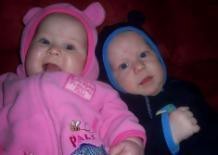 Lily and Zaide
18-month-old twins found in a family home dead from starvation.
Their bodies were found in their cots by their 11-year-old sister in suburban Brisbane.
They weighed 3.99kg (8.8lbs).
Neighbours said one of the older siblings once arrived naked on the doorstep and asked to be taken in to live with them.
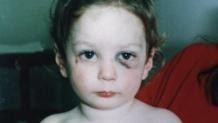 Daniel Valerio
2 years old.
Beaten and bruised to such an extent that his babysitter made him a child’s version of a boxer’s head-guard. Seen by 21 professionals in course of his life.
Report made by an electrician visiting the home who rang police.
Key Messages
It is fact that children die as a result of abuse and neglect.
In many cases these children do not live in isolation from their community. They are sighted frequently by neighbours, friends of the family, extended family, educational facilities and professional and social organisations
The Rule of Optimism refers to situations where mandated notifiers observe, witness or suspect children or young people are in abusive or neglectful environments and distract themselves by finding any positive, strength or possibility. Rather than actually observing in a child focused way, the distraction allows them to feel comfortable in not doing anything, or in concentrating on other elements of the situation rather than on the abuse or neglect for what it is. The end result of this is that children ‘fall through the gaps’ of the system and are ‘missed’ and don’t receive service.
In the case of Daniel Valerio there had been involvement with over 20 different professionals in his short lifetime however they had all allowed themselves to choose to become distracted with how happy he looked, how much he loved his Mum, etc. This meant that none of them took any or enough action to intervene in his life and that he sadly died at the hands of the parents/caregivers. Victoria introduced a mandate to notify, as a result of Daniel’s and other children’s deaths, in 1993.
In many coronial inquiries the rule of optimism has been viewed as a contributing factor in the deaths of children. Professionals and others have allowed themselves to find any positive, strength or possibility as a way of making them feel comfortable within themselves and justifying not taking action or intervening. The rule of optimism can be reflected in interagency collaboration when professionals choose to focus on other issues – the adult’s intent, the surrounding circumstances of the child’s life etc, rather than focusing on the child and what is happening for them. They therefore can justify in their own minds not notifying and not doing more to intervene in the child’s life. This can be used to justify not collaborating, not sharing information etc.
Existence
I think there is no problem.
At this level one does not accept that child abuse or neglect exists.
Statements that children lie about sexual abuse often reflect a refusal by the adult to accept that these problems exist.
Significance
The problem is not very serious.
At this level one accepts that child abuse and neglect exist, but refuses to accept that they are very serious problems. Statements about them only happening in certain ‘types of families’ etc are often attempts to discount the problem, to see it as something that affects a limited group of people and certainly not anyone in one’s own circle.
Statements about abuse and neglect being harmless to children also deny the significance of the problems. Refusing to see these problems as significant is another level of resistance that may be used to justify inaction.
Solvability
There is nothing that can be done.
The significance of the problem is acknowledged, but is seen as too overwhelming to tackle. It is out of society’s control. Believing there is no solution to a problem justifies the refusal to even attempt to find one. The problem ends up in the “too hard basket”.
Self
I can’t do anything – that’s for the experts.
At this level one accepts that child abuse and neglect exist, that it is a significant problem and that it may be solved. However, the individual does not wish to be involved or is unable to see how one person can make a difference.
Child protection is not seen as a personal responsibility but instead is that of governments and experts. This level resists personal investment.
Child’s Statement |
Leading Questions |
Non-leading Questions |
| I don’t want to work, my hand hurts. | Is that a cigarette burn on your hand, did Mum or Dad burn you? | Your hand looks sore, tell me more about it. |
| I don’t like going home, he hurts me. | Is that your Mum’s boyfriend? Does he ever kick or punch you? | Tell me more about what you don’t like. |
| I feel scared, Mum is angry. | Does your Mum hurt you or hit you when she gets angry? | You said your Mum is angry, tell me more about that. |
| I don’t like what Uncle Rick does. | Has your uncle touched you somewhere? | Tell me more about what you don’t like. |
| I don’t want to leave Mum, I feel scared for her. | Is your Dad hitting your Mum again? | Tell me more about being scared. |
| I am hungry. I don’t have any lunch. | Have you eaten breakfast? Did you have any dinner last night? | Tell me about what you have eaten. |
Being involved in a situation where children disclose abuse, or where one suspects that children have been or are experiencing abuse, can be stressful.
It is important that participants have the opportunity to consider the likely emotional effect that this will have on them as individuals, and how this may impact both on their responses and how the child/ren may be feeling.
Consider the different emotions that children may be feeling as they disclose, or are attempting to disclose, an incident of abuse or neglect. What would influence a child to disclose such an incident and what may stop a child from disclosing abuse and/or neglect.
Disclosure
- Safe environment
- Trust/rapport
- Respect
- Understanding
- Not stopping the child/ren
- Not judging the child/ren
- Believing the child/ren
- Listening
- Not displaying shock or disgust
- Reinforcing that abuse and/or neglect is not the victims’ fault
- Reinforcing that the child/ren has/have done the right thing by sharing the information
Blocking the Disclosure
- Literally stopping the child (statements like “I can’t hear this”, “I am not the person to tell”)
- Threatening to punish the perpetrator
- Interrogating the child
The overriding criteria to all of this is that Mandated Notifiers must focus on the child/ren in the first instance, remembering that all action must be in the best interests of the child/ren and that the safety of the child/ren is the paramount consideration.
To hear a disclosure by a child who has been physically or emotionally harmed can trigger strong emotional reactions and can evoke intense feelings. Feelings such as shock, revulsion, disbelief, anger, fear, protectiveness and sadness can be overwhelming.
To express such feelings to a child who is disclosing abuse and while they are immersed in their own feelings of guilt, powerlessness, confusion and fear, may make the child hesitant to disclose any further details and reinforce their sense of helplessness.
It is important to remain calm and avoid expressing strong feelings either verbally or non-verbally while the child discloses. Notifiers should be aware of their feelings, and control these while with the child.
It is important to take children seriously when they disclose to avoid the possibility of subjecting them to further trauma.
The Notifier’s role in responding to the child/ren who is/are suspected of being abused is to provide emotional and practical support.
When children disclose abuse, the following general principles apply:
- They need to be taken seriously
- They have the right to support, help and protection
- During disclosure the child/ren will be experiencing a
Approaching child/ren who may be being abused
The Mandated Notifier’s role is not to investigate or to prove that the abuse has occurred. Rather, they are simply required by law to report any suspicion on reasonable grounds that a child has been or is being abused. In establishing whether a suspicion is on reasonable grounds, talking with the child may be the immediate response.
The child may be reluctant to talk with anyone initially, due to:
- Fear of being hurt by the abuser
- Belief that the abuser will go to jail
- Fear that something bad will happen to her/him, such as being removed from home
- Loyalty to the abuser and family no matter how bad the situation may be
- Feelings that the abuse is deserved
- A belief that their situation is normal
- Avoid repeating questions as children may believe this means they have given you the wrong answer the first
- Where appropriate, ask children questions using their own terminology and language
- Avoid asking questions involving time as younger children have different perceptions of
- Do not follow every question with another question, instead comment or ask the child to elaborate on what they have
- Avoid asking the child “do you understand”? Instead ask the child to repeat what you have said or
- When talking to children allow them to ask you questions and share whatever they like about themselves or their Children enjoy having a sense of control over what they will be doing or saying (Michelle Aldridge and Joanne Wood (1998) ‘Interviewing Children, a Guide for Practitioners’).
- Avoid interrupting the child
- Do not make promises you can’t keep
- Don’t doubt the child
- Don’t tell them they are being silly
- Don’t display shock or disgust
- Listen carefully
- Show empathy and understanding
- Reinforce that they have done the right thing in telling you
- Reinforce the abuse is not their fault
Leading Questions and Comments
Leading questions and comments are inappropriate when dealing with disclosures of abuse and/or neglect by child/ren. They often label the child/ren’s feelings, may threaten their sense of privacy or put words in their mouth. Often, responses are limited to “yes” or “no”.
Another problem is that leading questions or comments tend to give direction to children, like providing a hint at how you expect them to respond.
Leading questions or comments often include assumptions about what may have happened and so don’t allow the child/ren to describe what has taken place in their own words. This type of questioning or commenting is not helpful, as the court will consider the child/ren’s evidence to be tainted or spoiled.
Research shows that children provide more accurate information when they are freely narrating, rather than being asked direct questions. If children avoid an issue, it may be necessary to try a different approach.
Child Protection Reporting Abuse and Neglect Procedure
Maintain the privacy and confidentiality of the child and family, and of employees with unproven allegations against them, at all times.
Document as soon as possible including:
- time, date and place of disclosure or suspicion
- own observations
- details of any conversations including quotes where relevant or possible
- details of disclosure or suspected abuse
- any actions taken
- date of report and signature
A report will be made using the following procedure preferably on the same day there is a disclosure or suspicion of significant harm, and no later than 24 hours
after the disclosure or suspicion.

The Approved Provider, Nominated Supervisor, employees and volunteers will:
- Consider whether disclosure or suspicion needs to be reported to Police
- contact the police on 000 if there is an immediate danger to a child and intervene immediately if it is safe to do so
- contact the police where the child has been or may be the victim of a criminal offence (including where a child is at risk of significant harm outside the family)
- get clear guidance from Police about who will tell child’s parents/guardians about the disclosure and who can give ongoing support
- Consider whether the disclosure or suspicion must be reported to Child Protection
- use the online Mandatory Reporter Guide which is available on the ChildStory Reporter website to help make decisions about whether there is a risk of significant harm. The Guide covers physical abuse, neglect (supervision, physical shelter/environment, food, medical care, mental health care, education), sexual abuse, problematic sexual behaviour, psychological harm, relinquishing care and carer concerns to do with substance abuse, mental health, and domestic violence).
- make a report by phone to the Child Protection hotline on 132 111 (available 24 hours/7 days a week). eReporting is available for non-urgent notifications at ChildStory Reporter website
- make the report with the assistance or support of the Nominated Supervisor. If the Nominated Supervisor does not follow through and make the report, employees and volunteers will make the report
- get clear guidance from the person answering about who will tell child’s parents/guardians of the disclosure and who can give ongoing support
- Consider whether referral is needed to family services or exchange of information required with other specified organisations/people
- exchange information with referral agencies or other allowable organisations/people as outlined above heading ‘Exchanging Information’ in Child Protection Policy if you reasonably believe this may help other specified organisations/people to ensure the safety, welfare or wellbeing of children.
- Contact details for family referral services are available in the resources section of the ChildStory Reporter website (Also Infoxchange Service Seeker is an extensive health, welfare and community services directory.)
- Where possible obtain family consent before making referrals. Advise families relevant information about the child and family will be provided, and they may provide feedback or complaints about the care they’re receiving or the disclosure of information. Document discussions and outcomes with families, and keep them informed
- Ensure confidentiality of employees’ personal information eg do not include in referrals
- Consider whether you must notify ECEC Regulatory Authority and other Authorities
- notify the Regulator within 24 hours through the online NQA ITS portal about any incident/allegation, including any suspected or alleged incident, of child abuse that has occurred at the service. This includes any physical or sexual abuse that has occurred or is occurring while the child is at the service.
Reportable conduct – employees and volunteers
Refer Fact Sheets from Office of Children’s Guardian for detailed information about Reportable Conduct Scheme. https://ocg.nsw.gov.au/
- Approved Provider notifies the Children’s Guardian within 7 business days of receiving a report or becoming aware of reportable allegations/convictions under the Reportable Conduct Scheme using the 7-day notification form available on the Office of the Children’s Guardian website https://www.ocg.nsw.gov.au/ and take action to protect children.
- Investigate allegation of reportable conduct as soon as possible after completing investigation plan
- Take action to protect children following investigation and provide report of findings and action taken to the Children’s Guardian within 30 calendar days.
Children and Young Persons (Care and Protection) Act 1998 (NSW)
A child or young person is at risk of significant harm if concerns exist for the safety, welfare or well-being of the child or young person because of the presence, to a significant extent, of any one or more of the above circumstances. The significance can be a result of a single act or omission or an accumulation of acts and omissions. The Department of Communities and Justice gives the following guidance: Significant harm means the concern is sufficiently serious to warrant a response by a statutory authority (such as NSW Police Force or Community Services) irrespective of a family’s consent. What is significant is not minor or trivial and may reasonably be expected to produce a substantial and demonstrably adverse impact on the child or young person’s safety, welfare or wellbeing, or in the case of an unborn child, after the child’s birth. The significance can result from a single act or omission or an accumulation of these (source: NSW Department of Communities and Justice)”
National Framework for Protecting Australia’s Children
In line with Australia’s obligations to the UN Convention on the Rights of the Child, the framework is underpinned by the following:
- All children have a right to grow up in an environment free from neglect and abuse.
- Children and families have a right to participate in decisions affecting them.
- Improving the safety and well-being of children is primarily the responsibility of their families, who should be supported by their communities and
- Children’s rights are upheld by systems and
https://www.ohchr.org/en/instruments-mechanisms/instruments/convention-rights-child
Other key components of the framework include:
National Laws and National Regulations: These outline specific legal requirements related to child protection, including child protection training, adequate supervision, appropriate discipline, protection from harm and hazards, and the notification of information to regulatory authorities. It also discusses various environmental aspects, such as maintaining a tobacco, drug, and alcohol-free environment, awareness of child protection laws, incident and injury records, supervision requirements, staff records, volunteer and student engagement, child-safe environment policies, and procedures for dealing with complaints and harmful sexual behaviors.
National Quality Standards (NQS)
National Quality Standard (NQS) Element 2.2.3 – Child Protection: This emphasizes the awareness of roles and responsibilities among management, educators, and staff to identify and respond to children at risk of abuse or neglect.
National Quality Standard (NQS) QA4 4.2.2 – Professional Standards: Professional standards guide practice, interactions, and relationships, ensuring a high level of competence and ethical conduct.
National Quality Standard (NQS) QA5 – Positive Educator to Child Interactions: This focuses on building trusting relationships through responsive and meaningful interactions, maintaining the dignity and rights of every child, and supporting self-regulation in children.
National Quality Standard (NQS) QA7 – Management Systems: This involves having systems in place to manage risk, clearly defined roles and responsibilities, continuous improvement processes, and ongoing development and evaluation of professionals.
Child Protection Policy and Procedures: The aim of the Child Protection policy is to protect children from harm, abuse, or neglect. This involves establishing a child-safe culture and environment, both online and physical. It also includes plans and procedures for identifying, managing, and responding to risks, as well as suspected or actual cases of harm. The policy provides guidance on reporting to relevant authorities. In particular, the Child Protection Policy and Procedures should be understood and used alongside our Child Safe Policy, which explains how your services operations, policies and procedures meet the NSW Child Safe Standards.
“Complaint” – expression of dissatisfaction made to or about an organisation, related to its products, services, staff or the handling of a complaint, where a response or resolution is explicitly or implicitly expected or legally required. Source: ANZ Standard Guidelines for complaint management in organisations – AS/NZS 10002:2014
“Complaints handling” – effective resolution of problem before it becomes worse; and providing a remedy. Source: Commonwealth Ombudsman – Better practice complaint handling guide.
‘Emotional abuse or psychological harm’ – serious psychological harm can occur where the behaviour of their parent or caregiver damages the confidence and self-esteem of the child or young person, resulting in serious emotional disturbance or psychological trauma. Source: NSW Department of Communities and Justice
“Exploitation of a child” – includes sexual abuse and any other forms of exploitation (such as using a child for financial gain, labour or personal advantage). It also includes involving a child as a participant or spectator in sexual acts. Source: State/territory based child protection legislation
“Grievance” – see “Complaint” definition
“Grooming” – generally refers to behaviour that makes it easier for a perpetrator to procure a child for sexual activity. For example, a perpetrator might build a relationship of trust with the child, and then seek to sexualise that relationship (for example, by encouraging romantic feelings or exposing the child to sexual concepts through pornography). Grooming is a subtle and gradual process used by perpetrators, who could be adults or children themselves. Note: grooming is a criminal offence in most states and territories. Source: Recognising signs of child abuse – Australian Government’s Royal Commission into Institutional Responses to Child Abuse
“Harm” – physical or mental injury; hurt. Source: ACECQA Policy Guidelines: Emergency and Evacuation
“Harmful sexual behaviours” – a general term to describe behaviour in children under 18 years that fall across a spectrum of sexual behaviour problems, including those that are problematic to the child’s own development, as well as those that are coercive, sexually aggressive and predatory towards others. The term ‘harmful sexual behaviours’ recognises the seriousness of these behaviours and the significant impact they have on victims, but is not contingent on the age or capacity of a child. Source: Final Report – Royal Commission into Institutional Responses to Child Abuse
“Hazard” – a danger or risk, even though often foreseeable. Source: ACECQA Policy Guidelines: Emergency and Evacuation
“Investigation” – A formal and systematic inquiry to establish facts about a complaint by collecting, documenting, examining and evaluating evidence. An investigation is not an end in itself. Throughout an investigation, the investigator should keep an open mind about the possible outcomes of the investigation, such as education, compliance action, or a decision not to pursue the matter. Source: Guide to the NQF – Regulatory Authority Powers – Monitoring, compliance and enforcement
“Mandatory reporters” – Mandatory reporters are required by law to report suspected child abuse and neglect to government authorities. Mandatory reporters are people who deliver the following services, wholly or partly, to children as part of their professional work or other paid employment, and those in management positions. Source: Family & Community Services (FACS)
“Mandatory reporting” – the legislative requirement for selected classes of people to report suspected child abuse and neglect to government authorities. Source: State/territory based child protection legislation
“Neglect” – When a parent or caregiver cannot regularly give a child the basic things needed for his or her growth and development, such as food, clothing, shelter, medical and dental care, adequate supervision, and enough parenting and care. Source: NSW Department of Communities and Justice
“Online grooming” occurs when adults make contact with children and adolescents online, with the intention of building a trusting relationship for the purpose of sexually abusing or exploiting them. Source: Recognising signs of child abuse – Australian Government’s Royal Commission into Institutional Responses to Child Abuse
“Personal information” – information or an opinion about an identified individual, or an individual who is reasonably identifiable: (a) whether the information or opinion is true or not; and (b) whether the information or opinion is recorded in a material form or not. Source: Privacy Act 1988
‘Physical abuse’ – a non-accidental injury or pattern of injuries to a child or young person caused by a parent, caregiver or any other person. It includes but is not limited to injuries which are caused by excessive discipline, severe beatings or shakings, cigarette burns, attempted strangulation and female genital mutilation. Injuries include bruising, lacerations or welts, burns, fractures or dislocation of joints. The application of any unreasonable physical force to a child is a crime in NSW. For example, hitting a child or young person around the head or neck, or using a stick, belt or other object to discipline or punish a child or young person (in a manner that is not trivial or negligible) may be considered a crime. Source: NSW Department of Communities and Justice
“Reasonably believes” – believes on grounds that are reasonable in the circumstances. You have a “reasonable belief” if a reasonable person in the same circumstances as you would believe something for the same reasons you believed it. See also “reasonable grounds”. Source: Schedule 3, Child Protection Act 1999 (Queensland)
“Reasonable grounds” – suspect that a child may be at risk of significant harm based on your observations of the child or family; what has been reported to you about a child or family; or what can reasonably be inferred based on observation, professional training and/or experience Source: State/territory based child protection legislation
“Reasonably suspects” – suspects on grounds that are reasonable in the circumstances. Source: Schedule 3, Child Protection Act 1999 (Queensland)
“Reportable conduct” – certain organisations or entities have legal obligations under Reportable Conduct Schemes. Under these Schemes, certain organisations or entities are required to notify and investigate certain allegations (reportable allegations) of abuse involving a child, when the allegation is against someone they employ, engage or contract in circumstances outlined by the legislation. Source: State/territory based child protection legislation
“Risk of significant harm” – means circumstances that are causing concern for the safety, welfare or wellbeing of the child or young person to a significant extent which means the concern is sufficiently serious to warrant a response by a statutory authority irrespective of a family’s consent. What is significant is not minor or trivial and may reasonably be expected to produce a substantial and demonstrably adverse impact on the child or young person’s safety, welfare or wellbeing. The significance can result from a single act or omission or an accumulation of these. Source: State/territory based child protection legislation
“Risk” – exposure to the chance of injury or loss; a hazard or dangerous chance. Source: ACECQA Policy Guidelines: Emergency and Evacuation
“Risk assessment” – assessing the risk means working out how likely it is that a hazard will harm someone and how serious the harm could be. Source: ACECQA Risk assessment template: Excursions
“Sexual abuse of a child” – ‘when someone involves a child or young person in a sexual activity by using their power over them or taking advantage of their trust. Often children or young people are bribed or threatened physically and psychologically to make them participate in the activity. Sexual abuse is a crime. Source: NSW Department of Communities and Justice
“Well-being”– sound wellbeing results from the satisfaction of basic needs – the need for tenderness and affection; security and clarity; social recognition; to feel competent; physical needs and for meaning in life. It includes happiness and satisfaction, effective social functioning and the dispositions of optimism, openness, curiosity, and resilience. Source: ACECQA Guide to the NQF
“Working directly with children” – a person is working directly with children at a given time if at that time the person is: physically present with the children; and is directly engaged in providing education and care to the children. Source: National Regulations
“Working with children / Working with vulnerable people check (WWCC/WWVP)” – a notice, certificate or other document granted to, or with respect to, a person under a working with children law to the effect that: the person has been assessed as suitable to work with children; or there has been no information that if the person worked with children; the person would pose a risk to the children; or the person is not prohibited from attempting to obtain, undertake or remain in child-related employment. Source: National Law
Education and Care Services National Law
Section 162A
The approved provider of an education and care service must ensure that each nominated supervisor and each person in day-to-day charge of the service has successfully completed the child protection training (if any) required by or under the law of this jurisdiction, a Government protocol applying to the approved provider in this jurisdiction or otherwise required by this jurisdiction.
Education and Care Services National Regulations
Regulation 84 Awareness of child protection law
The approved provider of an education and care service must ensure the nominated supervisor/s, staff members, volunteers and students at the service who work with children are advised of
- the existence and application of the current child protection law; and
- any obligations that they may have under that
Regulation 175 Prescribed information to be notified to Regulatory Authority
An approved provider must notify the regulatory authority of:
- any incident where they reasonably believe that physical and/or sexual abuse of a child has occurred or is occurring while the child is being educated and cared for by the service
- any allegation that sexual or physical abuse of a child has occurred or is occurring while the child is being educated and cared for by the service.
National Quality Standard
Element 2.2.3 Child Protection – Management, educators and staff are aware of their roles and responsibilities to identify and respond to every child at risk of abuse or neglect.
Children and Young Persons (Care and Protection) Act 1998 (NSW)
Under the Act mandated reporters include people employed in children’s services and people in management positions of these services. Mandated reported must make child protection reports if they suspect on reasonable grounds a child or young person is at risk of significant harm because:
- the child’s or young person’s basic physical or psychological needs are not being met or are at risk of not being met
- the parents or other caregivers have not arranged and are unable or unwilling to arrange for the child or young person to receive necessary medical care
- the parents or other caregivers have not arranged and are unable or unwilling to arrange for a school age child to receive an education
- the child or young person has been, or is at risk of being, physically or sexually abused or ill-treated
- The child or young person is living in a household where there have been incidents of domestic violence and, as a consequence, they are at risk of serious physical or psychological harm
- the parent’s or other caregiver’s behaviour means the child or young person has suffered or is at risk of suffering serious psychological harm.
A child or young person is at risk of significant harm if concerns exist for the safety, welfare or well-being of the child or young person because of the presence, to a significant extent, of any one or more of the above circumstances. The significance can be a result of a single act or omission or an accumulation of acts and omissions.
The Department of Communities and Justice gives the following guidance: significant means serious enough to warrant a response by a statutory authority (e.g. Police or Community Services) irrespective of a family’s consent. What is significant is not minor or trivial and may reasonably be expected to produce a substantial and demonstrably adverse impact on the child or young person’s safety, welfare or wellbeing.
Under the Act the identity of reporters is kept confidential (except in circumstances where the reporter gives consent to disclose their identity or a court/other body compels the disclosure), and reports made in good faith do not breach professional conduct or constitute grounds for liability. Note, that NSW Police can access the identity of the reporter if it is needed to investigate a serious offence against a child or young person.
Reasonable grounds is not defined in the Act but generally refer to the need to have an objective basis for suspecting that a child may be at risk of abuse and neglect based on:
- First hand observation of the child or family
- What the child, parent or other person has disclosed
- What can reasonably be inferred based on observation, professional training and/ or experience.
The reporter is not required to prove that abuse has occurred.
Chapter 16A of the Act allows children’s services to exchange information with specified organisations/people they reasonably believe may help ensure the safety, welfare or wellbeing of a child or young person.
Organisations include NSW Police, State government departments or public authorities, schools, public health organisations, private health facilities, nurses, doctors, midwives, psychologists, occupational therapists, speech pathologists and bodies like family referral services.
Information sharing applies whether concerns of harm meet the mandatory reporting threshold of significant harm, and would only be declined if this may endanger a person’s life or physical safety, prejudice an investigation, not be in the public interest etc. Consent is not necessary, but consent should be sought where possible from families (and children if old enough) unless this would further jeopardise a child or place another person at risk.
Child Protection (Working with Children) Act 2012
Employers have legal obligations concerning working with children. In NSW, anyone in child-related work who is 18 years or above must have a current Working with Children Check (WWCC). Services must have the systems in place to regularly check the currency and validity of WWCC for educators, volunteers, students and other staff. Services must also keep accurate records of all these checks.
Crimes Act
In NSW, criminal law offences exist in relation to not protecting and reporting child abuse (maximum penalty is 2 years’ imprisonment):
- Failure to protecta child from child abuse in which an adult with the power or responsibility to act, knows there is a serious risk of a child becoming a victim of abuse, and negligently fails to reduce or remove that risk (s43B of the Crimes Act)
- Failure to reportchild abuse in which an adult knows, believes or reasonably ought to know that a child abuse offence has been committed against a child and, without reasonable excuse, does not report that offence to the police (s316A).
Children’s Guardian Act 2019 (NSW)
Part 4 of the Act includes a Reportable Conduct Scheme. Under the Reportable Conduct Scheme, entities such as childcare services, must report to the Office of the Children’s Guardian any allegation that an employee (including volunteers and contractors) has engaged in, or been convicted of, inappropriate conduct – known as ‘reportable conduct’.
Reportable conduct includes sexual offences, sexual misconduct, ill-treatment, neglect or assault of a child, an offence under s 43B (failure to protect) or s 316A (failure to report) of the Crimes Act 1900, and behaviour that causes significant emotional or psychological harm to a child committed by an employee, volunteer or contractor required to hold working with children checks. Approved Providers must notify the Children’s Guardian within 7 business days of becoming aware of any reportable conduct whether or not the conduct occurred inside or outside the workplace, or occurred when the person was not an employee.
Approved Providers must also:
- take action to protect children
- investigate allegation of reportable conduct
- provide a report of the outcome of the investigation, or an interim report, within 30 calendar days of allegation
Any employee, volunteer or contractor who becomes aware of any Reportable Conduct must inform the Approved Provider (or the Children’s Guardian if the matter involves the Approved Provider). Failure to make a report could be a reportable allegation of neglect against an employee and/or a criminal offence under the Crimes Act in addition to misconduct for not following service policies and procedures.
Click here: ChildSafe Standards Poster
 Part 3A of the Act includes the NSW Child Safe Standards:
- Child safety is embedded in organisational leadership, governance and culture.
- Children participate in decisions affecting them and are taken seriously.
- Families and communities are informed and involved.
- Equity is upheld, and diverse needs are taken into account.
- People working with children are suitable and supported.
- Processes to respond to complaints of child abuse are child focused.
- Staff are equipped with the knowledge, skills and awareness to keep children safe through continual education and training.
- Physical and online environments minimise the opportunity for abuse to occur.
- Implementation of the Child Safe Standards is continuously reviewed and improved.
- Policies and procedures document how the organisation is child safe.