

Children can project their feeling onto us

This may appear a little weird at first, but let me explain. The process is called counter-transference and was initially written about by Freud when he noticed feeling the same way as his patients as they somehow transferred their feelings to him. This was further explored by other psychoanalysts in the 1950s and has developed into a process of assisting patients and clients of psychoanalysts.

Let me give you an example you will recognise. Imagine an educator comes into work and they’re moving house or going through a messy personal issue like a divorce. Their emotional energy gets transferred over to the children and then the whole room is a mess, behaviour problems, off the air children, educator breaking down and crying and complete chaos. What has occurred is the educator has transferred her emotional state onto the children. Anyone who spends some time in the room will begin to feel the same way as the children, as the educator’s feelings are transferred to them as well.

How can we use this technique?

When a child can’t talk or has language that is difficult to understand we can use this process to help understand what is happening. The child’s feelings will be transferred to us too.

As educators we need to constantly see things from a range of perspectives. This particularly applies to children with Autism and their families.

Allow yourself to become a part of a child’s world, take the time to know and work closely with families to support them to achieve the best results for families.

Teaching children how to be calm

Calmness and mindfulness is an open and friendly willingness to understand what’s going on in and around you. It means living in the present moment (which is not the same as thinking about the present moment) without judging or ignoring anything or getting carried away by the pressures of everyday life. When you are mindful while waking up, eating lunch, playing, or with every major and minor conflict, your mind is not elsewhere but right there in the moment.

You save energy, as you are aware of what is happening while it is happening. This mindful, friendly presence changes your behaviour as well as your attitude toward yourself and other children. Mindfulness is feeling the sun on your skin, feeling the salty tears rolling down your cheeks, feeling a ripple of frustration in your body. Mindfulness is experiencing both joy and misery as and when they occur, without having to do something about it or having an immediate reaction or opinion.

Mindfulness is directing your friendly awareness to the here and now, at every moment. But mindfulness practice involves some effort and intentionality.

Calmness and mindfulness
can be learnt.

BE A FROG. You could introduce an exercise as follows: “A frog is a remarkable creature. It is capable of enormous leaps, but it can also sit very, very still. Although it’s aware of everything that happens in and around it, the frog tends not to react right away. The frog sits still and breathes, preserving its energy instead of getting carried away by all the ideas that keep popping into its head. The frog sits still, very still, while it breathes. Its frog tummy rises a bit and falls again. It rises and falls. “Anything a frog can do, you can do too. All you need is mindful attention. Attention to the breath. Attention and peace and quiet.”

Calming activities for children with Autism

Consider implementing some of the following calming activities:

  • Working in a tent
  • Resting on beanbags
  • Gentle bouncing or rolling on a small exercise ball
  • Rolling up tight in a blanket or having a weighted blanket to wrap around
  • Slow rhythmic movements- tyre swing, rocking horse, facing each other holding hands rocking to and fro
  • Doing “heavy work” rolling tyres, dragging weighted bags
  • Offering a fidget toys basket with items that can be pulled, squeezed, and manipulated
  • Giving children bubble wrap to keep in their pockets during group times
  • Singing or listening to calming action songs
  • Sitting and reading child’s favourite stories.

Calming sensory seekers

To calm children seeking sensory input, activities that are not typically calming will often help regulate a child’s sensory needs. Then a child may be able participate in a calming activity.

Some of these activities can include:

  • Bouncing on a ball
  • Swinging on a tyre swing
  • Spinning around and crashing on a mat
  • Rolling around on the ground
  • Playing games like musical freeze
  • Throwing around a balloon

Different strategies will work for different children.


Scenario – Identifying behaviour and triggers

Before the behaviour

Educator tells children, “Time to pack away, put the trains away.” There was no warning provided. The other children follow instructions and begin to pack away the train set. Ben was playing with this and instantly reacts to the request.

The behaviour

Ben begins throwing the materials, runs around the room and returns hitting another child in the face with a train. The child who was hit was packing away the train set.

Step 1 Manage the behaviour

The following doesn’t help child or educators.

The educator tells Ben that it wasn’t the right thing to do and to say sorry. Educator encourages Ben to ‘use his words’. The educator who initially started the packing away transition comforts the child who has a red mark on his face. The other educator is unsure of how to respond so continues to transition the other children to the group time mat.

A better approach – What could have happened?

Educators could have:

  • introduced warning bells, visual cards or clear instructions the child responds to support the transition of packing away
  • allowed children to pack away in stages and let Ben leave his track out for later
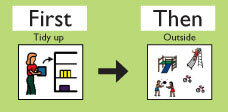
  • used a visual board with two steps – ‘first’ and ‘then’ showing images of what will be happening.
  • added a picture of a train to Ben’s visual routine
  • supported Ben with routine of packing away and involved him in preparing group time to eliminate meltdown occurring.

Step 2 Identify the purpose of the behaviour

Now that everyone is busy and out of Ben’s way he can continue to play trains.

Step 3 Plan of intervention

Critically reflect on the situation to see that no warning was given to Ben and that he was only aggressive to the other child because the educator didn’t carefully plan the transition and implement the types of steps discussed above.

Step 4 Replace behaviour

When a child has a meltdown provide an area for the child to self regulate. Rather than stopping the behaviour replace it eg let a child throw beanbags at the brick wall or into a bucket.

Step 6 Reward for replacement behaviour or following tasks using supports.

When a child packs away they get to choose a sensory item from their reinforcement kit.


Go back in time to deal with aggressive behaviours

Some children will demonstrate aggressive behaviours. These may be verbal or non‐ verbal.

In this situation there’s not much you can do to stop it other than letting it burn out.

It’s important to respond quickly to ensure the safety of the child, other children, and in a service staff and visitors. Remove all children away from the aggressor if you can. When responding to aggressive behaviours, we must aim to:

  • Comfort the victim of the aggressive behaviour
  • COMFORT THE CHILD WHO HAS BEEN AGGRESSIVE

It may take up to 20 minutes for the child to be able to reason with you and talk after the outburst. The neocortex in the brain has shut down and raw emotions are controlling the behaviour at this point in time. Be patient and go in with a big bundle of love, care and emotional support.

Sometimes we jump in and accuse the child. A better way to deal with these situations is to reverse time. This will be different depending on the child’s ability to communicate.

NON VERBAL CHILD OR MINIMAL LANGUAGE

Step 1 Ensure the victim is okay, supported by another educator and doesn’t require medical attention.

Step 2 Supervise the aggressive child as they are calming down, letting the child know you are available for a hug/ hand rub/ calming song when they are ready. Having a quiet time visual board works well. If the child continues to meltdown supervise and give them space.

Step 3 Once the child calms down give eye contact, offer the child one of their choices from quiet time visuals board.

Step 3 Identify if possible what triggered the child.

Step 4 Go back in time and role play with the child another way of dealing with the situation by reinforcing the visuals.

Step 5 Slowly introduce the child back to the group and be ready to identify the time when the child is triggered so you can model the desired behaviour.

HIGH FUNCTIONING VERBAL CHILD

Step 1 Ensure the victim is okay, supported by another educator and doesn’t require medical attention.

Step 2 Supervise the aggressive child as they are calming down, letting the child know you are available for a hug/ hand rub/ calming song when they are ready. If the child continues to meltdown supervise and give them space.

Step 3 Once the child calms down give eye contact, go over to the child calmly and say “(Child’s name)  can you tell me what happened/ made you upset?”

Step 4 Go back in time and role play with the child another way of dealing with the situation by reinforcing desired language or choice of spaces.

Step 5 Slowly introduce the child back to the group and be ready to identify the time when the child is triggered so you can model the desired behaviour.


Case Study – Charlotte

Charlotte didn’t like coming to the centre, but her mother needed a rest. This meant she screamed for two hours, hit her head, vomited then went home. Nobody liked this situation, but her mother really needed a break.

Charlotte’s Meltdowns

A meltdown occurs when the child’s fight or flight part of the brain kicks in and takes over. When this occurs, the other part of the brain used for thinking and reasoning is basically switched off.  For children with Autism this is intensified by all the other challenges the child may be experiencing whether it be sensory, communication or environmental.

What we need to do is look at the child who’s having the meltdown and think, “Wow, he or she must have felt threatened or confused in this situation and the emotional brain kicked in to get them out of it.” The difficult part for us is to work out what the child’s feeling threatened or confused by. We need to see the child’s world through their eyes, not ours.

The transition was causing Charlotte’s meltdowns because she did not understand why she couldn’t just stay at home with Mum.

Professor Linda Harrison from Charles Sturt University has identified morning transition for typically developing children from home to the centre as a very stressful time for them, let alone a child on the spectrum. The morning transition is far more stressful in a family grouping room and she has suggested that we separate into our own rooms as soon as possible in the morning. What is interesting is the afternoon family groupings are not as stressful for the children as they have spent the day with you.

How we worked with Charlotte.

Step 1 The everyday event we chose was to make Charlotte’s transition from home better.

Step 2 Plan with families

Transition can be even more difficult for children on the spectrum and we need to work with parents to help create a picture plan of events that will occur and finish with the child at home with the parents feeling safe.

With Charlotte and her family we created a ‘social story’ book consisting of pictures including her routine from home, transport to the centre, activities at the centre, transport ride home again and back to the safety of mum.

Step 3 Prepare all educators

We made sure everyone knew how the book would be used with Charlotte and where it would be kept.

Initially have no more than two different educators implementing the plan.

Step 4 Practice the plan

It started to work with one small step at a time. Charlotte stopped screaming. But she ran outside and sat by the fence. We realised the room was too loud and she couldn’t cope.

Again slowly, very slowly we introduced her to the room with the help of picture cards ensuring there were activities like drawing included that she really enjoyed.

Step 5 Reflection on the work goals

Early intervention came in later to assist further, for example in coping with the noise, knowing what to expect and looking at the demands we place on children.

Demands include statements like ‘come inside now’, ‘put your shoes on’, ‘sit on the mat’. We need to change the triggers and the way we communicate. We also then looked at the situation from Charlotte’s perspective and wrote down all the things we thought she could be feeling about the transitions.

This led us to try breaking the demand down into smaller steps eg ‘Come inside’ becomes

1) Sit down with Charlotte in the sandpit

2) Play with a bucket like Charlotte

3) Tell Charlotte “2 minutes then pack away”

4) Put bucket in container saying “mine first then Charlotte’s”

5) Make it fun and use positive effects. Children with Autism often need extra effect to gain their attention. Give them a reason to want to look at you eg brush the sand off the bucket and say “oh look at all the sand WOOSH off it goes and BOING in the bucket it goes.” Ask her to copy you eg “your turn now Charlotte WOOSH get your sand off.”

6) Use lots of smiles and positive, calm, quiet talking as educator goes over to the bathroom door encouraging Charlotte to follow.

7) Educator washing hands as Charlotte follows. If needed use same technique as step 5.

Think small steps. Break the big demand down and show her exactly what to do.

One small step at a time with lots of planning. Be patient and learn how to communicate with each child in a way that works for them


Supporting children who are triggered in sensory situations

How can we help? Try using some of the strategies above but when unsure follow the steps below.

Remove children from situations which trigger their behaviour and speak to them in a calm, quiet voice.

  • Step 1 Identify the places or situations where a meltdown occurred. Take notes, review the situation to identify what’s causing the behaviour (eg tugging on clothing, another child lent on them, it was just before they had to wash their hands).
  • Step 2 Create a strategy for the child to manage the situation. This may be a quiet space, a song or some sensory equipment recommended by the family or a therapist for example a weighted blanket. Refer to the strategies discussed on previous pages.
  • Step 3 Complete your child’s information using the ‘Likes, Tolerates and Dislikes’ table handout.

Sensory scenario- sensitivity to noise

Step 1 Sophia becomes upsets and hits other children as they transition to the mat from the bathroom at group time.

Step 2 Educator decided to transition other children to the mat first and let them settle, then encourage Sophia to join the group. Educator made sure the activities had low sounds and children’s voices did not become too loud. Slowly Sophia was introduced to other sounds and was joining the group without becoming physical.

Sophia doesn’t cope well in loud groups. Educators support her to cope by very slowly introducing situations where the noise becomes louder and she has time to regulate her senses at each stage. Educators closely observe Sophia during each volume increase.

Educators can set up an activity with Sophia and two friends and some soft pillows as drums. We start drumming with our hands onto the pillow one at a time. We watch Sophia very carefully for signs when she has had enough, stop the children and be still and quiet, then slowly introduce the drumming again. This first step may take weeks until we can slowly move on to louder instruments.

But remember we must be very careful and take it very slowly.

Reflect on this scenario. What could you be doing that escalates children’s behaviour?  What strategies can you put in place to create a sensitive and supportive learning environment for children with Autism?

_________________________________________________________
_________________________________________________________
_________________________________________________________
_________________________________________________________
_________________________________________________________
_________________________________________________________
_________________________________________________________

Sensory scenarios- sensitivity to touch

Scenario 1

Step 1 Wiggly, fidgety children may find the pressure of the mat hard. It could feel like concrete to them and sitting hurts.

Step 2 Find a pillow for the child to sit on. It might be trial and error to get one that’s the right thickness for that child. Also look up fidget toys on the internet and see what you could make for them.


Scenario 2

Step 1 Tyler loved cars, but hated things like clothing and water on his skin.

Step 2 Use something Tyler was  interested in educators slowly introduced a sensory experience. They stuck some double-sided tape on the roof of Tyler’s favourite cars, then rolled them in the sand. Tyler grabbed his car but let it go because of the sand. Educators slowly introduced the car again and played with other cars, showing him what to do on the car track. Eventually he held the car and played with it. They repeated this for a week, and then put the car in some shaving cream. Again he became distracted and disliked it at first, but slowly he drove his car through the shaving cream. After many weeks, Tyler was washing his car and his hands under the tap.

Reminders for the Environment and Educator practices

  • Set up small places where the child can feel safe and ‘chill out’
  • For children with sensory issues ensure temperature is comfortable and noise level not too loud. Be aware that certain scents ( eg perfumes, deodorants, washing powders) may affect child
  • Avoid situations and events that trigger meltdowns
  • Use short stress busters to redirect escalating behaviour ie count backwards or sing favourite song
  • Recognise when the child has gone beyond the point of reason – give the child space, calm down, quiet down, slow down
  • Let small things go – pick your battles and don’t become distressed with the child
  • Integrate child’s special interests into curriculum and ensure the routine is flexible
  • Adjust activities when sensory issues may be affecting child’s behaviour eg a resource makes a particular sound, shape, smell, colour and feel.

Sensory Processing Sensitivities

Sensory processing is the way in which people process information. We all take information in through our senses – touch, movement, smell, taste, sight, hearing and balance.

Sensitivities to sensory stimuli are common in children with Autism. There are two different ways children respond to sensory based experiences.

A child may be hypersensitive which means they are over responsive and their senses are too heightened to sensory stimuli. Children who are sensory avoiders are referred to as being hypersensitive.

Hyposensitivity relates to children who are under sensitive and often seek sensory input as their senses may be barely working at all.

Sensory problems are difficult to get our head around at first because they contradict themselves at every turn.

Sensory causes and strategies

Hypersensitivity

Sight

  • Can be sensitive to bright lights so educators may need to let child wear hat or sunglasses inside. Also ensure that all lights work properly. A flickering light may not be noticeable to others but can be very distracting to a person with sensory processing disorders
  • Can be overwhelmed and uncomfortable in a room with too much stimuli, colours and clutter. Ensure the environment is calming and has uncluttered spaces with neutral colours.


Auditory

  • Noises from air conditioners, vacuum cleaners or a far off train can cause sensitivity and distraction. Where possible warn children in advance about unexpected sounds and be aware of how they are affecting the child
  • Unexpected noises like cries or screams can be distressing so offering children head phones or time outside is necessary (take out a small group to ensure ratios are maintained).


Touch

  • Can strongly dislike being touched by others so consider where the child is placed when in lines or group times
  • May avoid getting their hands dirty so encourage but don’t force
  • Can feel uncomfortable with clothing tags or in particular clothing so ensure they always have a spare change of clothes in their bags.


Smell & Taste

  • Has a limited diet so offer lots of praise and encouragement for trying new foods
  • May detect smells that others don’t notice or gag at the smell and taste of certain foods. Working with the child’s OT and family is essential. Look out for a change in a child’s behaviour when cooking or when new people wearing strong perfumes enter rooms.

Hyposensitivity

Sight

  • May flap hands or objects in front of eyes, or watch repetitive movements like running water or fans spinning, so use these types of sensory toys (eg fan with flashing lights) as a reward or to settle
  • Can fixate on certain images and bright colours so visual media can be a great way to engage the child. Educators can also grab their attention by wearing some novelty glasses
  • May use their peripheral vision to stare at or down objects. Will often line those objects up. Play parallel to the child, colour coding or lining objects up by size to support learning.


Auditory

  • Seeks out and makes repetitive sounds, so use music, song, and rhythm to teach curriculum areas like ABCs and counting
  • May not notice surrounding noises like children screaming but can be distressed by loud or sudden sounds such as a siren or a vacuum. Help the child to identify noises that make them uncomfortable by using visuals. Point to the quiet visual when sounds become too much
  • May fixate on certain songs and tunes so ensure you give children time to focus before giving directions
  • Will not always respond when being called or given instructions so vary tone and volume to maintain children’s attention.

Touch

  • Enjoys sensory play. Include lots of finger-painting, sand, salt, shaving cream
  • Constantly touches everything, including other children. Role model appropriate physical contact with peers
  • May not realise they bump into objects and are not always aware when they get hurt. Can appear insensitive to pain. Ensure close supervision so educators are aware if child injures themselves.


Smell & Taste

  • May explore objects by smell or taste. Bring lots of sensory materials into the room and place them near during other experiences to support child’s participation
  • Enjoys food with strong flavours or textures. May also eat different substances like glues, play dough and sand so ensure only non-toxic materials are used
  • May not easily detect odours so monitor older children’s hygiene and work closely with families.

Things we take for granted become a huge problem for a child with Autism Spectrum Disorder.  Imagine if all the voices you heard were really loud to the point of hurting your ears. How would you feel if you jumped in fright every time a door shut because you were over sensitive to sounds?

It’s important we identify how a child processes information so that we can put clear plans in place to minimise a child having a sensory meltdown.


How can we help support children on the Autism spectrum?

Here are some strategies you can implement to help support Autistic children.

Communication

  • Use visual cue cards (picture or photo cards) individually or in a sequence of steps with verbal language
  • Break instructions down into simple, precise steps until child is ready to process more than one instruction at a time. Role model what is expected
  • Use visual boards with two steps – ‘first’ and ‘then’
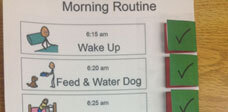
  • Create a visual routine for the room and if necessary individual children
  • Give children time to process your verbal and non-verbal communication. Always use child’s name when speaking to them
  • Role model in achievable steps how child can interact with peers
  • Give children warning about what’s coming next before ending an activity or routine (use visuals if necessary) so they have time to process what’s going to happen and can decrease their anxiety
  • Give clear, concise, literal instruction – make sure what you are saying is actually what you want child to do or hear
  • Avoid sarcasm and idioms -statements like ‘crying your eyes out,’ ‘piece of cake,’ and ‘you’re ok,’ don’t make sense to children with Autism who  take what you say literally and don’t understand the meaning behind these types of sayings
  • Model language correctly to help with lip reading
  • Don’t stop the child and correct communication. Give them time and model correct structure/ words in your reply
  • Work with families to learn and use the basics of visual sign languages like Auslan or Makaton to support your verbal communication
  • Be consistent with communication within the whole group or centre so every child can communicate with all children at the service
  • Don’t insist on eye contact – just because a child is not looking at you doesn’t mean they’re not listening
  • Provide one on one support and create a list of words the child uses in order to build and increase vocabulary – this can go into a child’s ‘planning matrix’
  • Regularly communicate with parents and professionals involved. Be positive but honest. A communication book is a great idea!

Environment

  • Set up small spaces in the indoor and outdoor environment for children who need to be alone or away from the main group. These spaces can also be used as aides to help the child integrate into the group
  • Consider any sensitivities children may have to pressure, texture, smell, noise, colour etc and adapt the environment
  • Purchase or borrow specialist equipment
  • Try to avoid sudden loud noises
  • Set up a space for children to retreat to. This is critical. Providing spaces can also serve a particular function, such as Lego, chess, robotics or art club. This will depend on the age and interests of those involved

Organise activities in small groups to increase the likelihood of children building friendships with others who have similar interests. This creates an opportunity for friendship and interaction.

Educator Practices

  • Develop and implement behaviour guidance and education plans with everyone involved in child’s care
  • Make sure all educators provide consistent care. There should be a plan in place to critically reflect, communicate changes and successes
  • Provide consistent, familiar routines
  • Provide calming breaks for the child and educators if necessary
  • Be aware of the child’s triggers and impacts on learning
  • Help children recognise others’ emotions and empathy
  • Regularly review strategies or education plan as a team. Ensure all educators working directly with the child review as necessary in consultation with the child’s families and professionals supporting them
  • Integrate child’s obsessions/ fixations with certain topics, people and places into curriculum and build upon them
  • Respectfully help children who need assistance with toileting and feeding. Be discreet and respect the child’s privacy when doing so.

Other tips

  • Get parent’s written approval to consult early intervention professionals
  • Make sure you get as much information about the child as possible during the enrolment process. Educators who complete ‘Visual matrix for parents’ (see handout) in consultation with families will create a smoother transition process
  • Create a specific enrolment process for children with additional needs and ensure a plan is in place before the child starts. If a child with Autism has a bad experience the first time they enter a particular environment it will be very difficult to fix and come back from
  • Invite the child and their parents into the centre at a quiet time of the day to help the child become familiar with the new environment.

Understanding a parent’s perspective

‘Welcome to Holland’ c 1987 by Emily Perl Kingsley.

I am often asked to describe the experience of raising a child with a disability – to try to help people who have not shared that unique experience to understand it, to imagine how it would feel. It’s like this……

When you’re going to have a baby, it’s like planning a fabulous vacation trip – to Italy. You buy a bunch of guide books and make your wonderful plans. The Collosseum. The Michelangelo David. The gondolas in Venice. You may learn some handy phrases in Italian. It’s all very exciting.

After months of eager anticipation, the day finally arrives. You pack your bags and off you go. Several hours later, the plane lands. The stewardess comes in and says, “Welcome to Holland.”

“Holland?!?” you say. “What do you mean Holland?? I signed up for Italy! I’m supposed to be in Italy. All my life I’ve dreamed of going to Italy.”

But there’s been a change in the flight plan. They’ve landed in Holland and there you must stay.

The important thing is that they haven’t taken you to a horrible, disgusting, filthy place, full of pestilence, famine and disease. It’s just a different place.

So you must go out and buy new guide books. And you must learn a whole new language. And you will meet a whole new group of people you would never have met.

It’s just a different place. It’s slower-paced than Italy, less flashy than Italy. But after you’ve been there for a while and you catch your breath, you look around…. and you begin to notice that Holland has windmills….and Holland has tulips. Holland even has Rembrandts.

But everyone you know is busy coming and going from Italy… and they’re all bragging about what a wonderful time they had there. And for the rest of your life, you will say “Yes, that’s where I was supposed to go. That’s what I had planned.”

And the pain of that will never, ever, ever, ever go away… because the loss of that dream is a very, very significant loss.

But… if you spend your life mourning the fact that you didn’t get to Italy, you may never be free to enjoy the very special, the very lovely things … about Holland.

Compare your families and their emotional and physical challenges.  Looking through their eyes, what is their emotional state at this point?

A parent you are having challenges with
A parent who is happy at the service

Understanding a child’s perspective – A voice of a child with Autism

Can’t versus won’t

I may not be ignoring you on purpose when you tell me to do something. Perhaps I just can’t understand what you’re saying. Remember my language is not as developed as yours. If you say, for example, “Matt we need to wash our hands. Can you see that lunch is being served?” I might just hear “Matt lunch” and then wonder why I get in trouble when I wander over there. Please make sure you use simple words. Tell me exactly what to do and why, so it’s easy for me to do the right thing. For example: “Matt, wash hands then lunch.”

Literal language

I may be confused when you say something to me because I only understand the literal meaning of the words. I don’t understand that there may be another meaning. If you say, for example, “You bit off more than you can chew” when I’m not eating I don’t know you mean “You took on a very big task”. When you say something “costs an arm and a leg” I see someone missing those body parts, and if you say “It takes two to tango” I don’t know you mean it takes more than one person. Please say exactly what you mean.

 Visual learner

I’m only learning about language so I don’t always understand what you say unless there are pictures to help me or you show me how to do things.  Please don’t get angry if I need to be shown many times. I am a visual learner so simply telling me things makes it very hard for me to learn. I often get stressed trying to remember my next activity or managing my time. A visual routine with photographs or drawings helps me with this. See for example https://www.cesa7.org/sped/Autism/structure/str11.htm. When I’m older I may have words instead of pictures – or even a combination – but pictures and drawings are what I need at the start.

Can do not can’t do

I have my own way of doing things, so please don’t get angry when I don’t follow the “right” way. I have many strengths, and I can do many things. Don’t focus on what I can’t do as this makes me feel I’m being judged for being ‘broken’. Please help me excel in the things I can do and encourage me to try new things. If you constantly tell me or correct the way I’m doing things I will not let you into my world. I am smart, but in my own way.

 Social learning

I’m not very good at reading people’s or my own feelings and emotions, and I need help learning how to socialise with others and how to respond in social situations. You may have to teach me, for example, not to laugh at inappropriate times. If I’m on my own don’t assume I want to be by myself and that I don’t like playing with other children. Please remember I may need help learning how to join in the play, and how to respond to other children’s emotions. You may also need to show other children how to ask me to join in. Structured play activities work well for me because they have a clear start and end.

Managing meltdowns

I don’t enjoy having meltdowns, but sometimes I get so frustrated not having the language to communicate how I feel or what I need that this is the only way I have to communicate. Sometimes my senses just get so overloaded and a meltdown happens. Please take notice when I have a meltdown and try and work out what is causing them eg a particular activity, time, person or setting. Keep a record of your observations.