
There are many myths about Autism including:
- All people with Autism have an outstanding ‘savant’ skill
- People with Autism do not have other disorders or conditions
- All people with Autism have an intellectual disability
- Children with Autism do not speak
- Children with Autism are more aggressive
- People with Autism do not experience the full range of emotions
- Children with Autism are less affectionate / cannot build strong relationships
- People with Autism prefer to be alone and do not want friends
- Autism is a behavioural or mental health disorder
- There is an Autism epidemic
- Autism is caused by parenting style
- Vaccinations cause Autism
- Autism is a childhood condition that can be outgrown or cured.
What is known about Autism
Autism is also known as Autism Spectrum Disorder. The word ‘spectrum’ describes the range of difficulties that people on the Autism spectrum may experience and the degree to which they may be affected.
It’s is a developmental disorder that occurs in both boys and girls across all cultures and communities. It affects how a person learns and how they interact with others and their surroundings.
All children on the Autism spectrum are unique. The main areas of difficulty are in social communication, social interaction and restricted or repetitive behaviours and interests.
In the next section we look at three of these common challenges children with Autism face.
Remember people on the Autism spectrum have their own unique strengths and skills. With regular, consistent support, these strengths can be supported and progress can be made. Children do develop at different times and rates.
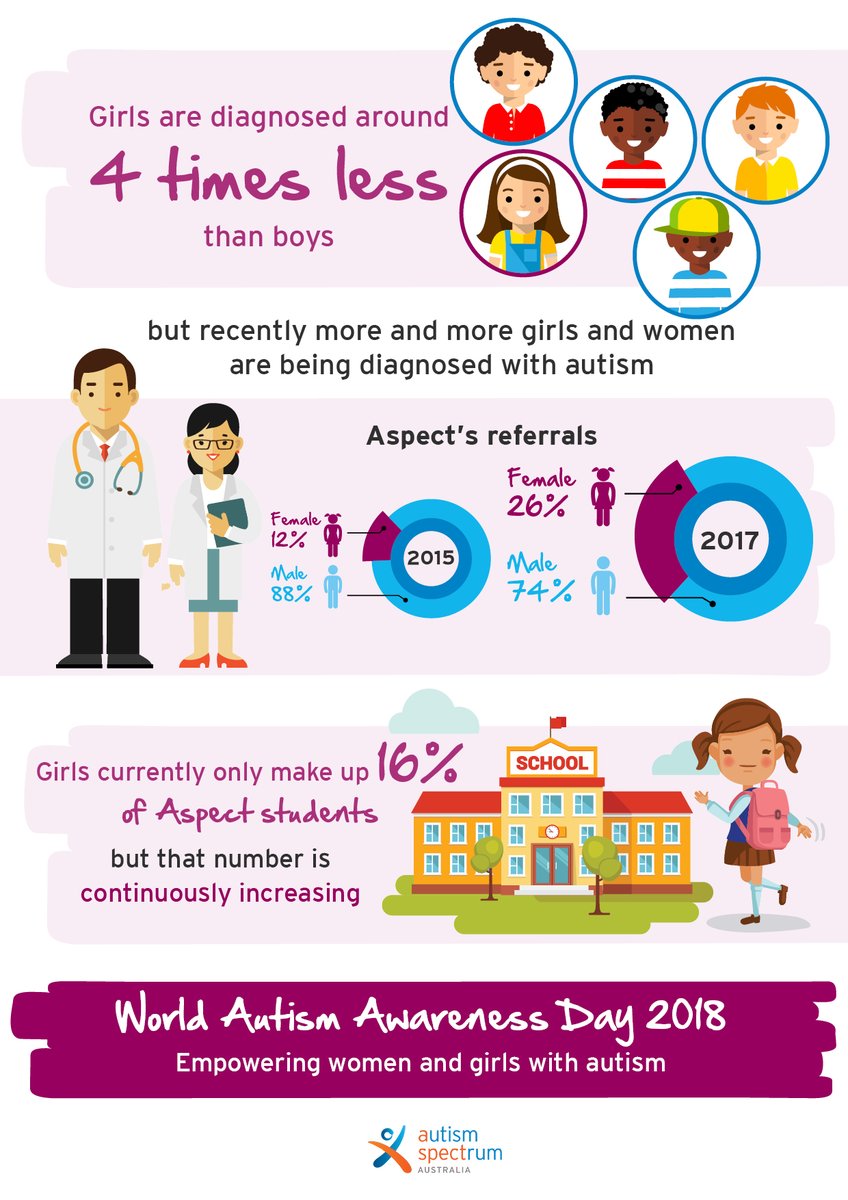
An estimated one in 100 people has Autism; that’s almost 230,000 Australians. Almost four times as many boys than girls are diagnosed with ASD.