
1.1.3 Program learning opportunities

All aspects of the program, including routines, are organised in ways that maximise opportunities for each child’s learning.

The big focus for this element is the two words ‘maximise’ and ‘learning’. With learning comes teaching and that is what this element wants from us as educators.

Firstly, let’s look at the routine and see if we are maximising the learning within all the routines that are conducted during the day.

Babies

Babies have their own routines and as they grow older you can start to form a Room Routine together. For example, meal times might include a child by themselves, or a few children. As they grow the room starts to eat as a group.

There are so many learning possibilities in the Room Routine and they become a part of the EYLF process of learning for young babies and children. For example,

Food service – get the children, including the very young children, to run it eg handing out bowls and cutlery, serving themselves, washing up. They love it.

Sleep rest area – prepare this area with the children.

Cleaning   – clean with the children using a roster for children’s jobs.

Gardening – garden with the children. My educators and children have done everything in my backyard, including recently laying new lawn and building climbing structures.

Recycling – eg children can help recycle material to use for art.

Toileting and nappy change –  this is the most valuable time you have with a child which allows warm nurturing relationships that build trust.

Cleaning time!
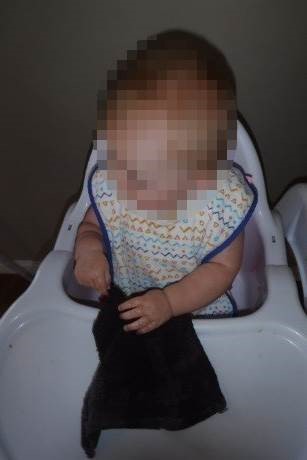
At morning tea time Harry and Lylah had fun cleaning their faces with washers. We have them clean up every time after their meals so they know the feel of the face washer. It’s also part of a routine that’s implemented every day to make their transition smooth as it can be. They had fun getting used to the face washers and cleaning their faces.  Courtney (educator) responded by talking to them and making them smile by clapping. Harry and Lylah would clap and laugh too.    Learning Outcome 1.1

Help with the cleaning

Today the children helped us clean the room. Hadlee helped Stacey wipe down the cupboard.  Sam provided Hadlee with a cleaning cloth so she could participate in cleaning the benches including the sides like Stacey showed her. Stacey actively supported Hadlee to learn hygiene practices during the daily routine.

Isabelle, Chelsea and Ivy helped Eliza wipe down the bookshelf. The girls climbed through the bookshelf to ensure all areas were clean as Eliza showed them how to wipe in big circles. Isabelle interacted with Ivy and Eliza by giggling with them and talking to them as she connected with them in a positive and happy way.

What are you doing well in relation to ‘maximising learning’ in the routine?

Where and how can you improve ‘maximising learning’ in the routine?

Exceeding Theme Core

All educators work collaboratively with the educational leader, and regularly engage with families and the community, to consistently make curriculum decisions, including the organisation of daily routines, which maximise learning and development outcomes for every child. All educators regularly reflect on changes to the program which would enhance learning outcomes, including through the organisation of daily routines.

Where is your practice compared to the above statement?

2.2.2 Incident and emergency management.

Plans to effectively manage incidents and emergencies are developed in consultation with relevant authorities, practised and implemented.

Go through the checklist and be honest so your Educational Leader and Nominated Supervisor know how to help you be the best.

E = Embedded, yes, I do that ALL the time.
K = We know we need to do that, but we don’t do
it all the time.
T = Please teach me how to do it or improve my understanding of why we need to do it.

Emergency Practices Edu 1
Facilities
Exit doors are always clear of obstructions/objects
Exit doors are unlocked when service is open
Rehearsals
Evacuation procedures are rehearsed at least once every three months on different days and at different times
Rehearsals for all potential emergencies (eg lockdown) are rehearsed at least once every three months on different days and at different times
Documentation
Incident, Injury, Trauma and Illness Records are completed for children that have suffered an injury or trauma during emergency
Practices in Emergency (Rehearsals)
Attendance records (children, staff and visitors) are collected and checked to ensure everyone is accounted for
All areas of service checked eg bathroom, toilet, cot room
The emergency kit is collected and contains everything required
The emergency kit is fully stocked
There is a charged mobile phone with credit
Educators contribute to evaluation of rehearsal

A lot of centres don’t understand they have to do a risk assessment for ALL potential emergencies or what those emergencies could be.

Please ensure you discuss and identify if these are appropriate for your room and service. Remember whole service emergency practice are required, but what happens if the emergency starts in your room?

  • Bushfire
  • Intruder
  • Grassfire
  • Building Fire
  • Severe Weather Event
  • River Flooding
  • Earthquake
  • Bomb/ Substance Threat
  • Pandemic
  • Hazardous Substance Release (Inside and Outside Facility Grounds)
  • Angry Parent Threatening or Abusing Educators
  • Child Meltdown
  • Child Leaving the Service by Themselves
  • Snake in the Room
  • Car smashing into service or playground trapping children
  • Educator on Drugs Having Psychotic Episode
  • Child brings hand gun to centre in bag and gets it out
  • Alien Invasion (just checking to see if you are reading).

Looking at your list of emergencies, how would you connect and learn from your local community? For example, Alice’s mum is an ambulance officer. She has assisted the educators thinking about different ways to deal with emergencies from her experience. Every visit from the emergency services to your centre gives you the opportunity to talk to and discuss how to deal with emergencies and this needs to be documented.

Document how you would connect to the families to learn more about dealing with emergencies.

________________________________________________

Exceeding Theme Core

Managers develop partnerships with key emergency service organisations and ensure emergency plans are practised regularly. All educators actively engage with families about their safety concerns, and critically reflect individually and as a team on emergency management practices, taking into account responses to past incidents and advice from recognised authorities, making identified changes to improve safety outcomes.

Where is your practice compared to the above statement?

_________________________________________________


2.2.1 Supervision

At all times, reasonable precautions and adequate supervision ensure children are protected from harm and hazard

Go through the checklist and be honest so your Educational Leader and Nominated Supervisor know how to help you be the best.

E = Embedded, yes, I do that ALL the time.
K = We know we need to do that, but we don’t do
it all the time.
T = Please teach me how to do it or improve my understanding of why we need to do it.

Edu 1
Supervision Practices
Are children effectively supervised at all times eg
  • in all areas they can access?
  • on the change table and any other places that present a risk?
  • while sleeping (especially babies and toddlers)?
  • at mealtimes or when eating and drinking?
  • all children within sight and/or hearing of educators at all times?
Do you focus completely on supervising children eg you’re not supervising children while also cleaning, programming etc?
Supervision and Communication
Do you communicate effectively with team members about supervision of children eg I’m going here, Darcy’s up there?
Do you share supervision planning/arrangements for indoor and outdoor areas with relief staff?
Supervision and Environment
Do you arrange equipment, furniture and activities to ensure effective supervision?
Do you arrange equipment and furniture so children can access private and quiet spaces while being supervised unobtrusively?
Do you follow the outdoor supervision diagram showing where you should stand for effective supervision (if relevant eg there are hard to see areas)?
Child Protection
Are volunteers and students always visible to other educators when they are with the children?
Do you ensure students are never left with the sole supervision of children, indoors or outdoors?
Do you ensure individuals/groups of children are never taken into rooms that can be locked or areas where they’re not visible to others?
Staffing
Are educator child ratios always met?

Exceeding Theme Core

All educators reflect upon their practice and families’ concerns to ensure children’s safety is always met. They do this by being consistently attuned to children and applying risk assessment. Educators can confidently explain and adjust the environment, program, practice, policies and procedures when required.

Where is your practice compared to the above statement?

____________________________________________________
____________________________________________________
____________________________________________________
____________________________________________________
____________________________________________________
____________________________________________________
____________________________________________________

2.1.3 Healthy lifestyle

Healthy eating and physical activity are promoted and appropriate for each child.

Healthy food and the five food groups

You want to provide healthy, nutritious food for your children, but what are the latest healthy eating guidelines for children?

Just like adults, children should eat a variety of foods from the five food groups every day

  1. Vegetables (lots of different colours) and legumes
  2. Fruit
  3. Grain foods like bread, cereal, rice, pasta, noodles (preferably wholegrain and/or high fibre)
  4. Meat (lean) and poultry, fish, eggs, tofu, nuts and seeds
  5. Dairy foods (milk, yoghurt, cheese)

While children aged 2 and over should eat or drink mostly reduced fat dairy foods, reduced fat milk (or food) is not suitable for children under 2.

And just like adults, children should avoid foods that are high in saturated fat or have added salt or sugar. This means foods like  biscuits, cakes, ice-cream, lollies, pies, takeaway burgers, chips and fried foods, potato chips, sausages, processed meats (eg frankfurts and devon), cordial, soft drink and sports drinks should only be consumed on special occasions.

Children should also drink plenty of water. Infants up to 1 year old should have breast milk or formula as their main drink (preferably breast milk). Soy and goat-milk based formulas are not recommended.

Around 6 months of age start infants on solid foods including iron fortified cereals, pureed meat and poultry, cooked plain tofu and legumes/beans. Foods can be introduced in any order provided the texture is suitable for baby’s stage of development. Cow’s milk products including yoghurt, cheese and custard may also be given.

Shopping and Cooking

So what do you need to be aware of when cooking or buying food?

  • Try not to add salt to food you cook or put it on the table
  • Use spices, herbs and lemon to flavour food instead of salt/sugar
  • Use polyunsaturated oils (eg olive oil) rather than saturated fats like palm oil, butter, cream, coconut oil, copha, lard
  • Trim fat from meat
  • Avoid frying and steam, bake, poach or grill instead
  • Check product labels for sugar, fat and salt (sodium) levels
  • Remember that products marked as ‘light’ may not necessarily be more healthy. They may have higher levels of sugar or bad fats, and contain similar calories as the normal product
  • Be careful you don’t end up buying a high sugar breakfast cereal which are often marketed as healthy options

Source: Eat for Health Federal GovernmentAustralian Dietary Guidelines 2013Infant Feeding Guidelines 2012

Why is physical activity good for children?There’s increasing research which shows a link between a lack of physical activity and illnesses like cancer, diabetes and heart disease. So it’s important to develop healthy habits in children to help protect them against disease in later life.There’s also growing evidence that physical activity helps children improve the way they process information, concentrate and remember what they’ve learned.

That’s good news for most children who naturally love to explore and run around.

Of course when children play they also learn about how their world works and develop the social skills needed to interact harmoniously with others.

Floor based play is best for babies who can’t walk yet eg tummy time. It’s important that the environment inside and outside is stimulating and encourages babies to explore. There should be exciting spaces (eg tunnel), sounds (eg things to bang) and textures. Educators can encourage greater activity and learning when they interact with babies, mirror their actions and talk with them.

The Federal Government recommends at least 3 hours of physical activity every day for children aged 1-5 years. It’s important to remember that everyday routines and activities contribute to this time.

Activities can include things like dancing to music, ‘make believe’ games, riding bikes, kicking balls, moving like an animal, yoga, sandpit play, treasure hunts, gardening (eg watering and weeding), water play and walking instead of riding in a stroller.

Exceeding Theme Core

All educators consistently promote healthy eating and physical activity in line with current recognised guidelines which they can discuss, actively engage with families about their child’s healthy eating and physical activity needs, strengths and preferences and include these in the educational program, and build partnerships with the community  to enhance children’s health and activity outcomes. All educators regularly reflect on opportunities to enhance health and activity outcomes, and make identified changes..

Where is your practice compared to the above statement?

____________________________________________________
____________________________________________________
____________________________________________________
____________________________________________________
____________________________________________________
____________________________________________________
____________________________________________________
____________________________________________________


2.1.2 Health Practices and Procedures

Effective illness and injury management and hygiene practices are promoted and implemented.

Go through the checklist and be honest so your Educational Leader and Nominated Supervisor know how to help you be the best.

E = Embedded, yes, I do that ALL the time.
K = We know we need to do that, but we don’t do
it all the time.
T = Please teach me how to do it or improve my understanding of why we need to do it.

Bathroom Safety and Hygiene - Cleaning Procedures Edu
Is soiled clothing/nappies firmly sealed in containers and inaccessible to children at all times?
Is the bathroom cleaned at least once a day?
Is the bathroom cleaned as soon as it looks/smells dirty or there are spills?
Is the toilet thoroughly cleaned eg around the base, under the lid?
Is the bathroom cleaned with detergent and water?
Is the bathroom disinfected if there are spills of blood, urine, poo or vomit which are known/suspected to be infectious?
Can sponges/cloths used be easily identified because they’re a specific colour eg orange for the bathroom?
Are gloves worn to clean the bathroom?
Are these gloves only used to clean the bathroom?
Are cleaning products inaccessible to children?
Are plastic bags inaccessible to children?
Are mops and buckets inaccessible to children?
Are drawers and cupboards closed immediately after use?
Do all staff clean and dry equipment after cleaning?
Do all staff wash their hands as soon as they finish cleaning?
The Bathroom - General
Supervision
Are children supervised AT ALL TIMES in the bathroom?
Display
Are toileting and nappy change procedures displayed?
Are hand washing procedures displayed?
Are handwashing procedures with pictures displayed for children to follow?
Is the cleaning schedule displayed
Is the cleaning schedule signed off by the person who cleans the bathroom?

Case Studies – Refer to Staying Healthy 5th Edition before talking. 

https://www.nhmrc.gov.au/_files_nhmrc/publications/attachments/ch55_staying_healthy_5th_edition_150602.pdf

All educators refer to Staying Healthy before making a decision about a child’s illness or their own illness. This process has taken a long time to implement in the centre because a cultural change needed to occur through reflection and a better understanding of where and how Staying Healthy 5th Edition was developed. Firstly, it was decided to not to discuss any child’s illness unless we had referred to Staying Healthy. Secondly room leaders and more importantly Nominated Supervisors had to push back and stop ALL conversations about illness until educators referred to Staying Healthy. This was required as far too much time was being wasted by getting many people involved to talk about a child’s illness. The benefits of implementing this practice has seen less wasting of other educators’ time talking about illness, giving educators confidence to refer parents to Staying Healthy when it comes to children’s illness, which in turn has seen parents keeping children at home when their child is contagious and overall better hygiene practices in the centre, especially when a preventable disease enters the centre.

Case Study – Injury management by engaging children with the risk benefit analysis process

 Reflecting upon the risk children are exposed to in the play area it was decided adults were not the best people to say what was risky and what was not. Educators and children developed lessons and discussions to identify what was dangerous and how to play safely. The children developed their own safety rules and checklist to monitor the playground as well as an end of play season reflection about what worked well in the playground and what could be improved upon (see Learning story 18/5/19).

We need to be sure your service reflects the unique geographical, cultural and community context and draw upon the voices, priorities and strengths of the children and families.

Case study – New family required a little help

Do you remember Maslow’s hierarchy of needs? He said before we can make close personal relationships or learn we need to feel full, warm, rested and safe. It’s the same for families. Before they care about who a child’s friends are, or what they are learning, they want their child to be safe and their basic needs met. Hygiene is one very important part of children’s safety. Poor hygiene practices can lead to illness, including infectious disease and isolation.

A family arrived at the centre as a new enrolment because another centre previously kicked them out because of the child’s poor hygiene. We didn’t realise this at the time, but it was later disclosed to us by the family.

The family had fallen on hard times, the parents were separating, the mother had lost her job and the children arrived dirty, neglected and hungry. The educators were required to report the family to child protection. This process initiated outside help and the family was given a case worker from an agency and support started which included the agency working with the centre to provide the support.

It was discovered the family was living without electricity, therefore there was no hot water to bathe with. The centre very discretely showered the children when they arrived and provided fresh clean clothes and nappies for the baby.

The centre discussed with the mother their food situation. It was discovered that they had difficulty scraping enough money together for food. The centre’s chef contacted Oz Harvest and discussed how they retrieved food from restaurant to give to the homeless. The chef discussed with the Nominated Supervisor how they could help and set up a food plan. Leftover food was kept for the family after it had been decided by the chef the food would meet the food hygiene standards and safety rules.

The centre worked closely with the agency and they were able to provide vouchers for food and electricity to the family.

When children are dirty and smell, other children won’t play with them. When children are hungry they don’t develop and can’t concentrate on learning. The NQS is focused upon supporting families with the help of the whole community to create the best outcomes for children. The centre that kicked out the family were not meeting the guiding principles of the NQS or coming anywhere near exceeding theme 3 Families and Community.  It is easy to remove the hard families and children, but how do you grow personally and professionally as an educator and person?

Remember, we need evidence written into the QIP showing how we work with families across ALL of the 7 quality areas. When we dig a little deeper the evidence is all there, we may have not thought about all the evidence we have. Think about all the ways you have worked with families and communities under the three strands of element 2.1.2

  1. Illness management and hygiene practices
    _____________________________________


  1. Injury management
    _____________________________________


  1. Hygiene practices
    _____________________________________

Exceeding Theme Core

All educators consistently implement effective hygiene practices, and manage and support children’s health and medical needs in line with recognised best practice which they can discuss. All educators reflect on health and illness-related incidents, and help to implement identified changes. All educators build partnerships with families and community members/organisations to enhance children’s health outcomes.

Where is your practice compared to the above statement?

_____________________________________________________
_____________________________________________________
_____________________________________________________
_____________________________________________________
_____________________________________________________
_____________________________________________________
_____________________________________________________


2.1.1 Wellbeing and comfort

Each child’s wellbeing and comfort is provided for, including appropriate opportunities to meet each child’s need for sleep, rest and relaxation.

Supporting rest and sleep in early childhood settings for toddlers

Daytime rest and sleep is an important feature of an early childhood centre routine and significant for children’s health, behavioural regulation, and learning. To create an environment for children to rest and sleep in there are four keys things to consider:

  1. scheduling
  2. routines
  3. environmental stimuli
  4. emotional climate
  1. Sleep scheduling

Sleep scheduling includes the consistency and duration of sleep and respect for the child’s sleep duration. We need to be aware of a child’s sleep schedule at home because it helps us to establish positive sleep and rest practices at the centre. Another important point is to know when a child has had their sleep schedule interrupted because we all know how a child’s behaviour can be linked to a lack of sleep.

We can assist the parents by teaching them the importance of regular bedtime, rise time, and allowing children to sleep to their needs. There is a link between sleep scheduling and behaviour, for example, irregular bed and rise times might disturb the circadian rhythm (body clock). When exposed to irregular sleep scheduling, they may experience tiredness and adverse effects on the child’s behaviour and learning.

What do we do well in centres?

Educators maintained sleep and rest routines, told stories, and offered children an opportunity to play with a soft toy or to read a book on their bed for a period of time before the expectation of sleep. They engaged in routines that prepared children for sleep time.

What do DON’T DO WELL in centres?

Educators were expecting children to have lengthy periods of sleep time, often up to 2 hours or more during which nonsleeping children were not permitted access to alternative activities. These rooms were characterised by a lack of pre-sleep routines to decrease arousal.

How can you improve your sleep and rest schedule at your centre?

  1. Sleep routines

Routines are activities that are associated with the start of sleep time and serve to reduce stress and increase predictability for children. Such routines lead to a decrease in arousal levels and result in a shorter period in getting to sleep and an overall improved quality of sleep.

Tips for parents. For night bedtime routines to be most successful, they should start before putting the child to bed and include a pre-sleep activity that is low in stimulation and signals transition to sleep. The worst things parents can do before bed are boisterous or mentally exciting activities that arouse the child and heighten physical and emotional states. The above works well in ECE setting too.  For daytime rest and sleep we need use consistent routines that reduce arousal states and signal the approach of rest and sleep time.

As a team create a list of pre-sleep routines that are low in stimulation and signals transition to sleep. Don’t forget to share the successful ideas with parents.

They will love you for it.

___________________________________________

Now list all the things you have seen or accidentally done that is the opposite of a pre-sleep routine and boisterous or mentally exciting activities.

__________________________________________

  1. Stimulus in the sleep environment

Activities that occur within the rest and sleep environment are important to look at and evaluate as they influence rest, sleep and the quality of sleep in both positive and negative ways. Reading a book has a positive effect on sleep, but activities involving screen-based media, for example TV, iPads or computer screens have a negative effect. Many research studies have shown the presence of screen technology reduces sleep duration and quality. Screen-based technologies heighten emotional, cognitive, and physiological arousal by increasing levels of environmental light and sound, and exposure to emotional content. It’s good to remind parents of this as well as the negative effect of having screens/iPads etc in the bedroom. Put simply, beds are for sleeping in and we don’t want to learn beds are for stimulating non-sleep screen activities. Sleep clinics and sleep health practitioners are worried about this trend in modern life.

Evaluate your sleep environment. Are you reducing the behaviours and practices to slow children down and take their emotional and physical states down? How can you improve?

_________________________________________________
_________________________________________________
_________________________________________________
_________________________________________________
_________________________________________________
_________________________________________________
_________________________________________________

  1. Emotional climate

Adults behaviour effect the arousal levels in the sleep environment and set the emotional tone of the room. A calm emotional climate can facilitate sleep, whereas an environment that is threatening or punitive (“on your bed” said in a harsh voice) may limit sleep and may become associated with sleep disorder.

Research showed centres scheduling prolonged sleep times without alternative activity for nonsleepers were found to have lower emotional climate, whereas those with more flexible timing and provision of quiet activities for nonsleepers had higher emotional climate. Disruption and distress of children within ECEC rooms have been reported to occur alongside coercive and punitive methods to keep children in their beds and can disrupt the sleep of other children in the room.

In contrast, positive behaviours such as gentle and respectful communication within classrooms have been observed to provide a calm and emotionally supportive environment. The best environments for the support of children’s sleep are: characterized by appropriate scheduling, the provision of pre-sleep routines that signal the commencement of the sleep period; presence of activities that reduce stimulation and remove arousing activities; and educator’s practice that maintains calm and are free of threatening or punitive behaviours.

What are the alternatives for non-sleepers?

Exceeding Theme Core

All educators consistently meet each child’s needs for sleep, rest and relaxation individually and in groups, taking into consideration information from children, families and the community. All educators can explain how children’s changing activity needs are considered in the program design and the guidelines that underpin their practice.

Where is your practice compared to the above statement?

_____________________________________________________
_____________________________________________________
_____________________________________________________
_____________________________________________________
_____________________________________________________
_____________________________________________________
_____________________________________________________
_____________________________________________________


1.3.3 Information for families

Families are informed about the program and their child’s progress.

Case study – Showing how writing curriculum documentation can easily cover NQS Element 1.3.3

NQS Guide Requirements Example of curriculum from pre-schoolers 4 -5 years From the EYLF Learning Outcomes
Below I have used the NQS guide to show how this learning example meets what the Element 1.3.3 requires.

Show how educators have supported and guided children.

Ensure information is provided that documents children’s participation and their progress against the approved framework’s learning outcomes.

Educators share ‘point-in-time’ summaries about each child’s progress towards the learning outcomes

Show how educators have supported and guided children.

Show families their child’s strengths, abilities and knowledge.
Re-visiting the Water Cycle (Tara)
Today with Miss Tara, Lucinda and Marlee set up an experiment to illustrate how trees collect and expel water. Miss Tara explained; “we are going to put the leaves inside the bag to see if it collects water.”

Marlee and Lucinda began pulling the leaves off the tree and putting them in the bag. “Instead of putting the leaves in the bag that way, we are actually going to leave the leaves on the tree and tie the bag around the branch!” Miss Tara clarified. Once the girls understood how we would set up the experiment we worked together to place the bag over the branch, making sure we got as many leaves in as possible and tied it off, so it was nice and tight.

“How do you think water might get into the bag?” Miss Tara asked Lucinda and Marlee.
“From the rain”. Marlee predicted.
“It might but we have tied off the bag so hopefully no rain gets in there” Miss Tara replied. To build on the knowledge and understandings that Lucinda and Marlee bring Miss Tara reminded the girls what they learned last year about the water cycle. (L/O 1.3)
“What happens when it rains, where does the rain go?” Miss Tara asked.
“On the ground” Marlee replied.
“And what do trees have under the ground that suck up the rain?” Miss Tara questioned.
“Wood?” questioned Lucinda. Miss Tara continued, “Yes, they are called ‘roots’. The water goes into the roots and travels up the tree until it reaches the?...”
“Leaves!” both girls replied.
“So, how do you think water might get into our bag?” Miss Tara asked again.
“From when it rains, and it goes into the ground and gets to the leaves and comes out the leaves”Lucinda replied.

Both Marlee and Lucinda displayed an ability to transfer knowledge from one context to another by applying their existing knowledge about the water-cycle to the experiment we are conducting. (L/O 4.3) Both Lucinda and Marlee have been checking the bag regularly to see if any water has built up. Miss Tara suggested we leave the bag overnight and check it tomorrow to see the results of our experiment.
Look at the EYLF Learning Outcomes and below you will see two boxes.

The green type represents the left-hand side of the EYLF outcomes indicators showing what children know, can do and understand.

The Blue type comes from the right hand side and represents what the educator can do to extend and promote the learning outcomes.

Exceeding Theme Core
All educators consistently engage meaningfully with children’s families in culturally sensitive ways that meet each family’s needs to inform them about the educational program and their child’s participation, learning and development, and regularly reflect, individually and with each other, on whether families can understand and easily access the information.
Where is your practice compared to the above statement?

__________________________________________________
__________________________________________________
__________________________________________________
__________________________________________________
__________________________________________________
__________________________________________________
__________________________________________________
__________________________________________________

1.3.2 Critical reflection

Critical reflection on children’s learning and development, both as individuals and in groups, drives program planning and implementation.

We need to identify what it is we are reflecting upon before proceeding. The element says critical reflection drives the program, but what exactly is a program. We need to interchange the word program with curriculum and use the description in the EYLF.

Curriculum:
in the early childhood setting curriculum means ‘all the interactions, experiences, activities, routines and events, planned and unplanned, that occur in an environment designed to foster children’s learning and development’.

EYLF Page 9

Let’s pull this apart into individual words and add the critical reflection to see what we need to do to drive the program’s planning and implementation.

  • Critically reflect upon our interactions to drive program planning and implementation
  • Critically reflect upon experiences, to drive program planning and implementation
  • Critically reflect upon activities, to drive program planning and implementation
  • Critically reflect upon routines to drive program planning and implementation
  • Critically reflect upon planned events to drive program planning and implementation
  • Critically reflect upon unplanned events to drive program planning and implementation
  • Critically reflect upon our environment to drive program planning and implementation   

 What is a critical reflection?

The good news is most people are reflecting most of the time. You probably never write down all your reflections or thoughts about what you do as a critical reflection or know it is a reflective process.

The EYLF says ‘Critical reflection involves closely examining all aspects of events and experiences from different perspectives. Educators often frame their reflective practice within a set of overarching questions, developing more specific questions for particular areas of enquiry.’

To create a ‘different perspective’ we need to imagine ourselves looking at things through different people’s eyes.

What do you see if you look from a child’s perspective (critical reflection) and how has that driven program planning and implementation?

What do you see if you look from a parent’s perspective (critical reflection) and how has that driven program planning and implementation?

What do you see if you look from another educator’s perspective (critical reflection) and how has that driven program planning and implementation?

What do you see if you look from a child’s perspective (critical reflection) and how has that driven program planning and implementation?

Critically reflect upon our interactions from a child’s perspective. What do you see?

___________________________________________________________

How has this driven program planning and implementation? 

___________________________________________________________

What do you see if you look from a parent’s perspective (critical reflection) and how has that driven program planning and implementation?

 Critically reflect upon our unplanned events from a parent’s perspective. What do you see?

________________________________________________________________

How has this driven program planning and implementation? 

________________________________________________________________

Exceeding Theme Core
All educators regularly engage in planned and spontaneous critical reflection on children’s learning and development, as individuals and in groups, and make identified changes to the design and implementation of the program. Critical reflection includes social justice and equity considerations, theoretical and philosophical influence, and how well all educators include the views and input of children, families and the community.

Where is your practice compared to the above statement?

____________________________________________________
____________________________________________________
____________________________________________________
____________________________________________________
____________________________________________________
____________________________________________________
____________________________________________________


1.2.3 Child directed learning

Each child’s agency is promoted, enabling them to make choices and decisions that influence events and their world

Go through the checklist and be honest so your Educational Leader and Nominated Supervisor know how to help you be the best.

E = Embedded, yes, I do that ALL the time.
K = We know we need to do that, but we don’t do
it all the time.
T = Please teach me how to do it or improve my understanding of why we need to do it.

Child Directed Learning Edu 1
Do you arrange play experiences, routines and the physical environment so children have a range of opportunities to make choices about what they will do and how they will do it? Can you see this in the curriculum?
Do you encourage children to make choices and decisions? Does the curriculum show this?
Do you acknowledge children as capable and competent, and encouraging them to act autonomously? Does the curriculum show this?
Do you provide children with strategies to make informed choices about their behaviours? Does the curriculum show this?
Do you incorporate children’s ideas and suggestions in planning? Does the curriculum show this?
Do you provide encouragement and display enthusiasm for children’s attempts to gain new skills and knowledge? Does the curriculum show this?
Do you embrace, and support play experiences initiated by children, motivating children to persist and extend their learning? Does the curriculum show this?
Do you notice and listen carefully to children’s concerns and discuss diverse perspectives on issues of inclusion and exclusion, and unfair behaviour? Does the curriculum show this?
Do you encourage children to direct their own play and leisure experiences with their peers? Does the curriculum show this?
Does the curriculum show children openly expressing their feelings and ideas in their interactions with others?
Does the curriculum show children initiating play?
Does the curriculum show children beginning to display understanding and willingness to negotiate and share with others?
Does the curriculum show children showing leadership, making decisions and following directions given by other children?
Does the curriculum show children actively participating in decisions that affect them, including their learning and leisure/rest?
Does the curriculum show children being supported to assess and manage risk?

This element is connected directly to children having the right to provisions, protection and participation under the United Nation’s Rights of the Child. For example:

Article 12
Children have the right to say what they think should happen when adults are making decisions that affect them, and to have their opinions taken into account.

Article 29
Your education should help children use and develop their talents and abilities. It should help children learn to live peacefully, protect the environment and respect other people.

Article 31
Children have the right to play and rest.

Let’s look at Babies – Milo’s first day 8 weeks old

This morning Tommy’s Turtles welcomed Milo into the room for his first big day. Milo has been forming relationships with his educators by looking and smiling at them. Milo used non-verbal cues and cuddled in to his educators. Throughout the day the Nursery staff have been acknowledging and responding to Milo’s cues and signals and following his home routine. When Milo showed signs of distress and agitation he was communicating his needs, which Natasha, Karen and Haley were able to meet with a cuddle, a bottle or sleep.  Milo showed how he could freely express his emotions and be involved in meaningful interactions with his educators to have his needs met and have control of his word.

Natasha, Karen and Haley are looking forward to spending more time with Milo throughout the week as we work to further build a bond with Milo and his family.

See how Natasha, Karen and Haley are meeting the outcome 1.2.3 Child directed learning – each child’s agency is promoted, enabling them to make choices and decisions that influence events and their world. When working with babies we need to be tuned into their signals so we can meet their needs. If not the baby will tend to cry.

Imagine
Xavier and Bryleigh have been confidently sharing the formula tins this morning as they used their imaginations to explore their environment. Xavier first sourced three tins from the recycled basket before Bryleigh arrived. Haley was sitting with Xavier, asking “what can we do with these Xavier?” Xavier began stacking the tins on top of one another to create a tower. As Xavier stacked the tins, he explored a new challenge and discovery, finding that stacking the tins wasn’t as easy as it seemed. Xavier placed a tin on top of one before stacking another, using both hands to ensure stability. During this process, Haley displayed her delight, encouragement and enthusiasm for Xavier’s attempts and successes as he showed his determination and persistence.

Bryleigh arrived later to see the tins lying on the floor before she crawled towards them. Using her own imagination and expressing her creativity through play, Bryleigh used the palm of her hand to hit the top of the tin, creating a musical sound. “Oh, you’re using the tins as drums” explained Haley. “Xavier was just using the same tins to stack”. Xavier approached Haley and Bryleigh in order to contribute to the experience Bryleigh had initiated.

Providing Xavier and Bryleigh with a wider range of flexible and open-ended experiences within their environment will allow them both to further build on their imagination skills. Perhaps we could source some loose parts from our homes to explore with?
Haley

Exceeding Theme Core

All educators consistently and respectfully support children to make choices and decisions throughout the day, and incorporate children’s ideas and views into the program to promote and extend learning. All educators regularly reflect, individually and with each other, on how they ensure the agency of every child at the service.

Where is your practice compared to the above statement?

__________________________________________________
__________________________________________________
__________________________________________________
__________________________________________________
__________________________________________________
__________________________________________________
__________________________________________________
__________________________________________________


1.2.2 Responsive teaching and scaffolding

Educators respond to children’s ideas and play and extend children’s learning through open-ended questions, interactions and feedback.

Go through the checklist and be honest so your Educational Leader and Nominated Supervisor know how to help you be the best.

E = Embedded, yes, I do that ALL the time.
K = We know we need to do that, but we don’t do
it all the time.
T = Please teach me how to do it or improve my understanding of why we need to do it.

Teaching Practices Edu 1
Do you let children lead the development of the curriculum?
Are you flexible in planning the curriculum ie don’t plan weeks or months in advance or have pre-determined themes?
Do you follow children’s learning preferences eg don’t force children to be involved in groups or activities (like formal structured group times) that don’t interest them
Are you flexible when it comes to routines where possible, giving children long periods of unhurried time?
Do you use intentional teaching practices whenever opportunities arise, including during routines, not just at set times like group time?
Do you reflect critically on activities, children’s learning and your teaching practices, looking at events from the viewpoint of children, families, colleagues and the community?
Do you change your practices as a result of your critical reflections?
Do you have conversations with children of all ages to affirm their identity and their place in their community?
Do you promote activities which encourage children to interact and learn for each other?
Do you identify what each child knows, can do and understands?
Do you extend each child’s learning based on what they know, can do and understand?
Does your documentation clearly show what children know and what you have done to extend learning?
Can families understand the documentation?
Do you participate in children’s imaginary play while allowing children to direct the drama?
Do you act on opportunities to have sustained interactions and conversations with a child or children eg while changing nappies, during meals, during play?
Do you base learning around relationships that you have with children, and that they have with their families and community, rather than relying on resources and equipment?
Do you actively seek to find out more about children’s everyday lives eg through conversations with their families?
Do you use information gained about children from their families and enrolment information to plan the Curriculum?
Do you include room routines as opportunities for learning?
Do you make sure your own beliefs and values about what children can do don’t limit their learning opportunities?

Case Study – Farm Animal Wall
Karen placed different farm animals on the wall before inviting the children over to explore relationships with living things. “These animals live on a farm” Karen explained. As the children pointed to the different animals Karen named them. “This is a sheep, dog, a pig, a cow, a horse, a chicken and a duck”. The children watched and listened as Karen continued to discuss the different features and colours of the animals. “There is a pink pig, a black and white cow and dog, a white duck and sheep, a brown chicken.

Karen modelled language and encouraged the children to express themselves through their own interpretation of language by pointing to the animals and making the sounds of each animal. “A cow goes moo, a dog goes woof, a sheep goes baa.” Karen repeated the sounds, so the children become familiar with which sound belonged to each animal.  cow and dog, a white duck and sheep, a brown chicken.
Karen modelled language and encouraged the children to express themselves through their own interpretation of language by pointing to the animals and making the sounds of each animal. “A cow goes moo, a dog goes woof, a sheep goes baa.” Karen repeated the sound’s, so the children become familiar with which sound belonged to each animal.
Learning Outcomes 2.4 & 5.1
Karen

Measurement

Continuing from yesterday, we discussed other forms of measurement. We used a tape measure to see the length of the table then we measured the width. Cherie told Jadzia, Churchill, Ivy, Eva, Zayne and Havana we would need to know these measurements if we were making or buying a tablecloth. Cherie said the size of the object we are measuring determines if we use a ruler or a tape measure. Zayne got a dinosaur to measure. Cherie questioned with, “Should we measure it with the small ruler or the long retractable tape measure?” Zayne said, “this ruler.” Jadzia loudly declared “No, this one,” handing the tape measure to Zayne. Ivy collected a skirting board that was in the room and Cherie asked what we should measure it with. Ivy picked the long retractable tape measure and stretched it out with the help of Nella. Cherie demonstrated how we look at the end of the object and notice what number it is next too. Cherie said each unit of length is given a number. Ivy softly replied “1,2 and 3. It’s 2.” Cherie recognised mathematical understandings that children bring to learning and builds on these in ways that are relevant to each child. Cherie praised Ivy’s knowledge and responded the units go up like counting. Ivy applies her mathematical knowledge to daily activities and makes predictions. LO 4.2 The children learnt how to stretch out a tape measure and know that units of measurement go up like counting. Eva stretched out the tape measure to the length of the dinosaur and looked up at Cherie saying “Five.”

Case Study –

Educator Jane was trying to run a group time and became very frustrated when the children jumped up and ran over to the window in their classroom as a huge truck with a digger appeared in the centre’s car park. Jane asked her team member for assistance by bringing the children back to the mat, so she could finish the book. Behaviour problems followed.

Exceeding Theme Core

All educators consistently and respectfully respond to each child’s ideas and play, for example through open-ended questions and feedback, to extend each child’s participation, learning and development. All educators consistently draw on families’ or communities’ understanding of each child’s strengths, ideas, culture and interests to extend their learning and development, and regularly reflect, individually and with each other, on their educational practice.

Where is your practice compared to the above statement?

__________________________________________________
__________________________________________________
__________________________________________________
__________________________________________________
__________________________________________________
__________________________________________________
__________________________________________________