
Health problems should also be considered

While we may suspect or know a child is on the spectrum, we should always make sure the child is not affected by any underlying health problems.

Arrange a meeting with all relevant educators and staff to discuss the possible causes of the behaviour.

First – Consider physical/medical issues eg

  • Hearing – can child hear properly, are child’s ears infected, inflamed, blocked
  • Throat – is it inflamed/constricted
  • Nose – can child breathe properly, are sinuses infected/inflamed
  • Eyes – can child see properly, is there conjunctivitis etc
  • Bottom-does child need medical attention for nappy rash
  • Bowel – is child constipated – this can cause pain and fear of going to the toilet
  • Scratching – does child have nits/lice, allergies which need treating
  • Eczema – is there a rash causing pain, scratching and discomfort
  • Asthma – are there breathing issues causing stress for the child

Second– Consider environmental issues eg

  • Diet – what is child eating, is there too much sugar, is at served at the wrong times, is it contributing to child’s allergies, is child eating enough, has child had breakfast
  • Sleep – is child sleeping at night, is child being forced to sleep at service instead of rest/quiet activities.

Looking at health issues in practice

The first thing educators do is look for out of the ordinary explanations, like illness, new baby at home, grandparents visiting etc. If these events are short episodes, educators shouldn’t have concerns and will work together to support the child through the change.

However, if there is an untreated illness like an ear infection, educators will see an increase in behaviours displayed over a period oftime.. An ear infection is a good example because some children can cover up the typical sore ear or sometimes we don’t see them pulling at the ear which could indicate an infection.
Who may be involved in supporting a child on the Autism spectrum?

A family’s role in raising a child with Autismcan be endless, and includes advocating for their child and trying to find the best possible care, to supporting their child when they try tocommunicate their feelings and cope with situations.Families can understand the causes of the behaviour and may develop corresponding solutions and strategies. But families alone cannot guide and support a child with Autism. There are many organisations and professionals within the community that support children and families, and create opportunities for children to be involved in activities and events. Some of the professionals include:

Educators –provide high quality education where every child is viewed as a capable learner.

Inclusion supportservices eg KU–The Inclusion Support Programme helps  services include children with additional needs alongside their peers, by providing tailored inclusion advice and support from Inclusion Agencies and access to specialist equipment and funding to support more challenging inclusion barriers where required.

Paediatricians–Will make a diagnosis of Autism made on the basis of careful observations of a child’s behaviour.

Psychologists ‘psychs’–Support children who are finding it hard to manage their emotions by introducing new thinking,and teaching new skills and behaviours. This can be done in groups or by themselves. They also guide families on how best to support their child.

Speech Pathologists/ ‘speechies’ – Support a child’ to communicate. They can find out if a child is learning how to talk at the same rate as other children and help if there are problems with speech sounds/ words or the way they talk to different people.

Local area coordinator National Disability Insurance Scheme (NDIS)– Help participants and families to get the support they need.

Occupational Therapists/ ‘OTs’–Help children cope with or understand the environment eg fussy eaters, loud sounds. They can also help with things like toilet training, sleeping, getting dressed, playing with others, learning gross and fine motor skills like writing, cutting, climbing and jumping.

Social Workers– Help people cope with problems and support them in difficult times. They can provide counselling and emotional support, as well as practical support eg accessing social services.

Audiologists –Are specialists who can diagnose many types of hearing problems, and improve hearing for people of all ages.

Physiotherapists/’physios’– Help people of all ages to move and function better.


Children with Autism at your service

We are all different. Whether adult or child, we all look different, like and dislike different things, have our own unique personality and interact with others and our world in different ways. How boring would it be if we were all exactly the same!

Some of us need more help than others to get through life. ‘Additional needs’ means just that- needing additional help. However, we should all be valued and respected equally, whether we need a lot of help or not.

Some children with additional needs enter a children’s service with a professional diagnosis of Autism. They may already have an inclusion support programme in place from a previous service. Other children may have additional needs that aren’t yet diagnosed. Whether they have a diagnosis or not, each child requires targeted support to learn and develop based on their specific needs. Part of meeting all children’s needs is to listen and watch each child as they communicate with us, verbally or non-verbally, and to make sure we really see and hear what each child is trying to tell us.

Our role as educators is to safeguard each child’s wellbeing, find out and celebrate what each child knows, can do and understands, and promote each child’s learning and development in a way that best meets their needs. When supporting a child with Autism we do this in partnerships with parents and other professionals supporting the child.  Developing strong professional relationships where we each share the experiences we see and hear.  These relationships are built on trust. Most parents will only fully confide in you when they feel completely safe and confident in your professionalism. Parents’ knowledge of their child is an essential part of the intervention process and helps the early learning service build a holistic picture of the child. Remember too – a happy parent often leads to a more settled child.

With parents’ approval we work closely as a team with other professionals to achieve the best outcomes for children.

If developmentally appropriate, the child should be included in this process too. Early intervention is key to achieving the best possible outcomes and helping a child reach their full potential.

We must remember though that we are educators, not medical professionals. We support, we guide, but we don’t diagnose.

We use our professional expertise to sensitively raise our concerns about children’s learning and development with parents.  Picking the right time to discuss your concerns with parents is the hardest skill to learn. The journey to diagnosis can be an emotional one for everyone involved.

Never forget - your actions can shape their future.

The myths of Autism

What is known about Autism

Autism is also known as Autism Spectrum Disorder.  The word ‘spectrum’ describes the range of difficulties that people on the Autism spectrum may experience and the degree to which they may be affected.

It’s is a developmental disorder that occurs in both boys and girls across all cultures and communities. It affects how a person learns and how they interact with others and their surroundings.

All children on the Autism spectrum are unique. The main areas of difficulty are in social communication, social interaction and restricted or repetitive behaviours and interests.

In the next section we look at three of these common challenges children with Autism face.

Remember people on the Autism spectrum have their own unique strengths and skills. With regular, consistent support, these strengths can be supported and progress can be made. Children do develop at different times and rates.

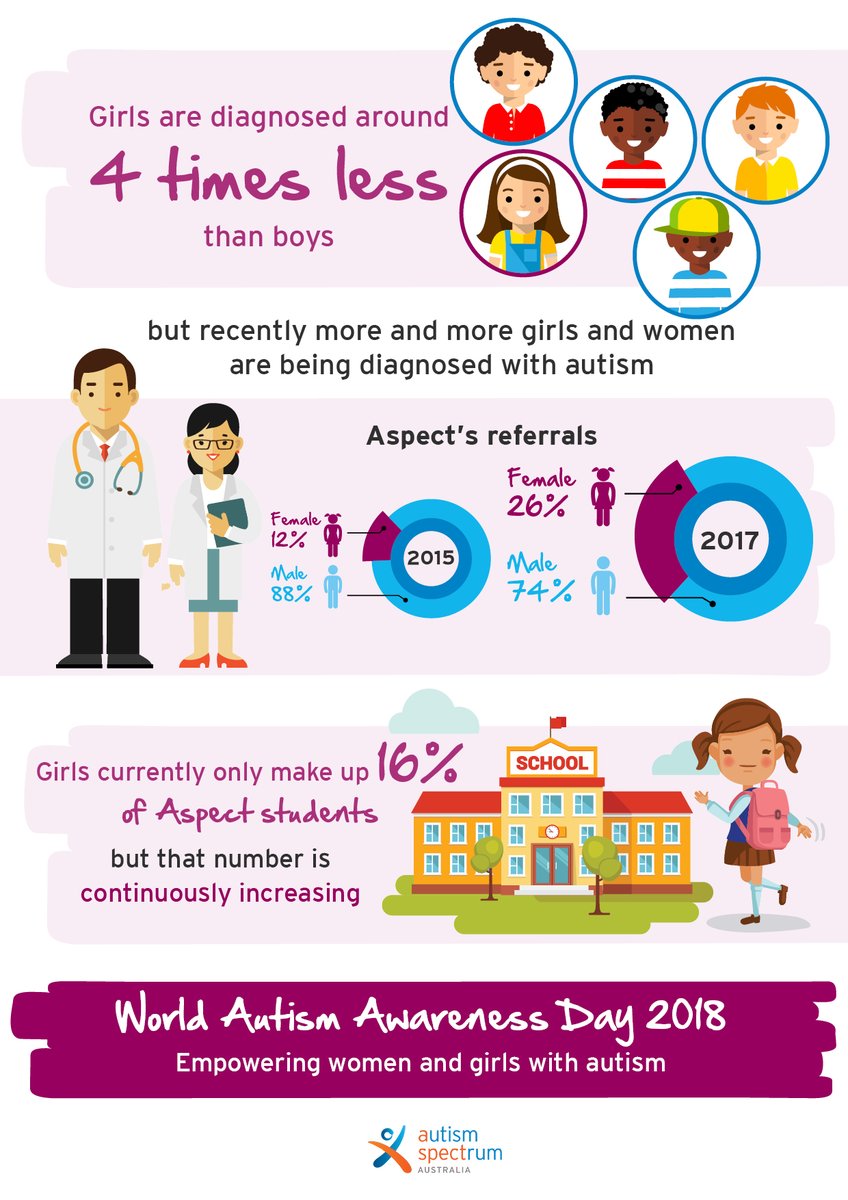
An estimated one in 100 people has Autism; that’s almost 230,000 Australians. Almost four times as many boys than girls are diagnosed with ASD.

Source: http://www.positivepartnerships.com.au

Relationships and music

Relationships

The EYLF uses the words ‘relationships/relationship’ 47 times, and community/communities 68 times. This reflects the social constructivist theory which underpins the learning framework. Simply put EYLF recognises that children learn through the social interactions and relationships they form with other children and adults from their family or community, including at your service. Objects don’t teach you much when you are by yourself. When we form relationships with others we learn and teach in a social way.

Music guides and encourages children to engage with their world. It can help build relationships through shared experiences. When groups of children are involved in musical activities, the positive effects from the release of the brain chemical oxytocin helps children build trust and therefore promotes positive relationships.

In early childhood, and throughout life, relationships are crucial to a sense of belonging. EYLF p 7

Tips

try singing a familiar song and inserting a silly word in the place of the correct word, like “Mary had a little spider” instead of lamb. Silly songs make children laugh and encourage positive relationships and collaboration

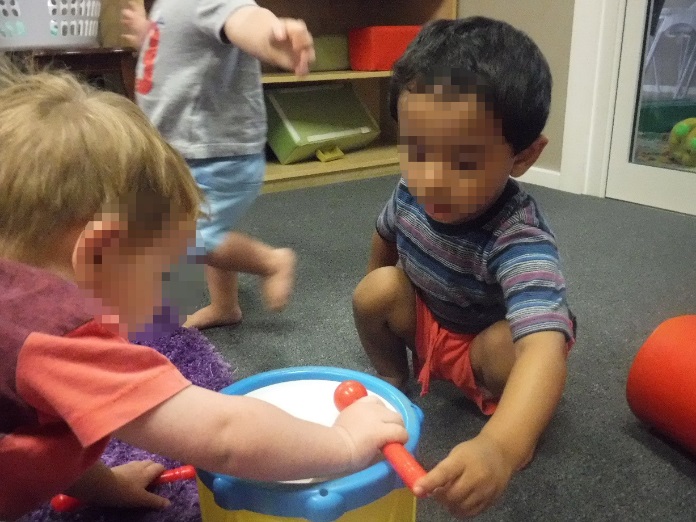
Drummer friends

Today Adrian and Eli both wanted to play the drums. The boys were arguing over who was to play with the drums first.

Sam showed the boys how with some team work and sharing they could use one drumstick each and play the drums together.

Adrian and Eli found that this was a fun activity as they developed a new friendship through playing music which caused them to giggle and smile with each other.

How good are you at music?

Always remember there are no right or wrong ways to present or interact with music. Music should be a creative, open-ended process which everyone contributes to in their own unique way. It doesn’t matter how good you are at singing or dancing etc. What matters is that you engage with children in musical activities and follow their lead.

Music therapy

Registered music therapists draw on the benefits of music to help people of all ages. It’s different from music education and entertainment because it focuses on health, functioning and wellbeing. Therapists use music to teach children specific skills. For example, music therapists use interactive musical activities to improve social and communication skills like eye contact and taking turns for children with autism spectrum disorder.  The therapist might also write lyrics about specific behaviour – for example, turn-taking. The idea is that the child might be better able to focus on sung information than spoken information. Do your families know that musical therapy could benefit some children with additional needs?

Culture and music

Culture

Music is a part of a culture’s narrative or story, and as we’ve discussed it’s an integral part of all children’s culture. It’s often used to help communicate stories and emotions by way of chanting, rhyming, singing, dancing or playing musical instruments. We see this in modern cultures as well as traditional cultures which have existed for thousands of years. For example, Indigenous Australians often use chants and dance to tell Dreamtime stories. There are also certain instruments that are associated with particular cultures eg didgeridoo (Australia), bagpipes (Scotland) and sitar (India). Music can help children understand diversity – that there are many ways of living, being and knowing (EYLF p 13).

Tips

  • explore songs, music and dance in other languages and from other cultures
  • investigate culturally specific musical instruments


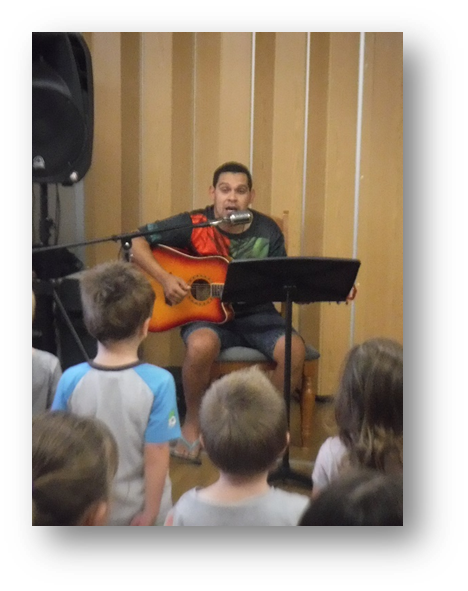
Learning Outcomes include 2 Children are connected and contribute to the world

Today at DELC we had a special visit from Isaac Compton who sang and played his guitar for the children.


The children enjoyed connecting with someone from the local community and were amazed at his talent at singing songs they were familiar with such as “Rockabye Your Bear” by the Wiggles.


Isaac had all the children and teachers up and dancing. We all felt comfortable with Isaac speaking and laughing with him afterwards. “I love you” was one of the comments made by William H during this experience.

Identity and music

Identity

Music contributes to young children’s understanding of relationships, and strengthens their growing sense of identity and sense of belonging, particularly where educators celebrate children’s culture and heritage through musical activities. Rhymes, simple songs and lullabies, for example, support a baby’s first communication in babbling and gestures. For generations music has been an important way that culture has been passed from adult to child. Children come to the service having experienced music in various forms with their family and community eg through songs, rhymes and games.

‘Being’ involves children developing an awareness of their social and cultural heritage, of gender and their significance in their world. EYLF p 20


Tips

The following activities all help a child create a picture of their uniqueness and inclusion:

  • play games like peekaboo, bouncing on a lap to rhymes
  • rock a baby while singing or humming
  • sing songs and play touch and tickle games to teach body parts
  • sing songs that include a child’s name and greeting songs


Learning Outcomes 1 Children have a strong sense of identity

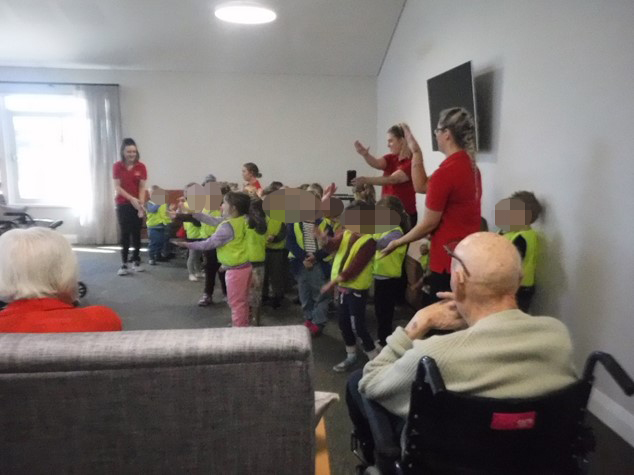
Our Excursion to the Masonic Retirement Village

Today, to provide the children with rich and diverse resources that reflect children’s social worlds, the Pre-schoolers went on an excursion to the Masonic Retirement Village. Before we attended our excursion, we talked about what a Retirement Village is, and explained it is a large home where lots of nannies and poppies live.

When we arrived at the village we were introduced to all the residents. We performed some dancing and singing including Baby Shark, A Tooty Ta, The Wombat Wobble, and Ellie’s Elephants performed a debut performance of One Call Away. The residents of Masonic Retirement Village were all very impressed by our singing and dancing.

After our performance, we were treated to some fruit and cake, before we sat and talked to the residents. Annabelle and Lydia confidently communicated and participated in reciprocal relationships with the residents, giving out beautiful hugs.

We plan on extending on our visit to the Masonic Retirement Village by sending and exchanging letters and drawings to the residents and visiting again on a regular basis with more songs and dances to perform.

Tara

Emotions and music

Emotions

Because music affects the way we feel, educators can also use it to enhance learning about emotions. For example, educators could play a piece of music and ask children how they feel, or to point to the emotion face that describes how they feel, and then engage in activities or discussion with children to extend learning about the emotion.

The ability of music to change our mood seems to be related to the production of different chemicals in the brain. Endorphins triggered by listening to and making music provide a kind of natural pain relief, where dopamine leads to feelings of buoyancy, optimism, energy and power.

Tips

  • ask children to make up dance steps which show how the music makes them feel eg happy, sad
  • get children to complete artworks while listening to different types of music. How does their art change when the music changes?


Learning Outcomes include 3.1 Children develop a strong sense of well being

Brett Young – Music Appreciation

While grouping this morning Will H requested we listen to country music. While listening to “In case you didn’t know” by Brett Young the children expressed their emotions and were involved in a discussion with Miss Danielle about the effect music can have on emotions and feelings.

The children spent time interacting in conversation with each other about their favourite music and the way it makes them feel.

We then painted a guitar and made collage cowboys/cowgirls in relation to the country song we had listened to.
Danielle

Behaviour and music

Behaviour

Music affects moods. It can make us feel happy, sad, angry, scared etc, and therefore can be used to help children manage their behaviour. For example, music can be used to energise children and prepare them for action.  One neuroscientist noted that “when children read words the language centres of the brain light up…but when they read music the entire brain lights up like a Christmas tree.” (Wilson cited in Beatty 2006). Research has shown that children learn best when music is at 60 beats per minute because it changes a child’s brain wave patterns to an optimal state for learning (Egle 2005).  Because music stimulates emotions, it also helps to synchronise the two hemispheres of the brain, which motivates children to explore and experiment.

Of course music can also be used to reduce stress and create a peaceful, calm environment. This type of music is often used to soothe babies, induce sleep and rest, and accompany restful or meditative activities like yoga.  A slow, repetitive musical beat can help to regulate our heart and breathing rates, while humming generates soothing vibrations similar to those the body produces naturally.

Tips

  • create ‘progressive relaxation’ activities by telling a story using sounds and asking children to imagine the story
  • sing simple, short songs to infants in a high, soft voice. Try making up one or two lines about bathing, dressing, or eating to sing to them while you do these activities.


Learning Outcomes include 3.1 Children develop a strong sense of well being, 4.1 Children develop learning dispositions and 4.2 Children develop a range of skills

Slowing children down with music and movement

Physical activity

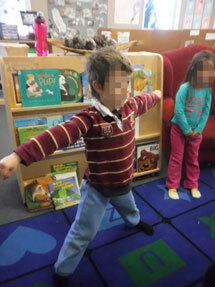
Today Miss Eliza & Miss Rachel planned for & participated in energetic physical activity with the children (L.O 3.2) The children asked to dance this morning so during free play they danced, then we all sat down once everyone had finished morning tea. The children then got to use their physical skills to engage in musical statues (L.O 3.2).

The children had a great time doing this.

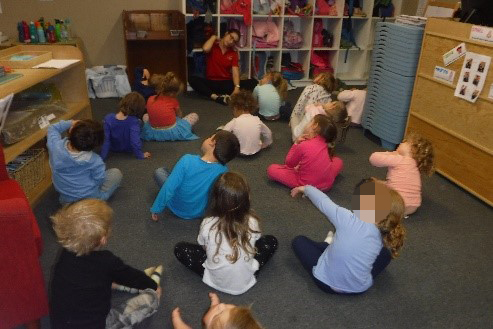
At our group time before lunch the children again used their physical skills for some stretching. Miss Rachel asked what type of music would be best for stretching?”

Chloe said “slow,” Jackson said “music with just sounds, no singing.”

During this activity, the children demonstrated their spatial awareness as they moved through the environment safely (L.O 3.2) in time with the music. Miss Rachele discussed how stretching before using our muscles for different things helps us not hurt our muscles.

Numeracy and music

Numeracy broadly includes understandings about numbers, patterns, measurement, spatial awareness and data as well as mathematical thinking, reasoning and counting (EYLF p 46). It’s characterised by inquiry and problems solving which begins from a very young age. You can see it when a baby follows a moving object with their eyes, looks you up and down, grabs their feet or an object, and moves them in different ways.

Teaching numeracy to young children involves activities which promote understanding about key mathematical concepts eg speed, direction, numbers, counting, mass, units, and shapes. Music and movement can be used to enhance this learning. Research shows, for example that learning to play an instrument can improve mathematical learning.

Tips

  • review the literacy tips above – many of these can also be used to promote learning about numeracy eg those exploring the speed and rhythm of music
  • sing songs which include numbers, sizes, textures etc
  • offer babies a box of objects of different sizes, textures and shapes and encourage them to explore the different sounds the objects make
  • include numeracy concepts in musical dramatic play

Physical Activity – Memory Movement

Today with Miss Danielle we played a game where the children listened to different sounds, where each sound corresponded with a different body movement. For example, the ‘shh’ sound related to walking on tippy toes. The children used memory of a sequence to complete the task and all enjoyed playing this physical form of Memory.

As part of our focus of recycling and reusing materials, Miss Tara provided a range of resources that enabled the children to express meaning using visual arts, using our donated pizza boxes, paper plates, paint and scrap paper. From these materials, we made our own pizzas and played “Pizza Shop”. Some of the children took on the role of shop assistant/pizza maker, while others were the customers.

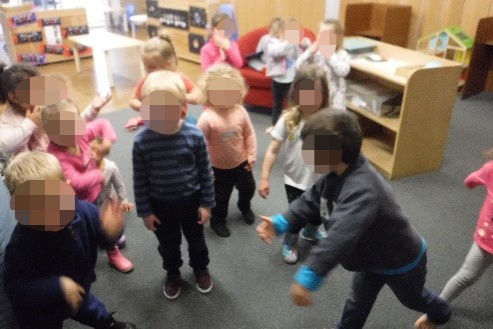
Dancing

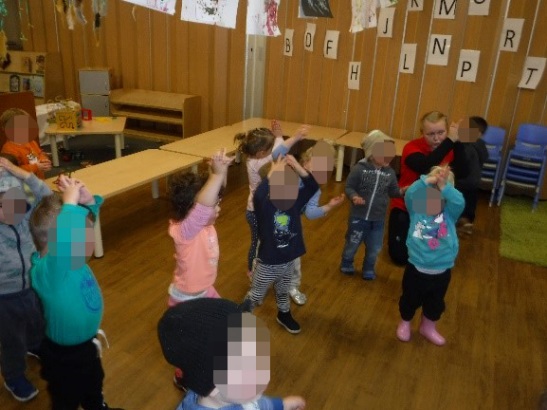
Today toddler 2 had a great time-sharing happiness, humour and satisfaction while dancing to some music. The children demonstrated great trust and confidence in each other as they spun around dancing and jumping together as their favourite songs played.

All the children showed very creative dance movements and drama while acting out dance moves to the songs. Some of the children would lay down when the songs said, “time to go to sleep or one of the monkeys fell off the bed” and the children would lay there until the songs would go to the next verse.

It’s always great to see the children interact and contribute with each other in a positive and happy way, all faces smiling while they enjoy each other’s company.

(Cody)