Emotions and music

Emotions

Because music affects the way we feel, educators can also use it to enhance learning about emotions. For example, educators could play a piece of music and ask children how they feel, or to point to the emotion face that describes how they feel, and then engage in activities or discussion with children to extend learning about the emotion.

The ability of music to change our mood seems to be related to the production of different chemicals in the brain. Endorphins triggered by listening to and making music provide a kind of natural pain relief, where dopamine leads to feelings of buoyancy, optimism, energy and power.

Tips

  • ask children to make up dance steps which show how the music makes them feel eg happy, sad
  • get children to complete artworks while listening to different types of music. How does their art change when the music changes?


Learning Outcomes include 3.1 Children develop a strong sense of well being

Brett Young – Music Appreciation

While grouping this morning Will H requested we listen to country music. While listening to “In case you didn’t know” by Brett Young the children expressed their emotions and were involved in a discussion with Miss Danielle about the effect music can have on emotions and feelings.

The children spent time interacting in conversation with each other about their favourite music and the way it makes them feel.

We then painted a guitar and made collage cowboys/cowgirls in relation to the country song we had listened to.
Danielle

Behaviour and music

Behaviour

Music affects moods. It can make us feel happy, sad, angry, scared etc, and therefore can be used to help children manage their behaviour. For example, music can be used to energise children and prepare them for action.  One neuroscientist noted that “when children read words the language centres of the brain light up…but when they read music the entire brain lights up like a Christmas tree.” (Wilson cited in Beatty 2006). Research has shown that children learn best when music is at 60 beats per minute because it changes a child’s brain wave patterns to an optimal state for learning (Egle 2005).  Because music stimulates emotions, it also helps to synchronise the two hemispheres of the brain, which motivates children to explore and experiment.

Of course music can also be used to reduce stress and create a peaceful, calm environment. This type of music is often used to soothe babies, induce sleep and rest, and accompany restful or meditative activities like yoga.  A slow, repetitive musical beat can help to regulate our heart and breathing rates, while humming generates soothing vibrations similar to those the body produces naturally.

Tips

  • create ‘progressive relaxation’ activities by telling a story using sounds and asking children to imagine the story
  • sing simple, short songs to infants in a high, soft voice. Try making up one or two lines about bathing, dressing, or eating to sing to them while you do these activities.


Learning Outcomes include 3.1 Children develop a strong sense of well being, 4.1 Children develop learning dispositions and 4.2 Children develop a range of skills

Slowing children down with music and movement

Physical activity

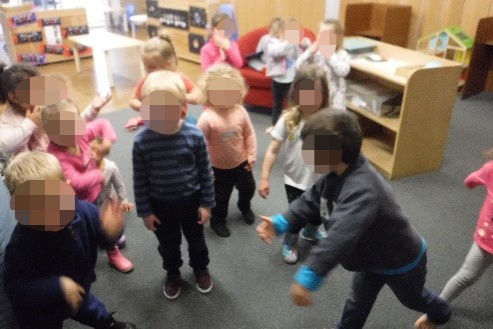
Today Miss Eliza & Miss Rachel planned for & participated in energetic physical activity with the children (L.O 3.2) The children asked to dance this morning so during free play they danced, then we all sat down once everyone had finished morning tea. The children then got to use their physical skills to engage in musical statues (L.O 3.2).

The children had a great time doing this.

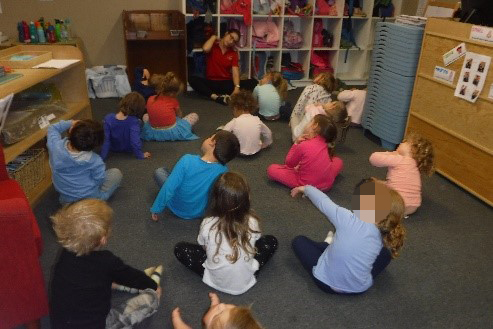
At our group time before lunch the children again used their physical skills for some stretching. Miss Rachel asked what type of music would be best for stretching?”

Chloe said “slow,” Jackson said “music with just sounds, no singing.”

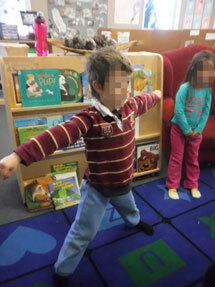
During this activity, the children demonstrated their spatial awareness as they moved through the environment safely (L.O 3.2) in time with the music. Miss Rachele discussed how stretching before using our muscles for different things helps us not hurt our muscles.

Numeracy and music

Numeracy broadly includes understandings about numbers, patterns, measurement, spatial awareness and data as well as mathematical thinking, reasoning and counting (EYLF p 46). It’s characterised by inquiry and problems solving which begins from a very young age. You can see it when a baby follows a moving object with their eyes, looks you up and down, grabs their feet or an object, and moves them in different ways.

Teaching numeracy to young children involves activities which promote understanding about key mathematical concepts eg speed, direction, numbers, counting, mass, units, and shapes. Music and movement can be used to enhance this learning. Research shows, for example that learning to play an instrument can improve mathematical learning.

Tips

  • review the literacy tips above – many of these can also be used to promote learning about numeracy eg those exploring the speed and rhythm of music
  • sing songs which include numbers, sizes, textures etc
  • offer babies a box of objects of different sizes, textures and shapes and encourage them to explore the different sounds the objects make
  • include numeracy concepts in musical dramatic play

Physical Activity – Memory Movement

Today with Miss Danielle we played a game where the children listened to different sounds, where each sound corresponded with a different body movement. For example, the ‘shh’ sound related to walking on tippy toes. The children used memory of a sequence to complete the task and all enjoyed playing this physical form of Memory.

As part of our focus of recycling and reusing materials, Miss Tara provided a range of resources that enabled the children to express meaning using visual arts, using our donated pizza boxes, paper plates, paint and scrap paper. From these materials, we made our own pizzas and played “Pizza Shop”. Some of the children took on the role of shop assistant/pizza maker, while others were the customers.

Dancing

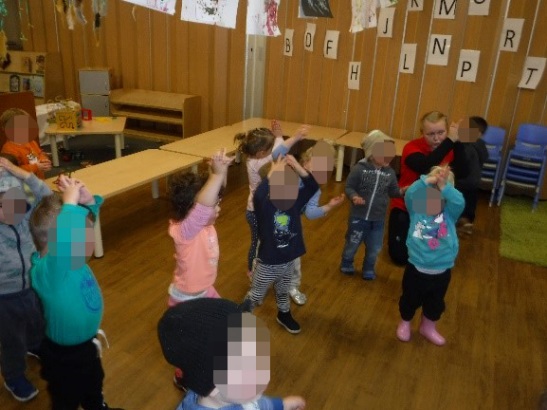
Today toddler 2 had a great time-sharing happiness, humour and satisfaction while dancing to some music. The children demonstrated great trust and confidence in each other as they spun around dancing and jumping together as their favourite songs played.

All the children showed very creative dance movements and drama while acting out dance moves to the songs. Some of the children would lay down when the songs said, “time to go to sleep or one of the monkeys fell off the bed” and the children would lay there until the songs would go to the next verse.

It’s always great to see the children interact and contribute with each other in a positive and happy way, all faces smiling while they enjoy each other’s company.

(Cody)

Physical activity and music

Physical activity contributes to the development of children’s brains and essential neural pathways. Connections are made during movement activities.  As many educators know, children cannot sit still for long periods, and physical activities contribute to their sense of wellbeing as well as promoting learning in key domains including gross and fine motor skills. Educators promote this learning, for example, when they plan for and participate in energetic physical activity with children, including dance, drama, movement and games. Music can be used to promote these learning activities. Remember physical activity occurs anytime children are not sitting still, and it often occurs as part of other planned activities.

Tips

  • encourage children to dance to different genres of music with and without props eg scarves and ribbons
  • dance the Hokey Pokey
  • ask children to pretend they’re an animal and show you how it moves
  • implement activities where children jump, hop, skip, roll, twirl, crawl and run etc
  • play games like duck, duck and Simon says
  • play music when children are helping educators clean or pack up
  • help children select music which complements their play and drama
  • rock, swing and bounce babies to music
  • sing songs like “The Itsy Bitsy Spider” or “Five Little Monkeys Jumping on the Bed” to help children practice their hand and finger control- a skill necessary for writing and handling small objects

Dance Time!

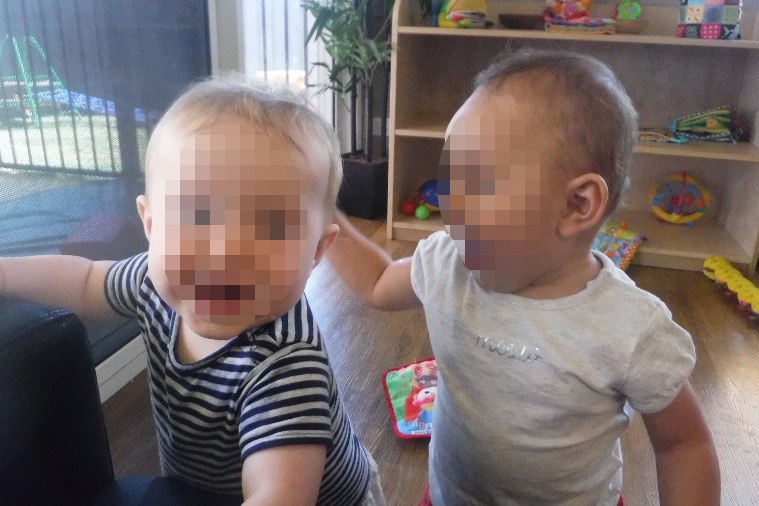
Ili began showing off her dance moves this morning whilst holding herself up by the lounge. Tamara (educator) began to extend on this by singing the song “Twinkle Twinkle”. Ili began bouncing up and down, using her physical skills to engage in a dance whilst trying to sing along to the song. Harry was soon being quick to join.

L.O 3.2 & 5.2

Extension of learning – 12/1/17

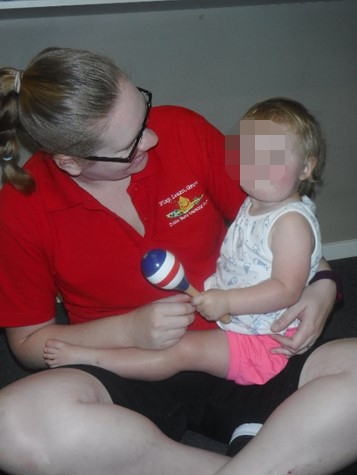
This week we have been focussing on sounds and different ways that the children can make music. To extend the children’s interest in this area Chloe provided the nursery 2 children with an opportunity to revisit their ideas and extend their thinking by giving them some maracas to explore. Eli, Evelyn, Ellie and Isabelle followed and extended their interest with enthusiasm, curiosity and concentration as they shook the maracas to make noise. Chloe sat with the children showing them different ways they can make noise with the maracas by shaking them, tapping them on the ground and tapping two of the maracas together. The children responded positively to the experience with laughter and smiles.

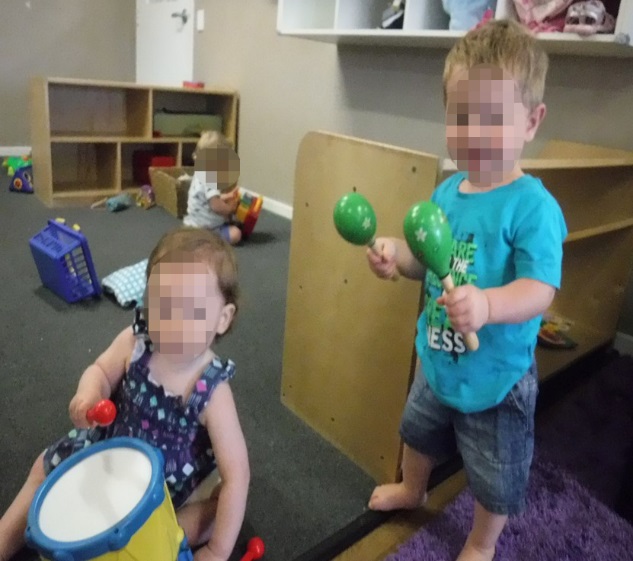
As an extension of learning from Monday the 30th of January, Sam set up the musical instruments again for the children to form a band. As Isabelle, had already played in the band yesterday she knew which instrument she wanted today. She drummed on the drum as Eli played the shakers. Isabelle used the sticks to hit the drum as she was taught yesterday. She enthusiastically played as she laughed and looked around to see who was watching. Sam Showed Eli how the shakers worked and had lots of fun being in a two-man band with Isabelle to perform for the rest of the room.

Creativity and Imagination

Creativity and Imagination

EYLF is a play based curriculum which recognises children’s capacity to initiate and lead learning. Through their play children express their personality, uniqueness and creativity to construct their own understandings which they may share with others (EYLF page 9).  Music will enhance children’s creativity and imagination.

Tips

  • provide opportunities for children to record and listen to their own musical arrangements
    and singing
  • encourage older children to create bands or put on musical shows for others at the service
  • use music to create stories eg farm sounds to tell a story about a child holidaying on a farm
  • encourage children to interact with and create music which taps into their imaginations eg

Rain is falling down, rain is falling down
Pitter patter, pitter patter
Rain is falling down

What does the rain sound like? Is it fast, slow, soft, loud? Is there a storm coming? Is it windy or hailing?Educators could use this traditional song as a finger play for toddlers, motioning rain falling with fingers in air, then on pitter patter tapping the rhythm of the words on a child’s hand or tummy, or massage babies’arm, leg or chest, tickling down for the rain then tapping for pitter patter. Older children can use percussion ‘instruments’ to keep the beat, and express how the rain is falling.

Today, Emma and Tabatha (educators) created a puppet show for the children. The children have been very interested in animals this week, so this gave us the opportunity to build upon and extend the children’s ideas about the farm animals. We asked the children what animals we should use to sing some songs with.

Tabatha asked the children what songs they would like the puppets to sing, giving all the children the chance to respond verbally through their communication. Archie, Carter and Kloe yelled out “Baa baa”. Tabatha and Emma sang Baa Baa Black Sheep using the puppets to do the movements and singing. The children absolutely loved it and couldn’t stop laughing at the puppets being “silly”.

Today in toddler 2 Emma (educator) listened carefully the children’s ideas and discussed with them how these ideas could be developed. Emma noticed Eden, Chase and Ava sitting on the lounge. Eden said, “I’m waiting for the bus.” Emma suggested the children stay on the lounge and that can be the Bus. Emma soon placed more chairs to create the bus and as she did this more children wanted to participate in the activity. Emma was soon singing the “Wheels on the Bus.” All the children loved participating in the singing.

The children asked Emma if they were able to go and pick up KymmyJ (educator). Ariah said “Kymmy we are going to Canberra.” “Wow” replied Emma.

Toddler two follows and extends on their own interest with enthusiasm, curiosity and concentration.

Making Sounds!

Hadlee was trying very hard to make some sounds using her mouth. Tamara (educator) began engaging in enjoyable interactions with Hadlee through making and playing with sounds. Tamara would click her tongue, blow raspberries with her lips or roll her tongue to purr like a cat. Hadlee was so intrigued and became confident to begin copying Tamara in these different types of communication methods.

Peek-a-Boo!

During inside play this morning, Ili found a sudden interest in looking outside the window. Tamara (educator) was wanting to continue spending time interacting and conversing with the children. Tamara ducked outside without the children noticing and banged back on the window at Ili. Hadlee and Ili both confidently began to engage socially together themselves, and with Tamara through play. Ili and Hadlee banged on the window, screamed, laughed and blew kisses along with Tamara and the relationship continued throughout the day.

Musical experiences should be integrated with other learning experiences to enhance learning

Learning

Children’s learning across all the domains is enhanced when educators take a holistic approach to learning and recognise the connectedness of mind, body and spirit (EYLF p 13). Musical experiences should be integrated with other learning experiences to enhance learning, for example, playing different styles of music during art/craft activities, singing songs and rhymes to accompany stories and books, using dance, movement, rhyme and songs to explore maths and science concepts and promote literacy. Music can also be usedduring routines as it encourages children to follow rules and co-operate while improving long-term memory.

Music helps children develop dispositions for learning. Many musical activities encourage children to experiment, hypothesise, and investigate. When children play with musical instruments, for example, they explore cause and effect.

Tips

  • encourage children to engage spontaneously with music by providing lots of musical resources, including everyday objects and loose parts which children can use to create musical ‘instruments’, in the environment. You could create a music centre at your service with these resources
  • select music styles which suit the outcomes you are trying to achieve eg upbeat marching music to accompany packing away or a signature piece of music that introduces an activity or lets children know it’s nearly time to transition to a new activity or routine.


  1. Literacy

The EYLF says “Literacy and numeracy capabilities are important aspects of communication and are vital for successful learning across the curriculum. Literacy incorporates a range of modes of communication including music, movement, dance, storytelling, visual arts, media and drama, as well as talking, listening, viewing, reading and writing.

Language is a system of symbols and patterns, and early literacy activities which involve music, movement, dance, storytelling, visual arts, drama and talkinghelp children understand these symbols and patterns. Participating in musical activities improves a child’s literacy skills as they learn to pick up the beats and rhythms of the music and language patterns.

Research studies have shown that musical experiences in childhood can actually accelerate brain development, particularly in the areas of language acquisition and reading skills. Music helps children learn language in a multi-sensory, playful context.

Tips

  • explore different types of music and songs including those from different cultures
  • try songs and rhymes along with actions eg “The Hokey-Pokey”. Toddlers in particular like to hear the same songs over and over. This helps them learn and memorise words
  • teach children to sing with music as well as without. Music teaches children to keep up with a recognised rhythm and beat while singing on their own teaches children to make their own
  • explore songs with a changing melody. Teach melody by explaining it’s the tune of the song. It can be fast, slow or medium
  • clap the rhythm with children. Explain that rhythm is the pattern of the music
  • explore changes in beat, tone, rhythm, and volume
  • make up new words for familiar songs and rhymes
  • encourage free dance activities to music along with taught routines
  • prepare songs and dances for an open day concert attended by families and community members
  • make musical instruments out of loose parts and recycled materials, and use these to create rhythms and melodies

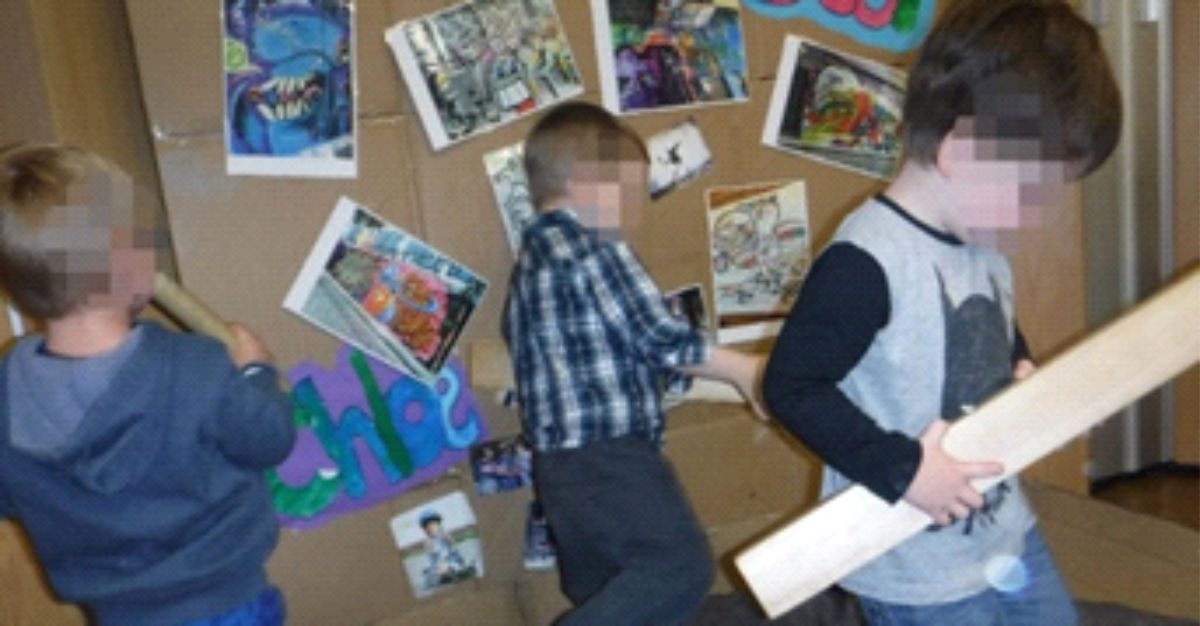
Extending on from last week’s interest in guitars (11.05.16). Tamara mentioned this interest to Archie’s Dad and found out that Archie actually has a guitar at home!! So today Archie, Charlie and Mason all made guitars out of blocks and rubber bands again. “Quick Tamara, come watch us!” Charlie began, “we’re going to put on a show just for you!” Charlie led Tamara to a chair and asked her to sit and watch them on the ‘stage’ (which is normally used as the skate park). The boys began strumming their guitars, humming along to the exact same tune with each other. Charlie even had a long round block to use as a microphone whilst they danced around the stage with big smiles on their faces. “We’re done!” Mason called as they stopped singing. Tamara began to clap, and then asked the boys if their new band had a name. “We’re the Bucking Bull Band!” Archie called.


Time for some action planning!

Now we are going to go through a process of designing the best fun based team

What does a fun team look like?

List everything you think makes a fun team of educators.

_____________________________________________________
_____________________________________________________
_____________________________________________________
_____________________________________________________
_____________________________________________________
_____________________________________________________
_____________________________________________________


Designing your best fun team

Let’s imagine we have shaped, inspired, taught and mentored a group of people to be the best fun team of educators. You produced the perfect fun team.

How did you produce the perfect fun team?

What were the main issues you needed to solve to get the perfect fun team?

_______________________________________________________
_______________________________________________________
_______________________________________________________
_______________________________________________________
_______________________________________________________
_______________________________________________________

You’re looking at the perfect fun team and you see they’re innovative.  What makes them innovative?

_______________________________________________________
_______________________________________________________
_______________________________________________________
_______________________________________________________
_______________________________________________________
_______________________________________________________

Again, looking at the perfect fun team you see unusual traits in them. What are they?

_______________________________________________________
_______________________________________________________
_______________________________________________________
_______________________________________________________
_______________________________________________________
_______________________________________________________

What needed to be communicated to the fun team to make them perfect?

_______________________________________________________
_______________________________________________________
_______________________________________________________
_______________________________________________________
_______________________________________________________
_______________________________________________________

What was the best way to communicate with them?
Was it in pictures, practice, demonstration?

_______________________________________________________
_______________________________________________________
_______________________________________________________
_______________________________________________________
_______________________________________________________
_______________________________________________________

How did you ensure educators knew how to be a part of the perfect fun team?

_______________________________________________________
_______________________________________________________
_______________________________________________________
_______________________________________________________
_______________________________________________________
_______________________________________________________

What couldn’t you explain in a practice or words?

_______________________________________________________
_______________________________________________________
_______________________________________________________
_______________________________________________________
_______________________________________________________
_______________________________________________________

Exploration/Refinement

Simplify the perfect fun team to their most basic state. Strip the details and embellishments.

When do you begin to impair their functionality so they’re no longer the perfect fun team of educators?

_____________________________________________________
_____________________________________________________
_____________________________________________________
_____________________________________________________
_____________________________________________________
_____________________________________________________
_____________________________________________________
When does the perfect fun team of educators begin to lose their identity?

_____________________________________________________
_____________________________________________________
_____________________________________________________
_____________________________________________________
_____________________________________________________
_____________________________________________________
_____________________________________________________

Having removed as much as possible without transforming the perfect fun team of educators into another (imperfect) fun team of educators, describe the perfect fun team of educators in the simplest way.

_____________________________________________________
_____________________________________________________
_____________________________________________________
_____________________________________________________
_____________________________________________________
_____________________________________________________
_____________________________________________________
Conceptualisation

Describe the perfect fun team of educators metaphorically (using language that refers to other concepts) ie “They’re (like) a . . . “.

_____________________________________________________
_____________________________________________________
_____________________________________________________
_____________________________________________________
_____________________________________________________
_____________________________________________________
_____________________________________________________

Now think of ways to describe the practices of the perfect fun team of educators.

_____________________________________________________
_____________________________________________________
_____________________________________________________
_____________________________________________________
_____________________________________________________
_____________________________________________________
_____________________________________________________

How would you describe the perfect fun team of educators if you had never seen anything like it before?

_____________________________________________________
_____________________________________________________
_____________________________________________________
_____________________________________________________
_____________________________________________________
_____________________________________________________
_____________________________________________________

Identification – Use the results from the above steps to write a brief for the process on how you trained the educators to be a part of the perfect fun team of educators.

_____________________________________________________
_____________________________________________________
_____________________________________________________
_____________________________________________________
_____________________________________________________
_____________________________________________________
_____________________________________________________

Briefly describe the perfect fun team of educators. What is their nature?

_____________________________________________________
_____________________________________________________
_____________________________________________________
_____________________________________________________
_____________________________________________________
_____________________________________________________
_____________________________________________________

Why is it necessary to design the perfect fun team of educators?

_____________________________________________________
_____________________________________________________
_____________________________________________________
_____________________________________________________
_____________________________________________________
_____________________________________________________
_____________________________________________________

What was the problem that led to you designing the perfect fun team of educators as the solution?

_____________________________________________________
_____________________________________________________
_____________________________________________________
_____________________________________________________
_____________________________________________________
_____________________________________________________
_____________________________________________________

What are the benefits of the perfect fun team of educators?

_____________________________________________________
_____________________________________________________
_____________________________________________________
_____________________________________________________
_____________________________________________________
_____________________________________________________
_____________________________________________________

How does your design of the perfect fun team of educators solve any problem that you may have identified in the previous question?

_____________________________________________________
_____________________________________________________
_____________________________________________________
_____________________________________________________
_____________________________________________________
_____________________________________________________
_____________________________________________________

Now how are you going to put this into practice?

_____________________________________________________
_____________________________________________________
_____________________________________________________
_____________________________________________________
_____________________________________________________
_____________________________________________________
_____________________________________________________

Let’s start by getting to know the unique you!

What do you value most? What’s important to you in your career? Helping others? Being creative? Teaching? Circle your values:

Ambition

Attention to detail

Authenticity

Work life balance

Being kind

Calmness

Challenge

Change and variety

Collaboration

Community

Compassion

Competence

Courage

Creativity

Cultural diversity

Decisiveness

Empathy

Excitement

Experimentation

Expertise

Fairness and social justice

Family

Financial security

Flexibility

Frankness

Fun

Generosity

Growth

Happiness/positive attitude

Harmony

Having a say and a voice

Health

Help others

Honesty

Humour

Imagination and creativity

Independence

Inner harmony

Innovation

Inspiring others

Integrity

Intelligence

Kindness

Knowing your vales

Knowledge

Laughter

Leadership

Learning

Living your dreams

Love for myself

Love for others

Making a difference

Making decisions

Massive wealth

Moral fulfilment

Music

Nature

Open communication

Passion

Persistence

Personal growth

Perspective

Physical challenge

Play

Power and authority

Professionalism

Protecting the environment

Quality of life

Quiet times

Recognition

Reliability

Respect

Results

Risk taking

Security

Self respect

Stability

Sunlight

Support

Taking responsibility

The big picture

Tidiness

Trustworthiness

Understanding

Wonder and awe

From that place bubbling with unlimited possibility, write up to 10 reasons why you became an educator!

  1. _______________________________________________________
  2. _______________________________________________________
  3. _______________________________________________________
  4. _______________________________________________________
  5. _______________________________________________________
  6. _______________________________________________________
  7. _______________________________________________________
  8. _______________________________________________________
  9. _______________________________________________________
  10. _______________________________________________________

Do you know what you do best?

Perhaps you’re incredibly organized. Or, you might excel at motivating people, helping resolve disagreement, or researching hard-to-find information.

What are your strengths?

_______________________________________________________
_______________________________________________________
_______________________________________________________
_______________________________________________________
_______________________________________________________
_______________________________________________________
_______________________________________________________
_______________________________________________________

Whatever your strengths, you have something valuable to offer. Find a role within your team that allows you to do what you do well. This will help you make a meaningful contribution – and increase your chances of doing a great job. Plus, it’s usually much easier, and more satisfying, to do tasks when you’re naturally good at them.

When a team works well together, creativity levels are generally higher, as people tap into one another’s strengths. This often leads to increased productivity, and an inspiring sense of collaboration and cooperation that moves everyone forward.

The most successful teams don’t just combine different technical skills; they also allow members to take on more general roles that cross traditional functional lines.

What responsibilities as an educator are you confident in performing and enjoy? Why?

___________________________________________________________
___________________________________________________________
___________________________________________________________
___________________________________________________________
___________________________________________________________
___________________________________________________________
___________________________________________________________
___________________________________________________________
___________________________________________________________

What responsibilities as an educator are you not confident in performing? Why not?

___________________________________________________________
___________________________________________________________
___________________________________________________________
___________________________________________________________
___________________________________________________________
___________________________________________________________
___________________________________________________________
___________________________________________________________

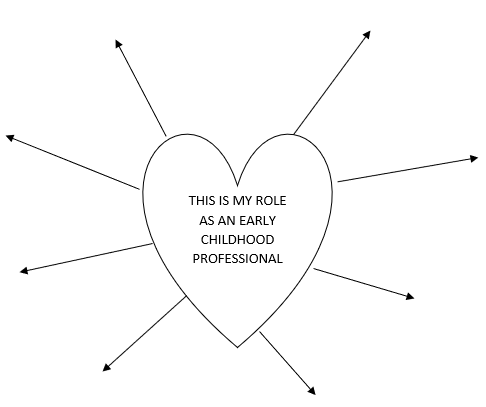
Use the following template to design your job description as an Early Childhood Professional. Remember, you are not just an Educator. You are a role model supporting the development of children for their future.

Now share with your team why this is relevant for a fun based team.

Three common challenges

Communication

Children on the spectrum may have problems understanding others, talking about their own feelings, following simple one step instructions, participating in group times or large group activities or maintaining a conversation.

Some develop language skills but may have difficulties such as understanding jokes and sarcasm. They may find it difficult to infer meaning if it’s not explicitly stated.

They may be good at giving information about topics of interest but may struggle to participate in reciprocal conversations where they need to follow rules about turn taking, listening and responding to others. Others on the spectrum will have more significant communication difficulties, limiting their ability to communicate about their needs, wants and feelings. They may have significant receptive language (comprehension) difficulties as well making it challenging for them to understand what is expected of them or what they need to do. Non-verbal elements of communication like eye contact and gestures can also be a challenge. Children may avoid eye contact, or use it in odd ways.


Social interaction

Difficulty with social interaction is seen as the most significant feature of Autism. Social interaction skills include social communication, non-verbal skills, understanding and recognising emotions, participating in conversation, cooperation with others and conflict resolution.

Social interaction may be difficult, for example, because the child displays unusual or inappropriate behaviours eg child may

  • giggle or cry for no apparent reason
  • not seek physical comfort from parent or caregiver
  • be impulsive
  • be aggressive
  • have frequent meltdowns
  • self harm
  • seem unwilling
  • not point to or hold up objects to show people things, share an experience or show they want something.

All people on the Autism spectrum are different and this is true across all areas of development. Some young people are very interested in social interaction, even though this may be difficult for them. For example, they not always respond to their name.

It is important to remember that not all young people on the spectrum want social interaction but it’s important that educators create these opportunities. Some children may prefer their own company and would prefer to pursue their own interests. It is important that educators understand and respect this preference, and take a sensitive approach to initiating interactions.

School age children who isolate themselves may be at increased risk of bullying, especially if they are isolated completely from other students and staff.

Behaviours

Children on the spectrum may have problems adapting to different situations and environments. For example, they may become easily upset if routines change and have difficulties with transitions, and they may have limited engagement in pretend play.

They may also have challenges with controlling emotions or reactions to particular situations. They may always need someone to do the same thing in the same way. Other behaviours include engaging in rhythmic body movements such as rocking, pacing, hand flapping, toe walking, spinning, repeating actions or movements over and over, or Echolia where a person repeats noises and phrases. Echolalia is a common feature especially when developing language.

Some children may have highly restricted, fixated interests with a strong interest in one or more special topics. The interest might be an unusual one for their age such as fans or lights. They might show interest in a common topic but have a much greater interest and depth of knowledge than other children their age (eg knowing the name, size and habits of all discovered dinosaurs). They may also have an intense interest in certain objects or a particular toy.

Children on the Autism spectrum may have over or under sensitivity to sound, smell, touch certain smells, certain tastes, movement or people and objects around them. They may be extremely sensitive to sensory experiences, or seek sensory stimulation.

Sources

 www.positivepartnerships.com.au

Benefits of Music and Movement

Babies move with music in the womb

At 22 weeks gestation, the foetus is experiencing music and other sounds. We know the auditory system is fully functional and the brain is processing sound. Italian researcher Rhodari has shown mothers can calm their child and assist them to fail asleep by singing the same music they sang while pregnant.

New born babies communicate through music

Colwyn Trevarthen, one of UK’s foremost researchers of young children’s innate musicality writes:

“ … I have seen what power music has in communication with infants. Mothers’ songs, action games and dances, and instrumental and recorded music of more popular ‘folk’ kinds, appeal to young infants many months before words have any sense, pleasing them, animating them and calming them to peaceful sleep. Infants also participate musically with skill. They hear music and they join in. We are certainly born musical. This musicality is an expression of the moods and self-regulations that infants and their companions, old and young, can share.” (Trevarthen 1997)

Colwyn Trevarthen says humans use musical forms in their speech – noticeable changes in pitch, strong rhythms, variety in volumes and changes in speed – to attract and keep the baby engaged. The baby imitates these musical ideas, with adult and child seeming like dance partners. It is now thought that this very early musical communication has been valuable in human evolution, because it strengthens bonds between parent (or carer) and child.

Very young babies can’t move their body like us, but they use their facial expression, eye focus and sounds to respond to the music and their mother’s voice.

More theory

Howard Gardner proposed the theory of multiple intelligences. Gardner argues that there are eight different types of intelligence and people can be intelligent in different ways. One of these is Musical/Rhythmic Intelligence.Most adults and children show ‘intelligence’ in all areas but excel in one or two. It is much easier to learn new things when it’s presented in a way the learner easily understands and feels comfortable with. Identifying children who favour a ‘musical/rhythmic intelligence and encouraging them to participate in lots of different musical activities will help them, in particular, to achieve learning outcomes. These children will love to sing, dance and hum, easily pick up on rhythms and patterns in music and be sensitive to sounds and tones of voice. However, as we will see, musical activities will help all children achieve learning outcomes.

 The fear of music in early years’ settings

Given these strong reasons in support of music why does it lag behind other early years’ creative expression? The following reasons are suggested:

  • a lack of awareness, knowledge and appreciation of children’s spontaneous musical behaviours in their everyday play
  • little awareness of the role of music in the development of relationships and the pedagogical implications of this
  • limited ideas about how to foster children’s innate musicality
  • lack of confidence and fear of exposure of perceived lack of musicianship
  • a tendency to over-emphasise ‘accurate’ performance
  • a belief that music depends on genetic endowment
  • worry about the noise that musical activities might make.