

Create fun teamwork activities that increase skills

Campfire Stories

A classic activity that inspires storytelling and improves team bonding. Teams gather in a circle and share their workplace experiences. Along the way, they learn things about each other and relive old memories.

  1. Create a set of trigger words that can kick-start a storytelling session. Think of words like “first day”, “families”, “partnership”, “nature play”, etc. Add them to sticky notes.
  2. Divide a whiteboard into two sections. Post all sticky notes from above on one section of the whiteboard.
  3. Ask a participant to pick out one trigger word from the sticky notes and use it to share an experience (say, about his/her first day at the centre). Shift the chosen sticky note to the other side of the whiteboard.
  4. As the participant is relating his/her experience, ask others to jot down words that remind them of similar work-related stories. Add these words to sticky notes and paste them on the whiteboard.
  5. Repeat this process until you have a “wall of words” with interconnected stories.

Make Your Own Movie

What better way to stimulate creativity than to get your team to make their own little movie?

This fun activity can be done indoors or outdoors. It requires just 2 or 3 iPadsor a phone and your team will love it! After all, who doesn’t love movies?

  1. Setup the iPads / phones onto camera mode.
  2. Divide participants into teams and each team needs to work together to divide responsibilities (screenwriter, actors, camera operator, director, etc.).
  3. Optional:Introduce a theme such as a promotional movie for your Centre. If that seems too constricting, ask teams to pick their own topic/theme linked to their role.
  4. Ask teams to write scripts for their own 5-7 minute movie.
  5. Teams to create movies based on the script.
  6. Screen all finished movies at the end of the exercise!

Develop ideas and events for teams

Are you feeling like your team needs a lift?

Quite often teams will go through phases of ups and downs.

Try some of these great ideas to lift the spirit of your team and bring them together. These ideas work well when implemented consistently throughout the year to keep the team feeling good about themselves, recognised and appreciated.

  1. Staff lunches – every now and then organise a nice healthy lunch for your team. This is a nice way to have the staff come together to share in some food and enjoy a break together. Often, staff may enjoy bringing in a plate of food to share for a special lunch.
  2. Positive quotes – have a special area in the staff room where you can display positive and uplifting quotes for your team.
  3. Organise a staff appreciation week – take the time to show your team that you appreciate their hard work and dedication. You can organise some treats, fun games, small gifts, thank you notes. Parents and children usually love getting involved in these weeks as well.
  4. Social activities – organise some bonding time outside of work. Staff dinners, going to the movies, having a games night. This can be a great way to really get to know each other and build relationships.
  5. Board games and activities – provide your team with some fun board games and activities in the staff room that they can enjoy during their break times. Uno, Connect 4, Chess, Guess Who, colouring competitions are just some ideas of getting your team to spend time together and enjoy each other’s company.
  6. Staff member of the month – this can be a great way to keep staff motivated throughout the year and feel appreciated. There are many ways that this can be organised and lots of different options for rewards. Have the staff individually put in votes for who is the staff member of the month and why they are deserving.
  7. Appreciation Wall – Have a permanent spot for an appreciation wall where educators can write appreciation or thank you notes to each other. Families love to join in on this one as well. Kind and thoughtful words is a great way to lift someone’s spirit.
  8. Staff meeting Shout Outs – Open or close your staff meeting with some positive ‘shout-outs’ to your team. Let them know that you are watching them and that you notice all the great things they do.
  9. Random Acts of Kindness – This can be done in many different ways. Staff pick names out of a hat and have to do something nice for that person over the next week. Have a different theme every month or perhaps a different staff member to focus on.
  10. Celebrate Birthdays and special events – take the time to make your staff members feel special on their birthday or any other special event in their life such as getting married, having a baby, educational achievements like graduation. Make a card for them, share in a cake and sing them Happy Birthday or throw them a party. This is a great way to develop a sense of belonging to the group.
  11. Postcards and letters – This may take up a bit of time, but it is something that would make your team feel very loved and appreciated. Write a short ‘thank you’ letter or create a ‘thank you’ postcard and mail it home. This would be a lovely surprise for your staff when they check their letterbox and I am sure it would make them feel great at the end of their day.
  12. Positive self-reflection notes – Stick up some positive self-talk notes around the mirror in your staff bathroom. When your staff head to the bathroom and look at themselves in the mirror while washing their hands, they can read a whole lot of positivity e.g. you are looking great today! Your smile has just made a child’s day! You are an awesome teacher!
  13. Fun Competitions – Competitions can be a great way to get teams working together. Think of some fun competitions throughout the year such as vegetable growing competitions, class projects, art competitions, team sports day, cooking competition.The ideas are endless!
  14. Educator in focus – Write a piece on a different educator in your monthly newsletters highlighting their achievements, skills and talents, and what makes them a wonderful educator. This is a great way to build the relationships with families as well.
  15. Themed dress up days – A great way to bring a bit of fun to the centre. Get your team involved in some dress up days and have special awards for most creative and best dressed.

What are your favourite ideas?

_____________________________________________________
_____________________________________________________

_____________________________________________________
_____________________________________________________
_____________________________________________________
_____________________________________________________
_____________________________________________________
_____________________________________________________
_____________________________________________________
_____________________________________________________
_____________________________________________________
_____________________________________________________



Tips to promote a sense of ownership across the team

  1. Don’t cherry-pick tasks! It can be tempting to choose only those tasks that seem easier, or ones that offer more benefits. But if you choose more difficult responsibilities and accept what’s offered to you, you’ll learn whilst you earn and gain a reputation for being a hard worker and team player which will pay off in the long term.
  2. Support other people on your team by offering positive feedback and providing help if they need it. Your willingness to collaborate and help others will make a good impression across the team and the children will reap the benefits!
  3. Share information and resources with your team. Remember, you’re all there for one purpose – and by keeping everyone informed, you contribute to the common goal. If you have past experiences or knowledge that can help others, then offer it. They’ll appreciate the help.
  4. Keep a positive attitude. If you complain, delay, or leave the tough jobs to other team members, people will notice – and they may start to avoid you. A positive attitude can be a refreshing change, and it will help others stay focused and productive as well.

Educators and staff often come together from various background, cultures, experiences, qualifications, beliefs, skills and talents. Respecting and utilising these differences can enhance the effectiveness of the team.

A team needs to have a common vision to establish what they are working toward. Perhaps they have an overall goal however they may be currently focusing on one particular aspect. Maybe they are working toward an element of the National Quality Standard that they know they have not yet met and it may be an identified issue in their Quality Improvement Plan.


Foster creativity and increase learning across the whole team

Describe ALL of your skills and attributes and list how you use them as an educator.

__________________________________________________________

__________________________________________________________
__________________________________________________________

__________________________________________________________

__________________________________________________________
__________________________________________________________

__________________________________________________________
__________________________________________________________

1. Name group strengths

In your group, name each strength out loud and discuss how those strengths might be applied in your roles in the team. Write down each strength:

______________________________________________________
______________________________________________________
______________________________________________________
______________________________________________________
______________________________________________________
______________________________________________________
______________________________________________________

2. Apply individual strengths to achieve the Centre goals

In your group, speak to the strengths of each individual team member and suggest how the team might take advantage of others’ strengths and listen to what the team has to say. Look beyond your daily role to the role of the Centre to see whether demonstrated strengths can be used in neglected areas of the business.

______________________________________________________
______________________________________________________
______________________________________________________
______________________________________________________
______________________________________________________
______________________________________________________
______________________________________________________

3. Assign team tasks based on team members’ strengths.

You would never intentionally assign tasks based on weaknesses, but you might overlook strengths unless they’ve surfaced. In your groups, collectively discuss all strengths as a team and where they fit on a daily basis. How could others learn this strength / skill?

Educator’s strengths identified How this strength could be utilised on a daily basis based on Centre needs How could this strength be implemented across the team to increase learning and support professional development

4. Encourage team members to act as “strengths advocates” to help others use their talents and gifts more fully.

Identify members of the team to be leaders and motivators within their roles. Consider cross-training among teammates who have specific strengths by forming mentoring relationships. This cross-training lets strong team members develop their training abilities, while the mentees receive some good modelling and a chance to strengthen their skills.

Developing your teams’ individual competencies has other benefits, but watching team members grow into their roles and develop their skills can be one of the most rewarding experiences in a career.


Use team members’ strengths to create a fun working environment

Have you worked for teams where everyone pitches in, and you all work together in perfect harmony? Do you always play to your strengths in a team, or are there times when the group you’re in just doesn’t gel?

What does this mean for you? Teams are an integral part of how things are done in your centre. If you show that you have the ability to work well with others, this will have a major impact on the overall success of the Centre for the children and the Educators!

Do you recognise that others in the team have strengths and experiences that can complement yours and those of other team members?

Can you identify them?

Where do they come from?

For example, before becoming an educator:

  • I was born and lived in England
  • I worked at Pizza Hut
  • I worked at a Bakery
  • I worked in a Supermarket on the check-out
  • My father was an architect
  • My mother worked in childcare as a cook
  • I studied to be a scientist
  • I worked internationally in Clinical Research
  • I studied Early Childhood Education & Care
  • I am apublic speaker

Your knowledge of each educator’s strengths and experiences is invaluable to your team and the children. These strengths can help achieve the goals of the team. Do you value them?

An educator’s thoughts….

When leaders value the strengths, talents and interests of a team member:

  • They empower that person to use and share their strengths. This creates a “social constructivist learning community” among the team which benefits the children, families and the service
  • They can create an enthusiastic team who feel valued and committed
  • They can enhance leadership opportunities by placing people in roles that complement their strengths, then expand these roles into future leadership positions. By encouraging leadership succession opportunities they plan for the profession of tomorrow
  • Learning among team members becomes embedded and valued
  • They empower the team to achieve shared visions and to get the job done
  • They promote happiness, productivity and retention
  • People perform best when working in their strength areas, and teams perform best when the team itself has a balanced, complementary set of strengths.

Every educator is different and diverse and comes to the setting with skills, talents and experience that are as unique as they are.


Where are you now in relation to teamwork?

The checklist keys to use.

E = Embedded I do that ALL the time
K = I know I need to do that, but I don’t do it all the time
T = Please teach me how to do it or improve my understanding of why I need to do it.

Professional Collaboration Educator
Communication
Do you communicate clearly, openly and honestly?
Do you always interact with others in a polite and positive way?
Do your responses show others that you respect their views, beliefs and suggestions?
Do you react positively when receiving praise or suggestions for improvement?
Practices
Do you plan curriculum, goals and activities and solve problems together with other educators and staff?
Do you actively value and use the skills/interests of other educators when planning the Curriculum?
Do you often share your knowledge, experiences and strengths with other educators and staff?
Are you willing to mentor or support new, casual or less experienced educators?
Do you look at the needs of team members, and step in and help if there is an immediate need?
Are you willing to ask for help if needed?
Do you actively contribute to your training plan to ensure areas you wish to strengthen are covered?
Do you regularly complete professional development/training to improve practice, regardless of your current knowledge and skills?
Do you always work to achieve the three exceeding themes of the NQS: embedded practice, critical reflection and engagement with families and community?
Are you always willing to try new ways of doing things to continually improve practice?
Do you regularly contribute to the service QIP?
Do you regularly reflect critically about children’s learning, your practice and service operations, both individually and as a team, and help to implement resulting changes?
Do you reflect on your own beliefs and values to ensure they’re not hindering effective teamwork?
Do you respect the confidentiality of information shared by other educators?
Do you participate in all relevant team or service activities?

7.2.3 Development of professionals

Educators, co-ordinators and staff members’ performance is regularly evaluated and individual plans are in place to support learning and development.

All educators learn new professional skills and gain new knowledge by evaluating and critically reflecting on their practice, work with the educational leader to tailor professional development and enhance the process by building community partnerships and learning communities.

What do you do well?

The key aspect of this NQS Element 7.2.3 is to make sure all educators identify what they do well and discover areas of practice they can improve upon.

Identifying what you do well is easy when we look at the children’s documentation and your curriculum planning. For example, when Cody looks at his curriculum planning he can identify physical activity as one of his main strengths- Learning Outcome 3.

Sports with Cody
Cody planned and participated in a football game with the children.

Now ask yourself, how could Cody help other educators in your centre using his strength?

When you identify your strengths through the Learning Outcomes it will also show what you keep away from or areas you could improve. See example below.

Name What do you do well? What Learning Outcomes are easy for you to plan and teach? Who could you teach your strengths to? In relation to the Learning Outcomes what isn’t Cody’s strength and who could help him improve?
Cody
  • Physical activity
  • Healthy eating
  • Gymnastics
  • Ball games
  • Basically all of Learning Outcome 3
Cherie in the toddler’s room and Tara in the preschool room. Collectively the team need to identify strengths and areas to improve. Looking at the Learning Outcomes and documentation Cody will often do craft with the children to extend an idea, when there is a lot more than just craft available. Chelsea could be good at helping Cody extend beyond craft, and Emma could help with science ideas.

You can build a strong team of educators using this method. Don’t forget educators are great at all types of practice that can be taught to others. For example, Kate is great at making resources and has beautiful interactions with children. Kerrie is great at warm loving interactions. Charlee is great at building trust and communicating with children which results in children following instructions.

Teaching other educators your strengths

Try using this six-step process to create a professional development plan for educators.

Cherie thought it was a great idea for Cody to teach her some physical activities for young children.

Steps Process
1. Observing an initial model lesson delivered by Cody Cherie needed to swap with an educator in the rooms so she could see Cody in action creating ball games with the children.
2. Participating in in-service training as part of a community of learners Together Cody and Cherie developed a plan for Cherie to try.
3. Co-teaching a lesson Again, educator room swapping occurred to allow Cody the time with Cherie to co-teach the ball game lesson.
4. Planning a lesson with Cody Cherie planned her own ball games with Cody.
5. Teaching a lesson while being observed by Cody Cherie delivered the lesson while Cody watched and took notes.
6. Reflect and evaluate the lesson with Cody Together Cody and Cherie reflected upon the lesson and made improvements.

Exceeding theme 3: Families and community connection

Case Study – Professional Development learnt through visiting specialists

Remember to place in your QIP’s strength section how your connection to community professionals have indirectly created professional development opportunities and new learning for you as an educator. Here are some points below to help remind you of the potential professional development opportunities and learning.

Social Worker

  • Ways to assist families obtaining support they need in times of divorce, illness and death

Your experience

____________________________________________________________


Diabetes Educator

  • How to administer Insulin
  • How to tell when a child is experiencing a “low” or “high” and how to respond
  • How to take blood sugar readings
  • Information on how to prevent type 2 diabetes

Your experience

____________________________________________________________


Occupational Therapist

  • How to use visual aids to communicate with non-verbal children
  • How to introduce new experiences to children with sensory processing issues by slowly exposing them to new textures and sounds (eg – rolling a spiky ball on a child who doesn’t like to be touched)
  • How to provide experiences designed to increase their core strength to help children increase their sense of balance and co-ordination.

Your experience

____________________________________________________________


Speech Therapist

  • How to start with simple words and short sentences so children aren’t overwhelmed
  • How to help twins with speech issues by encouraging them to talk when away from their twin, as they tend to rely on each other
  • How to ask lots of questions about things relevant to the child – interests, family, pets, friends etc.
  • How to sound out words and speak clearly and slowly
  • How to match words with pictures/visuals
  • How to encourage participation in groups by asking for child’s opinion and encouraging children to talk to each other instead of a teacher all the time.

Your experience

____________________________________________________________


Psychologist

  • Understanding behaviours
  • Understanding triggers for children’s behaviours
  • Gaining a better understanding of autism and how to work with children on the spectrum

Your experience

____________________________________________________________


Continence Nurse

  • How to support children while maintaining their dignity
  • How to identify symptoms that need further investigation by professionals
  • How to support families get professional help for their child.

Your experience

____________________________________________________________


7.2.2 Educational leadership

The educational leader is supported and leads the development and implementation of the educational program and assessment and planning cycle.

Exceeding theme 1: Practice is embedded

Case Studies – Supportive Educational Leaders

 Karen says her education leader helps with Centre Support, and supports all of the educators in her room. She even helps her with questions she doesn’t fully understand in her diploma. The thing she like best about our educational leader is the way she assists with new educators. She identifies if they could be afraid or scared to do a practice or write the program and she sits and shows them how to do it, slowly and methodically. She has lots of patience and is extremely good at getting the new educators to see the importance of strong relationships between families, children and educators.

 Tamara is a new room leader and her educational leader helps her when she is stressed. Tamara says “our educational leader is easy to talk to and is happy to just listen or give me endless ideas to help me become a better room leader. She always has advice or a practice I can try with educators and the best thing is, if she sees curriculum that isn’t fabulous she comes in and shows why it isn’t and how to fix it. The educational leader may help me with strategies to teach the educators on how to write better curriculum or if I’m running out of time she will teach the educators.”

Eliza says Georgie her educational leader is very good at seeing when they are stressed in the room. She will come in as an extra pair of hands to take the room level tension down and give strategies with the room and children. She is great at helping with a debrief of the day. Georgie helps with practices like supervision too, especially with the trainee. It’s not just curriculum.

 Max says “our educational leader doesn’t get a lot of time off the floor, so we have developed an educator swap system to get the support we need with curriculum. We might swap with an educator in the educational leader’s room for an hour. During the hour with the educational leader she explains what and why she’s doing things and she really helps with the language we use in our documentation. Plus being in her room we get to explore different ways we could implement practice which definitely makes us think about new ideas, and she constantly talks about theory while it’s happening in practice.”

Case Study – Educational leader in name, not in practice

Our educational leader is also our Nominated Supervisors which makes it difficult to find time to discuss ideas, practice and curriculum with her.

Exceeding theme 3: Practice is shaped by meaningful engagement with families and community

The service needs to reflect the unique geographical, cultural and community context and draw on the voices, priorities and strengths of the children and families.

The biggest influence on children’s lives comes from their family and community because they spend far longer with them than at the Service. Look at the curriculum and see if you can identify the below concepts being explored and learning extended as the curriculum plan grows:

  • Who lives in the child’s house?
  • What type of dwelling do the children live in?
  • What do the children eat for breakfast?
  • How do they get to your service?
  • Who belongs to the child’s extended family?
  • Who else is authorised to collect the children?
  • What parks do the children play at?
  • What coffee shops do the children go to?
  • What after school activities do the children go to?
  • Which shops do they visit?
  • What restaurants do the children go to?
  • What doctors do the children go to?
  • What hospital have they been to?
  • What do they do at home?
  • How many bedrooms do they have?
  • What toys do they have?
  • What books do they read?
  • What songs do they sing at home?
  • What TV shows do they watch?
  • What time do they go to bed?
  • What does mum and dad do for work?
  • Who are mum and dad’s best friends?

What might families think about the service or educators if they experience these practices?

____________________________________________________________


How will this affect children’s learning?

____________________________________________________________


What changes might you need to do after reflecting in this section?

____________________________________________________________

I often hear people say ‘they’ don’t know what ‘they’ are doing and ‘they’ have no common sense. However, what I usually see is a lack of experienced educators teaching less experienced educators.  So I’d like to work with you on the process of coaching.

What is coaching?

Coaching can be used to develop people’s skills, improve their performance, explore goals and correct inappropriate conduct. It typically takes place as a conversation between two people a focuses on an agreed goal. The coach then helps the other person to learn new things themselves rather than having new ways imposed on them. This approach is more likely to provide a lasting result.

How do I coach someone? 

The GROW model – think about

  1. GOAL – what you want to achieve
  2. REALITY – what’s happening now
  3. OPTIONS – what you could do
  4. WAY FORWARD – what you’ll do

Practical Example

Mandy’s been a trainee for 6 months. She’s a hard worker, studying well and is forming great relationships with the children and team members. Her portfolios and programming are coming along nicely – but some families have said they’re not happy with her communication.

  1. GOAL

Mandy and the Educational Leader Tracy discuss the family feedback. They agree Mandy needs to become more confident communicating with families and set a timeframe of 4 weeks.

  1. REALITY

Tracy and Mandy discuss:

  • how Mandy feels when a parent approaches her
  • what Mandy thinks her role is in building strong partnerships with families
  • her understanding of service policies and procedures on communication
  1. OPTIONS

Tracy and Mandy brainstorm ideas and develop a plan involving:

  • training in relevant policies and procedures
  • Mandy to stand with Tracy while Tracy models appropriate communication with families
  • Tracy to support Mandy while Mandy speaks with families and then provide constructive feedback
  1. WAY FORWARD

Nominated Supervisor speaks to parents after 4 weeks. They acknowledge a marked improvement in Mandy’s confidence, saying she now talks with them about their child’s learning. Nominated Supervisor implements a regular parent feedback tool to monitor all educators’ communication.

Mandy now has aspirations to be a Room Leader one day and continues to grow in confidence.

Tracy has added communication with families to all weekly meeting agendas to maintain the focus on communication.

Please give this new method and mindset a go and let me know what you think

Reflect

Educational Leader looking through the eyes of other educators. Look through the eyes of other educators you work with and imagine you are them. Do you think you are taking the time to coach them so they understand what you are trying to achieve?

____________________________________________________

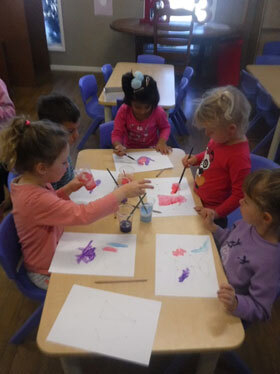
STEPS OF RUNNING THE LESSON 1. Make dots all over the paper in any fashion you choose. There is no wrong or right way!

2. Look at the dots and see what you have done. Is there something inside the dots? What would happen if you joined the dots together?

3. Begin to connect the dots to find an image/shapes.

4. Colour in the shapes/image using paints.

5. Reflection – what outcome did you get? What types of images/shapes? Notice how everyone’s art images are unique.

6. Extension – Collaborate with your friend. Draw the dots then join some up. Swap with your friend and finish each other’s artwork.

Evaluate the lesson

Some of the pre-schoolers experienced some difficulty grasping the concept of the activity. Dots were very large or close together in lines so when they were joined they did not form an image/shape. Regardless these children were encouraged and praised for their artwork and still painted along their lines, adding to the varying degrees of artworks.

Case Study – Young people today!!!

Reflecting on education through what we are getting as trainees, we can see the high schools have taught young educators to use Google for everything. Many have described never having used a book to find information. Let’s compound this problem. First, imagine a young educator looking for a solution. They go to social media sites, ask everyone the question, get a million wrong answers from a million wrong people who never read a book, let alone looked up a Regulation. Facebook ECEC groups become full of people dobbing themselves and their centres in for breaching Regulations. Their communication takes place mainly on smart phones.

Another interesting aspect to young educators is their communication method. They appear to communicate primarily through their smart phones and face to face communication is becoming difficult for them. Have you ever noticed how many say good morning to you as they walk through the door? This poses a risk to the centre because some are finding it difficult to have a face to face conversation with families. With their love of new technology, they have adapted well to the digital portfolios, but face to face conversations with families are a vital part of EYLF and MTOP and their loss is concerning.

The Nominated Supervisor and Educational Leader worked together to create plans, not just for programming, but also for practice.

Greeting Parents Procedure

When a parent walks into the room in the morning educators must:

  1. Make eye contact and say “Hi __________(parent’s name)” and then “Hi”__________ child’s name by physically getting down and looking in the child’s eyes, then giving the child a big hug and welcome.
  2. Start an informal conversation and ask things like:
    (a) how the parent and child are
    (b) whether the child had a good sleep
    (c) about anything we need to know eg medication that needs to be administered
    (d) who will be collecting the child in the afternoon
    (e) what they’ve been doing during the week to get curriculum ideas

Use ‘keep them safe and look after them words’ like those in the following script.

Script

Educator: “How are you Nadine and Jackson?  It’s good to see you today.”
Nadine (parent): “Hi Rachel –  say hi Jackson.”
Educator: “Did Jackson have a good sleep?”
Nadine: “Yes, he slept all the way through.”
Educator: “That’s great Jackson. You will have lots of energy to have fun with your friends and learn lots of exciting things. Now Nadine, (use the parents name as many times as you can) is there anything we need to know like giving Jackson medication?”
Nadine: “No, all good.”
Educator:  “What exciting things have you been doing on the weekend or over the week?”
Nadine: “Nan is visiting us from Townsville.”
Educator:  “Wow Townsville is a long way away.”
Educator:  “Who will be picking up Jackson today?”
Nadine: “Daddy will.”
Educator: (look at Jackson and say) “That’s great Daddy will pick you up today. I will look after you and keep you safe until Daddy comes and picks you up. Give mum a big hug and say goodbye and we’ll put your bag in the locker and go and play.”
Nadine: “Thanks Rachel. Have a good day Jackson. I love you.”

Note: I will look after you and keep you safe until Daddy comes and picks you up.

These words come from Dr Robyn Dolby’s research, and it works very well.

If we don’t teach then review, how will we ever know if our educators know? These are the must know procedures. You are to coach your team and then assess/test them. Remember: what you don’t inspect, don’t expect.

Step 1 Educational Leader goes through the steps with educators
Step 2 Educational Leader lets educators practice
Step 3 Educational Leader assesses educator in a real-life situation
Step 4 Educational Leader coaches educator for improvements if required
Step 5 Educational Leader /Nominated Supervisor completes educator’s training plan

That is embedded practice.

Matthew Stapleton, Director of Centre Support


7.2.1 Continuous improvement

There is an effective self-assessment and quality improvement process in place.

There is one NQS Element that is the backbone of the whole NQS.

Element 7.2.1 Continuous improvement. There is an effective self-assessment and quality improvement process in place.

Centre Support’s (CS) weekly learning activities (WLA) assists you to meet and exceed the NQS. To achieve this and gain a better understanding of the NQS I have copied points from the NQS guide below with the ways our weekly learning activities guide you to meet and exceed the elements.

NQS Guide: Quality services regularly monitor and review their performance to guide planning and improve service quality.

CS: Our WLAs do this by covering ALL 40 NQS elements with a structure . On Monday I ask you to review your practice with the use of a checklist. On Tuesday I use case studies to make you think and evaluate your practices and create a plan to improve them.

NQS Guide: This creates a shared understanding of the principles that guide the service, and encourages continuous improvement in practice, policies and procedures.

CS: All WLAs should be completed as a team. If one person or room leader is left to complete the WLAs then it won’t work. The assessor will ask educatos questions and educators won’t have the confidence to answer them.

NQS Guide: Quality services regularly update and maintain their Quality Improvement Plan as a dynamic document to guide progress towards improvement. Quality services use the Quality Improvement Plan for continuous assessment against the National Quality

CS: The WLAs do this in two ways. Firstly on Tuesday I get you to create an improvement plan after you reflect on the case study and secondly on Friday where I get you to write your strenghts in relation to the NQS Element.

NQS Guide: Quality services use the Quality Improvement Plan for continuous assessment against the National Standard and the approved learning frameworks, to identify new goals for the service as part of an effective cycle of improvement. Incorporating regular self-assessment and quality improvement discussions in staff meetings encourages educators to participate in reflection on key practices, such as pedagogy and inclusion, and enables all staff members to provide input into planning for continuous quality improvement.

CS: The WLAs cover all of this as mentioned previously. Don’t forget we start every week with some goals that can be matched to NQS Elements.

NQS Guide: Establishing and maintaining a culture of ongoing reflection and self-review offers challenge, inspires motivation, and supports positive levels of staff satisfaction.

CS: Every Thursday we critically reflect from different perspectives which includes children, educators, families and theorist. This reflective process should create a change in practice.

NQS Guide: This provides opportunities for all staff to improve their practice and programming, which contributes directly to improved learning outcomes for children.

CS: The WLAs cover all of this as mentioned previously.

NQS Guide: An effective cycle of continuous improvement includes reviewing:

  • the extent to which the service meets or exceeds the National Quality Standard
  • the performance of all staff members
  • how the service and its practices are delivered in accordance with the Early Years Learning Framework and/or the Framework for School Age Care (or other approved learning frameworks)
  • the outcomes for children at the service against the learning outcomes in these frameworks
  • feedback and complaints from children and families.

CS: The WLAs cover all of this as mentioned previously.

NQS Guide Exceeding Theme 1, embedded practice.  All members of the service team:

  • are able to explain how the service’s performance evaluation process consistently supports their learning and development goals and growth as professionals, including how a tailored professional development plan provides a focus for continuous performance improvement;
  • are able to discuss and demonstrate how they actively participate in the service’s ongoing self-assessment and quality improvement process, and how this process drives continuous improvement in service quality and enhances outcomes for children and families

CS: The WLAs cover all of this as mentioned previously.

Exceeding theme 3: Practice is shaped by meaningful engagement with families and community

NQS Guide says to get gexceeding we need to:

  • support families and the community to participate meaningfully in the service’s quality improvement processes, including the development and review of the Quality Improvement Plan;
  • The service supports and enables families and the community to provide feedback on quality improvement processes, and this feedback is actively considered as part of the regular cycle.

These points are difficult as families don’t give feedback on the QIP easily, but they do have a big influence on quality improvement.  Below is an example of how the centre worked with family feedback to improve the centre’s practices and staff professional development.

Family feedback to assist with curriculum
Asher is cooking fried rice for his family tonight. Ash added all the ingredients to the pan and practised cracking the eggs. Asher’s verdict is “it smells delicious!” 19 July 2018. Reflecting upon the family input led to children preparing lunch at least once a week.

This morning Cody, Rocky and Charlie prepared lunch for our preschool room. Rocky and Charlie were excited to make their own lunch especially since they love playing in their kitchen. Rocky and Charlie engaged in their own learning and development (LO 4.3) by following instructions that Cade (the centre’s chef) sent us along with all the ingredients to make lasagne. Cody asked Rocky and Charlie if they have ever made lunch before. The boys responded, “no we haven’t.” Cody replied, “this will be the first time we make lunch together.” We continued to place the mince, lasagne pasta sheets and white sauce in the dish. We went through the ingredients. Cody asked, “Rocky what is this?” and Rocky responded, “it’s mince.” Cody responded, “yes Rocky that’s correct. Do you know what this is Charlie?” Charlie then responded, “yes, it is pasta.” The boys layered the pasta sheets. Cody provided opportunities for Rocky and Charlie to construct materials as a strategy for learning (LO 4.4) as we built our lasagne for our friends to eat. We finished making our lunch and we sent it back to Cade to put in the oven.

When it turned up for lunch Rocky and Charlie were so happy with their job of making lunch that their smiles would not leave their faces.

Other educators in other rooms reflected upon the success,  and this led to every room preparing their food at least once a week. Reflecting further Chef Cade and educators now have a daily program called Junior Master Chef where small groups of 4-5 children with an educator prepare meals with Chef Cade.

Which led to the chef enrolling in a Diploma of Early Childhood with the intent to go onto an early childhood degree. All this from family input into the curriculum.


7.1.3 Roles and responsibilities

Roles and responsibilities are clearly defined, and understood, and support effective decision-making and operation of the service.

The element 7.1.3 wants each individual who begins work at the service to have a clear understanding of their role, responsibilities and the expectations for their performance. They should be encouraged to engage with the philosophy and context that underpin the operation of the service as early as possible. A comprehensive induction process plays a critical role in creating and maintaining a positive and professional culture.

Case Study – Everything just works.
At Cinderella’s everything just works. For example when nursery educators go to do a nappy change, there is always a supply of nappies set up perfectly above the nappy change table.

Educators know exactly how much their rooms craft and material budget are because they are told each week by the room leader. The room leader involves all educators by asking how we would like to spend the budget. This gives Emma, the Toddler educator confidence and she is never afraid to plan for science lessons with her children as she knows how to take the centre credit card to buy material she needs. Emma knows exactly where to put the receipt, so the budget can be reconciled.

All educators know exactly how to complete their timesheet and know if it’s not correct they will not be paid. This ensures everybody completes the timesheets correctly with admin never wasting a minute to chase people.

These practices allow Jenny the admin person to do other things that support educators to their job, like booking buses for excursions. Jenny has developed a strict routine which includes timesheets, ordering food and other material the service needs to buy.

Jenny says she has a diary where she adds everything from emergency drills, to the daily, weekly, fortnightly, monthly, quarterly and yearly task. Jenny says she needs this level of strict routine so nothing gets forgotten.

Mel the Nominated Supervisor is confident when an authorised officer walks in because every month Jenny is completing filing cabinet audits on both children and staff folders. All staff and nearly all parents know to keep their records up to date with Jenny.

Tamara says, “This level of detail flows through to the rooms to help us be better educators. We follow children’s interest and balance this with lesson plans that educators need to develop weekly. The weekly routine of creating lessons helps educators to plan better, manage time, plan a mini budget for the resources they need and learn new teaching techniques that in turn help create curriculum from children’s interests. Another practice that really makes a difference is ensuring everybody writes on the curriculum. Educators feel pride in their achievements and this practice sees educators from different rooms often talking and discussing their curriculums with each other. This has helped improve the whole centre’s curriculum.”

These practices were developed a few years ago and many aspects are led by the Educational Leader. She ensures everybody knows exactly how to do their job and takes the time to teach what is required and why it is required. The educational leader runs the inductions for all new staff and really assesses the educator’s knowledge and practice to ensure they know what to do. She never lets them ‘just read it’, she makes them read it and show how they understand what they have read by demonstrating it. New educators at all levels get up to speed quickly with what is expected because Georgie (Educational Leader) does a great job, which in turn allows everyone else to do a great job.

Case Study – Putting out fires. The Nominated Supervisor is always putting out fires, never gets things completed and educators don’t do much as they are waiting for someone else to make a decision. The educators turn around and say “we can’t do that because nobody ordered the craft paint last week…. We need more equipment because they broke that 3 weeks ago….. We can’t go on excursions because no parent has signed off on the form.” Behaviour problems take up a lot of time and stressed educators have used all their sick leave.

What is not embedded practice?

In 1974 William Oncken Jr. and Donald L. Wass used the analogy of monkeys to describe what happens to your time. They observed that many problems arise because staff don’t know how to deal with their problem and then they decide to throw their problem (or monkey) onto others. Imagine all the problems you are given as, time wasting, wriggling, demanding monkeys on your back that were never your monkeys but which you need to do something about it. These monkeys come in all different breeds.

For example, you get a call from the preschool room as a child’s behaviour has become a monkey ready to be thrown onto your back. In you go and out you come with a little monkey named Jackson. You are now a monkey entertainer which leaves you no time to do what you need to do as Jackson the monkey is in your office. Then you may make the mistake of going into the toddler’s room and the room leader says “we have a problem.” They describe this problem in great detail and want you to do something about it. This is the trainee breed of monkey, who doesn’t have the skills to do anything. They can’t interact with children, can’t do a nappy change and don’t have the skills for early childhood.

Now you have two time wasting, wriggling, demanding monkeys on your back, but wait, a parent is now ringing to give you another monkey in the form of a lost item of clothing. You put the phone down, turn around and an educator is in tears at your door as she throws you her monkey before walking out the door. This is a magical, just appeared, sickness breed of monkey.

See how Oncken and Wass describe the monkey plague that becomes your management chaos so beautifully.  Let us suppose that ten educators are so thoughtful and considerate that they let two monkeys leap from each of their backs to yours in any one day. In a five-day week, the Nominated Supervisor will have picked up 100 screaming monkeys—far too many to do anything about individually. So you spend your precious time juggling educators’ issues (monkeys) while leaving no time at all to do what a Nominated Supervisor has to do. Welcome to the world of early childhood.

What should have happened?

Educators in the preschool room needed to step up and increase their skills in building relationships with children and managing challenging behaviour. In my experience most, if not all, behaviour problems come from disengaged educators who can’t build relationships with families, which in turn means they can’t build relationships with children. These educators are then unable to create curriculum that is meaningful to the child. What they create is something that is easy for them eg getting activities out of the storeroom and plonking them on tables without engaging with children. The child becomes bored out of their brain and disengaged. Through their behaviour (which is the only way many can communicate this type of problem) they tell educators that the rubbish from the storeroom doesn’t interest them and they’ll behave this way until they get another form of attention.

The trainee problem comes from the room leader not having enough structure in the room for educators and trainees, and not taking the time to show rather than just tell them exactly what is required as part of their job. The phone call is an extension of this problem, in that educators are not being held accountable to their job and room leaders are not managing their room and children.

The sickness problem comes from not effectively managing educators’ sick leave (eg allowing excessive sick leave to be taken) or not enforcing sick leave policies.

Start identifying the monkeys and when people throw their monkey onto your back. Use the next page to help assist you.

Matthew Stapleton, Director of Centre Support


7.1.2 Management Systems.

Systems are in place to manage risk and enable the effective management and operation of a quality service.

All educators can discuss, reflect and engage in regular reviews of systems, policies and procedures to ensure they are effective, align with quality practice, are responsive to feedback identified through the service’s risk management and quality improvement systems, and support consistent, high quality practice across the service. All educators support families and the community to understand the roles and responsibilities of members and regularly asks for feedback.

Efficient and effective systems

Efficient and effective management systems allow the service to identify and manage organisational risks in a timely manner and carry out risks assessments as required to manage foreseeable risks to children’s safety and wellbeing. Effective management systems support the educational leader, nominated supervisor and educators in their planning, delivery and reflection on the educational program, and the development of strategies to continuously improve. When educators have adequate time and administrative support to perform their roles, they can focus on delivering a quality service to children and their families.

 Confidentiality and records management systems

Services are required to safely store and maintain the confidentiality and currency of information provided
by families, service staff and other stakeholders. This builds families’ confidence in the service’s records management practices and is an indicator of the level of professionalism at the service.

 Administrative systems

The approved provider is required to:

  • Ensure that the service operates in compliance with the National Law, the National Regulations and the National Quality Standard
  • Liaise with the regulatory authority when required. The approved provider must ensure that there are adequate systems in place to maintain the effective, compliant operation of the service.

Complaints management system

An effective complaints and grievance management system confirms to staff, families and the community that complaints and grievances are taken seriously and investigated promptly, fairly and thoroughly. Effective management of complaints may inform quality improvement processes and is an efficient way of considering and acting on feedback from families.

 Notifying the regulatory authority of operational changes, incidents and complaints

The approved provider must notify the regulatory authority of certain circumstances and information, including any:

  • significant changes to the operation of the service
  • changes relevant to the fitness and propriety of the approved provider
  • complaints that may impact on the regulatory authority’s consideration of provider or service approvals
  • complaints alleging that a serious incident has occurred or is occurring while a child was or is being educated and cared for by the service, or the National Law has been contravened
  • serious incidents that occur at the service
  • any incident where the approved provider reasonably believes that physical or sexual abuse of a child or children has occurred or is occurring while the child is being educated and cared for by the service.

Documented policies and procedures

The service should ensure that policies and procedures are well-documented, maintained and easily accessible to staff members and families. This supports the service to implement practices that are based on the service’s policies and procedures. Regularly reviewing policies and procedures in collaboration with families supports a shared understanding of the service’s practices.

Risk management and employing fit and proper staff

Fitness and propriety describes a person’s suitability to be involved in the operation of an education and care service. Prior to granting provider approval or service approval, regulatory authorities assess whether the applicant applying for provider approval is fit and proper to provide an education and care service. The approved provider is responsible for assessing a person’s suitability for the roles of nominated supervisor and responsible person at the service. The approved provider, nominated supervisor and responsible person must remain fit and proper for the service to operate under their management.

Checking and maintaining accurate records that relate to the fitness and propriety of all staff assists in safeguarding children against risks to their safety and wellbeing.