How do I stop children from swearing?

Swearing Children – Just lovely
Swearing has become a part of our language in the everyday. If you watch TV after 8:30pm we hear it all the time. Many parents are swearing in front of children, but we don’t need to accept it in our centre.

Step 1 Write down some examples of what you have heard when a child swears

Step 2 What is the child trying to say?

Step 3 Come up with a better vocabulary for the child to use. Ensure the new words and sentences are difficult to say. This then gives the child a real challenge and when they achieve this they will then have a sense of achievement.

Let’s put it into practice.

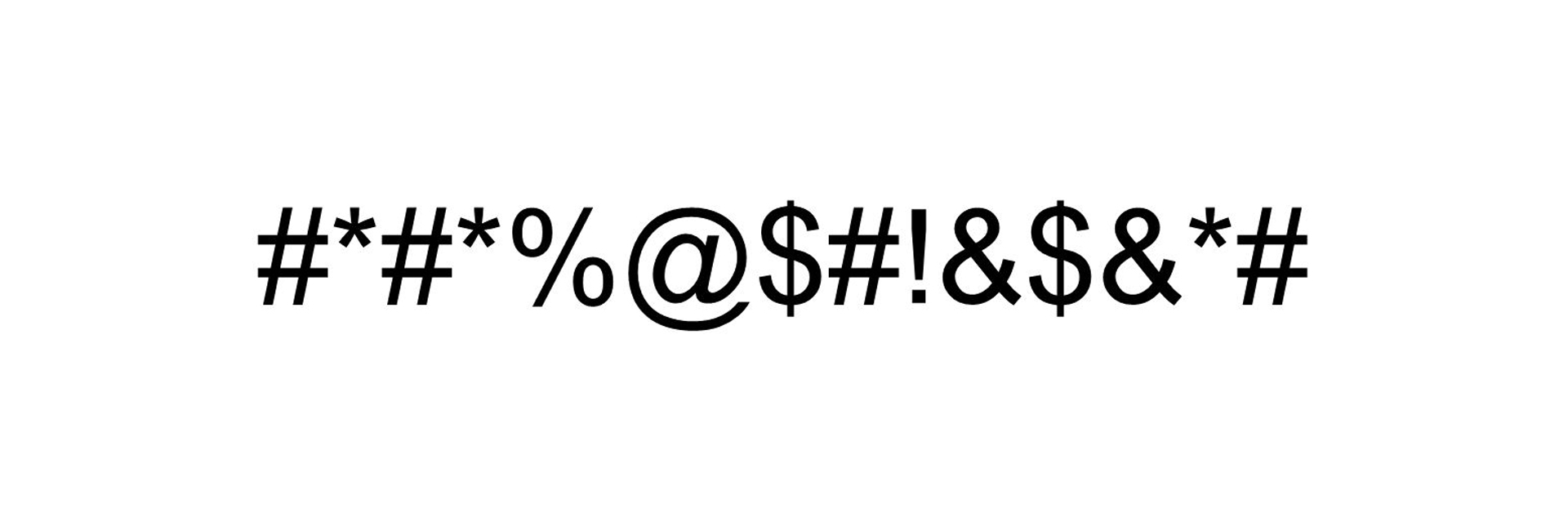
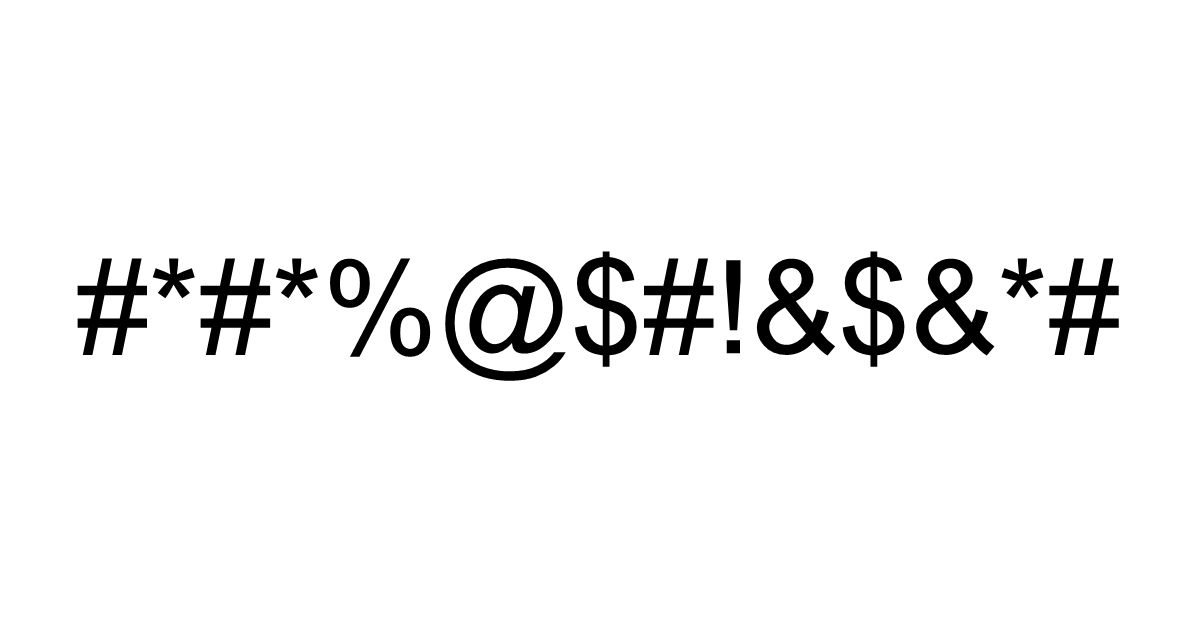
Step 1 “You’re a F*#king C*%t Rachel” said Jackson. True story….

Step 2 What is the child really trying to say?

I’m frustrated that you are not allowing me to _______________ (please fill in the blank)

Step 3 We don’t use words like that here at our centre. Let me give you better words to use.

I’m furiously frustrated at you Miss Rachel. I would like to continue here playing with…

I’m wrathfully irritated at you Miss Rachel. I would like to continue here playing with…

I’m irately exasperated at you Miss Rachel. I would like to continue here playing with…

Step 3a Write the words down in foundation font and display it on a word board. Teach all the children the new words.

Praise the children for using them.

Children love to learn new words. Now practice.


What do I do with a defiant child?

A defiant child

A defiant child wants to be just like you and do everything you are doing, but you stop them. They want to be the teacher in every way, so let them.

Step 1 What is the child trying to say? What does the child need? Do they need to show you how they can do what you are doing?

Step 2 Think of the end result you want ie serve lunch.

Step 3 Give the lunch problem to your defiant child to solve and step back out of their way.

This works well with all aspects of the routine. When children contribute to activities and routines everyone gains both energy and confidence. We usually do too much for children because we are caught up in our timeframe and adult routine. We jump in and set the table, serve their lunch, make their beds, sweep and mop the floor etc. How do children feel when this occurs? While it may take much longer when children assist, they get a sense of achievement.


How do I stop children from biting?

Biting – how do I stop children from biting?

For some toddlers, biting is a frequent form of aggression. For staff, biting outbursts can be highly stressful to deal with both at the children’s level and a family member’s level.

Biting as a tool of language

Step 1 Identify it and teach the new language that is missing

Step 2 Work with families – essential

It is most common for biting to occur in the toddler age range and may be associated with developmental issues such as limited speech and language development and skills, poor self control or a lack of understanding of the consequences.

Establish any reasons such as delayed speech, overtiredness, hunger, impatience etc. Observe and discuss these concerns with family members to encourage a holistic approach. Perform preventative measures such as changing routines, removing the child from high risk situations and monitor food and sleep levels.

Coaching children will empower them in dealing with conflict in a more positive manner. For example, teach the victims of biting to say “Stop” and immediately seek the help of an adult. Praise and acknowledge successful social interactions.

Reprimanding, removing and firmly asserting “No biting” may be necessary.  In the previous exercises we have practiced not saying NO. When we reduce the use of the word NO it will be effective when we need to use it – for example, “No Biting.”

Consistency among educators in this process is particularly important. This may include educating adults on how to react appropriately to instances of biting.

If the biting continues we need to shadow the child at all times.

Biting as a cultural learnt behaviour

Step 1 Identify it and teach new ways to interact

Step 2 Work with families – essential

For example, a child comes from a Greek family where all Aunties ‘eat the child’ when they kiss them. It’s not just a kiss on the cheek. The child doesn’t understand fully, reproduces it and bites accidentally.

Teach different ways to interact and show how their actions were meant for good but hurt.


How do I teach children to be calm?

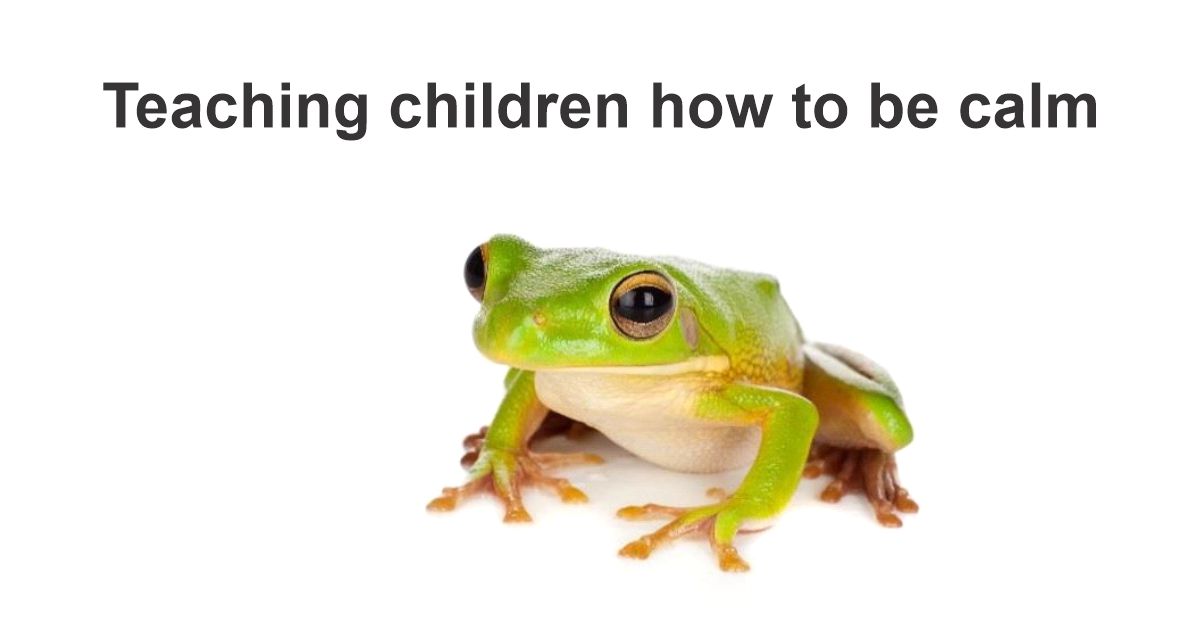
Teaching children how to be calm

Calmness and mindfulness is an open and friendly willingness to understand what is going on in and around you. It means living in the present moment (which is not the same as thinking about the present moment) without judging or ignoring anything or getting carried away by the pressures of everyday life. When you are mindful while waking up, eating lunch, playing, or with every major and minor conflict, your mind is not elsewhere but right there in the moment.

You save energy, as you are aware of what is happening while it is happening. This mindful, friendly presence changes your behaviour as well as your attitude toward yourself and other children. Mindfulness is feeling the sun on your skin, feeling the salty tears rolling down your cheeks, feeling a ripple of frustration in your body. Mindfulness is experiencing both joy and misery as and when they occur, without having to do something about it or having an immediate reaction or opinion.

Mindfulness is directing your friendly awareness to the here and now, at every moment. But mindfulness practice involves some effort and intentionality.

Calmness and mindfulness
can be learnt.

How to do mindfulness with children

There is a great book called Sitting Still Like a Frog: Mindfulness Exercises for Kids (and Their Parents) by, Eline Snel.  

Could you BE A FROG?

You could introduce the exercise as follows: “A frog is a remarkable creature. It is capable of enormous leaps, but it can also sit very, very still. Although it is aware of everything that happens in and around it, the frog tends not to react right away. The frog sits still and breathes, preserving its energy instead of getting carried away by all the ideas that keep popping into its head. The frog sits still, very still, while it breathes. Its frog tummy rises a bit and falls again. It rises and falls. “Anything a frog can do, you can do too. All you need is mindful attention. Attention to the breath. Attention and peace and quiet.”

LOOK BUT DON’T JUDGE. When you learn to look at things without interference from your thoughts, you will realise that you are seeing more—and interpreting less. You will also retain more, because when you look attentively, you really see things.

Here is an exercise for young children. Try to remember five things that you see (a tree, a traffic sign, an unusual house, the entrance to your school, the classroom door). What do they look like? You can train yourself to see more and more properties of the tree or the traffic sign, such as colours and shapes, spots and stripes. By looking without judging whether something is pretty or ugly, you will see more of the world around you.

LISTENING TO A SOUND without immediately wanting to label it strengthens our ability to really listen to one another. What sounds can you hear right now? Are they high- or low-pitched, humming or buzzing sounds? Can you detect some kind of rhythm? Are the sounds behind you or in front of you? Far away or close? Are they outside you? Can you hear any sounds inside yourself?

EATING WITH MINDFUL ATTENTION may seem simple, but it can be quite a challenge. Try to get all the children to eat one attentive mouthful without comments such as “Ugh,”“Yummy,”“We eat this all the time,” or “I don’t like this.” It can be a surprising experience. Discuss what you smell, notice, taste, and feel in your mouth when you take a mindful bite. Hold it in your mouth for a moment, and swallow. Take a bite and note the following:

  • What do you really taste once you stop thinking about the food being either tasty or nasty? (Remember, these are just thoughts.)
  • Do you have a salty, sweet or bitter taste in your mouth? Or a mixture of all three?
  • Does it feel hard or soft in your mouth? Rough or smooth?
  • What is happening in your mouth while you are eating? What do you experience? Can you feel your mouth watering? What is your tongue doing? What happens when you swallow? And when do you lose track of your mouthful?

There are great books regarding mindfulness and calmness for children such as


What do I do when children’s behaviour is aggressive?

Children pushing children – She just pushed another child

If this is a younger child, we would go over to the child, get down to their height and say calmly and with a soft voice. “Hands down” (you may need to physically guide them down).

“Be gentle with our friends”. Then we redirect, let’s push the bike

Please remember, with all new strategies it may take practice and time. You may need to practice for weeks.

Aggressive older behaviours – Go back in time

Some children will demonstrate aggressive behaviours. These may be verbal or non‐ verbal.

In this situation there is not much you can do to stop it other than letting it burn out.

It is important to respond quickly to ensure the safety of the child, other children, staff and visitors. Remove all the children away from the aggressor if you can. When responding to aggressive behaviours, we must aim to:

  • Comfort the victim of the aggressive behaviour
  • COMFORT THE CHILD WHO HAS BEEN AGGRESSIVE

It may take up to 20 minutes for the child to be able to reason with you and talk after the outburst. The neocortex in the brain has shut down and raw emotions are controlling the behaviour at this point in time. Be patient and go in with a big bundle of love, care and emotional support.

Sometimes we jump in and accuse the child of behaving in a way that is inappropriate. For example, a child hits another child. We see the victim and automatically blame the other child. What is worse we say things like “get over here now Max. We need to talk about your behaviour” or “what have you done now Max?”

A better way to deal with these situations is to reverse time.

Step 1 Ensure the victim is okay and doesn’t require medical attention.

Step 2 Go over to the aggressive child calmly and say “(Child’s name)  can you tell me what happened?”

Step 3 Let the child tell their version of events

Step 4 Go back in time and show the child another way of dealing with the situation.

What is the best way to talk to children when their behaviour is challenging you? Respond but don’t react.

If you’re feeling really challenged, count to three to settle yourself, Try not to shout, you will lose all credibility with a child if you shout and they will think they have won because they now know how to press your buttons for a reaction. You need to be the best role model and teach the behaviours you want to see.

If you feel like you are about to shout, turn around, take a deep breathe in slowly turn back and start talking quietly, assertively. This works really well, remember the time when your mother was really really angry and you knew it was going to bad because she went quiet? You knew it was bad, and so will children, the calmer you are the more serious they know it will be. We go into a lot more detail later with children who are having a meltdown, but this example is pre meltdown children.

Go to the child, touch and gain eye contact and attention, then say, ‘Listen .. .’ Look into the child’s eyes as you set boundaries. This will help you to remain focused and not fly into a rage. Using the word ‘Listen’ before you start any sentence with a child is a good strategy to get them focused about what you are going to say.

Remember, if the child behaves appropriately, always praise: ‘Good listening!’

You need to calmly stand your ground and quietly but firmly repeat your request up to three times. Ignore protests, and repeat your request. Give children time to process the request and your serious demeanour.

Counting down from ten to one can help everyone settle, and can be a game to play, giving a child time to respond to the request.

Practice straightening your shoulders and spine, opening your chest (your heart) to be lovingly assertive, just and fair.

Choose a word to signal a change is required. It may be ‘Listen’ (as discussed earlier), ‘Stop’, or when older, ‘Not appropriate’, before explaining the appropriate behaviour. If this is done with consistency, the child will get the message.

Talk with your other educators and see if you can follow the same process. If not do it your way and the others will follow what works.

Meltdowns – Sometime the best strategy is to walk away

When a meltdown occurs walk away and get the other children to follow you. You need to ensure the safety of the other children, yourself and other educators first. When a child is having a meltdown there is very little you can at the peak of the meltdown, as the child’s thinking and reasoning part of their brain has completely closed down.

When they come out of the meltdown start describing what emotions you saw coming from the child.

“I could see you were very angry, very distressed, wait with long pausing before going on, I could see you not happy”.

 “When you are ready, I’m here for you and you can come and tell me how you felt so we can work out what we can do”.


What do I do when children climb on furniture and run inside?

She is climbing on the furniture

What do I do when I see a child climbing on the furniture?

Never yell across the room

“Annabel get down from there now,” yelled Holly. Of course, Annabel didn’t listen and proceeded to climb on the bookcase.

What are the steps we need to take?

Step 1 See the child doing something that isn’t appropriate

Step 2 Calmly walk over to the child and get down to their eye level

Step 3 In a caring voice redirect the child into a safer place

Step 4 Tell the child how much you care for them and you are there to look after them and keep them safe

Walk calmly over to the child, get down to their level and say “Annabel, I need you to come down from there and go over to the block corner and play. I can’t let you fall and hurt yourself because I would feel very bad if you were hurt.  I need to keep you safe and look after you until your Mum comes in today.”

What do I do when the children are running inside?

A lot of behaviours we perceive as not good are usually just in the wrong location. When this happens we need to learn how to redirect the children. For example

Child is running inside. (running is good, wrong location)

Stand at the door and ask them “Can you run to the tree and back three times?” standing at the door ensure you still have the ability to supervise them.

Imagine a Child is climbing on furniture (gross motor good, wrong location)

Let’s take these great climbing skills outside on our tyre tower.

Then you need to reflect, am I providing enough physical activities for these active children? If not adjust your program to add more physical activities.


What do I do when children throw toys?

Throwing toys and fighting over a toy

Why are they throwing toys?

If it’s in the room and someone could get hurt, then that is no good. So, we need to redirect. For a quick fix get down with the children and show them how to build an enclosure for the toys i.e. look, these cars need a hoe, where can cars live, awesome idea, a car park, let’s build one. Or thee animals need to be kept safe, they look endangered, where can we keep our endangered animals s built, animals into farm enclosures.

Inappropriate Throwing can take time to plan an activity, for example

Once we moved outside Cade began to set up an activity for the children. “What are you doing Mr Cade?” Abby asked. “I am setting up a game to play Abby.” Cade told her. “But why?” Logan asked. “I thought we could use this game to practice our throwing skills. This game is to help us with throwing and turn taking rules. One at a time, you need to stand here and try to throw the ball through the tyre. Do you think you can do it?” “Yeah” the children all called out together.

Cade finished setting up the tyre and the game was on. Roman was the first to try. He threw the ball and it bounced off the tyre. “Great try Roman, you got it very close to the hole. Try again.” Cade praised his effort. Roman threw the ball a second time and it went straight through the middle of the tyre. “Yay I did it.” Roman cheered celebrating his achievement with the others. Before long all of the children had taken their turn. “You all did a fantastic job.” Cade praised them all.


Fighting over toys

Why are the children fighting over a toy, its good to get to know why and to do this get down to their level and ask. If you discover someone has grabbed it off another, then you teach the child to as if they could play with it, usually the answer is no, or if they could play together with the toy, which usually take time to sit with them and teach turn taking or you could re direct the toy grabber to another area or other toys.


What do I do when children do things to annoy me?

What happens when children are making annoying sounds?

A child is tapping on a table/window/surface that makes an annoying noise

Redirecting – Here is a musical instrument/ saucepan and wooden spoon. Let’s make music. If we tap on the window it may break.

Here is a great learning story that was developed because children were annoyingly tapping

Miss Tamara was telling Archies’ dad Jack that the group had a great interest in noise making which lead to seeing what we could tap on to make music. Jack said we have a guitar at home and Archie and I play it together all the time!!

As an extension of noise making and Archie knowledge about guitars Archie, Charlie and Mason all made guitars out of blocks and rubber bands again. “Quick Tamara, come watch us!” Charlie began, “we’re going to put on a show just for you!” Charlie led Tamara to a chair and asked her to sit and watch them on the ‘stage’ (which is normally used as the skate park). The boys began strumming their guitars, humming along to the exact same tune with each other. Charlie even had a long round block to use as a microphone whilst they danced around the stage with big smiles on their faces. “We’re done!” Mason called as they stopped singing. Tamara began to clap, and then asked the boys if their new band had a name. “We’re the Bucking Bull Band!” Archie called.

The reason I want to show you how this annoying tapping was extending into learning and building guitars is because of the EYLF and literacy

The EYLF says “Literacy and numeracy capabilities are important aspects of communication and are vital for successful learning across the curriculum. Literacy incorporates a range of modes of communication including music, movement, dance, storytelling, visual arts, media and drama, as well as talking, listening, viewing, reading and writing.

Language is a system of symbols and patterns, and early literacy activities which involve music, movement, dance, storytelling, visual arts, drama and talking help children understand these symbols and patterns.

Participating in musical activities improves a child’s literacy skills as they learn to pick up the beats and rhythms of the music and language patterns.

Again, I want to show you how so many things we might consider inappropriate behavior is usually in the wrong location, or is a great opportunity to extend learning.

She has just drawn all over the wall…. AHHHHH

Drawing on the wall, again Creativity great, wrong canvas. What can we do?

Let’s draw on the paper or let’s draw on the path with chalk, but first let’s clean the wall together.


What do I do when children won’t listen to me?

Use your voice in interesting ways and children will listen

Your voice is an amazing tool that can help guide children’s behaviour and remember the loud voice is not always best.

The tone, volume and pitch of your voce can do wonderful things, what happens if you use a soft voice?

A loud voice?

A silly voice?

A crazy voice?

To learn how to use our voice to guide children and gain their attention, try playing Simon Says.

Playing Simon says type games allows educators to work out how to direct and give instructions to children and allows children to learn how to follow instructions from educators.

Simon says is best played with many different tones. Try it to see what works best:

“Simon says hands on knees

Simon says ahnds onnnnnnnnnnnnnnnn……….. head (soft voice)

Simon says

Practice using all types of tone, volume and pitch with silly crazy voices.

Andrew does not listen – what can I do?

“Andrew can you please get down from the table?” says Robyn.

What does Andrew really hear? If Andrew has a receptive language problem, he may only hear “Andrew table.”

You need to slow things down when children have receptive language problems. You may need to use pictures instead of words.

You need to take a deep breath in and work out what the child has actually understood. Communication is only as good as the response it gets.

Did Andrew do what you wanted? No. Therefore, what you are doing is not working. Change it.

Many educators are really bad at this. They just keep using the same communication strategy even though the child does not respond.

Remember, say things in a positive way.

“Andrew (leave time gap so they hear and process you are talking to them), feet on the floor Andrew.” (repeat name again at the end)

The following are simple little things we can do in practice.

I say ‘No’ and they continue doing it

How would you like it if you were yelled at across the room by your mother saying No, No No No. It wouldn’t feel good, and that is why we need to stop using the word No.

There are many ways can you replace the word NO

Imagine we are working away and a Child request something that can’t happen now. If we say no, and it’s a part of our everyday practice the child starts to give up and won’t even bother. So here are some great strategies to use instead of saying No

Can you read me a story please? Say Annabelle

Yes, I can, before I come over to read you the story look through all the pages to find your favourite picture.

Remember to look at all the pages and all the pictures. When I am finished with Jackson, we will look at the book together and I’ll read you the story. Or, if you want, you could come over here first and help me with the cleaning. Then we will can read a story later.

When we are transition from different spaces children may not want to cooperate with your request. For example, “I want to play on the fort” and you have just moved the children into the room for lunch. Great, you can play on the fort this afternoon, Let’s race to the door now: ready, steady, go. Let’s run!

You are just about to finish your shift and Eve says “I want to make a cake. Good idea. We can bake a cake on Wednesday once I can get everything we need. Can you ask your mum for some recipes when you are home tonight so we can get organized for Wednesday Cake Making Day?

I want to play for longer! Of course you can, five more minutes, one minute, thirty seconds, one more turn, any little amount of time to a child is better than saying ‘No’.

Eve is Angry and just ignores me

Sometimes we need to Break the negative mood with laughter.

As Laughter can be the best medicine

WE may need to Tickle children.

Chase children in a fun way with lots of laughs.

Make fun out of it. Shake loose a smile.

Be lighthearted and have some fun.

Put on the laughter music

Children get angry if you don’t listen to them, this is called stonewalling.

We need to assist children to express their feelings with time, empathy and support. Time means stopping and really listening to what children have to say, not just rushing through a room and saying “that’s nice dear” as we keep walking. When we listen, we are saying “I can hear you, I understand you.”

Ask questions

When children don’t listen to you, continually ask questions. When they answer the question they are showing you they know what to do ad are capable of doing it.

Educator: What do you have to do to serve morning tea?

Child: Get the trolly

Educator: What do you have to do before you get the trolly?

Child: Pack away

Educator: who could help you pack away?

Child: Ethan and Jack

Educator: Great, when Ethan and Jack have helped you pack away, what do you do next?

Child: Get everyone in to read a book

…..

Ask questions all day. Try it, it makes children think about time and the sequence of events.


Use your voice in interesting ways and children will listen


 1 MINUTE READ

Your voice is an amazing tool that can help guide children’s behaviour and remember the loud voice is not always best. The tone, volume and pitch of your voice can do wonderful things, what happens if you use a soft voice?     

A loud voice?

A silly voice?

A crazy voice?

To learn how to use our voice to guide children and gain their attention, try playing Simon Says.

Playing Simon says type games allows educators to work out how to direct and give instructions to children and allows children to learn how to follow instructions from educators.

Simon says is best played with many different tones. Try it to see what works best:

“Simon says hands on knees

Simon says ahnds onnnnnnnnnnnnnnnn……….. head (soft voice)

Simon says

Practice using all types of tone, volume and pitch with silly crazy voices.