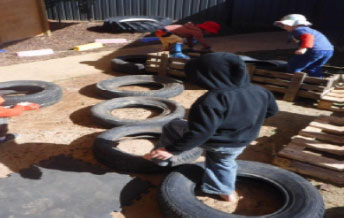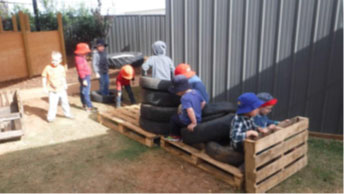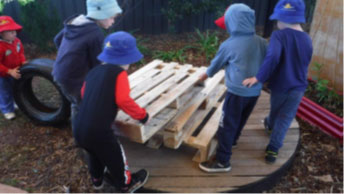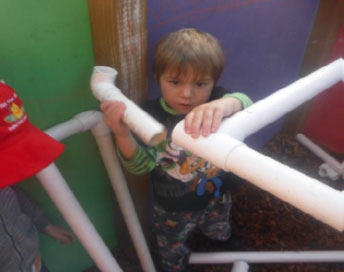
Loose parts makes a clam environment

It is generally recognised that children’s opportunities for outdoor play are much more limited today than they were say 20 years ago. Reasons for this include increasing urban development, concerns about children’s welfare, parents’ working patterns and the increase in digital technologies.  This raises the question of what role ECEC and school based settings have in the provision of outdoor play environments.

Research suggests that pre-school policies and practices regarding outdoor play significantly influence children’s levels of physical activity. Reilly (2010) found that physical activity in childcare centres was typically very low while levels of sedentary behaviours were typically high. Things found to increase levels of physical activity include higher staff qualifications, excursions, square meters of space allocated to each child, vegetation and loose, unstructured materials.

You may think it obvious that more space leads to greater physical activity. However Moser and Martinsen point out that the “psychology of the space” ( ie whether it meets children’s play needs) and “opportunities for extended periods of time within the space” are just as important.

Studies have shown that public playgrounds do not match children’s interests because they do not offer the levels of challenge or risk children seek.  They show it’s important to understand how children view their outdoor environment and to make them aware of any challenges and risk. “Reduction of risk is through understanding of the environment rather than adult restriction.” This perspective requires adults to see children as “competent rather than …vulnerable and in need of adult protection.”

Play is an important aspect of children’s learning processes. Do we encourage and foster children’s participation in outdoor play? Do we hear their voices? Do we truly allow them to participate in defining and engaging with play environments? As Pramling Samuelsson (2010) states, “Accepting children as equal partners also means  to make play visible, since play is supposed to be a great part of the child’s world and the way into children’s social life and learning.”

The dynamics of early childhood spaces: opportunities for outdoor play? European Early Childhood Education Research Journal 18:4 437-443

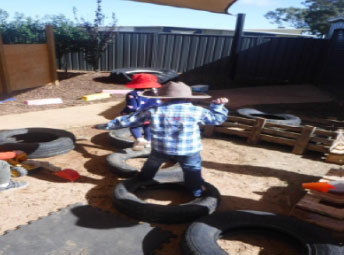
Loose Parts for calm
Have a look around your service and answer the following questions:

  • Is it vibrant and attractive? Would you like to play here if you were a child?
  • Are the indoor and outdoor environments regularly reorganised to stimulate children’s interests and promote creativity?
  • Is there something that every child loves?
  • Are there quiet, restful places for children who need some time out or small group interactions?
  • Are there places where children can ‘hide’ from adults (while educators still supervise)?
  • Are there activities that challenge children and encourage them to take appropriate risks?
  • Are there spaces for team sports and physical play (especially important for school aged care)?
  • Has the environment been modified so children with additional needs feel comfortable and can participate? This does not just involve ramps and bathroom facilities but also colours, noise levels etc.
  • Can children reach things/do things without always asking an adult for help?
  • Are activities and furniture set up so children and adults walk around rather than through children’s play?
  • Are there lots of loose part resources inside as well as outside?
  • Are children encouraged to be active and get messy?
  • Are there things like sticks, leaves, water, grass, sand, rocks, mud to play with?
  • Are there things to climb like trees?
  • Are there open ended resources that children can use to build with and engage in imaginary play?

What can you improve? Pick three issues from the above list and reflect on them from a child’s perspective. Ask your children some of these questions and see what answers you get. eg what do you love here? What do you need help to reach? Which is your favourite space? Why?

Connecting to your community for resources makes a clam environment

When a service connects to their local community to provide resources the play becomes interesting and creates calm.

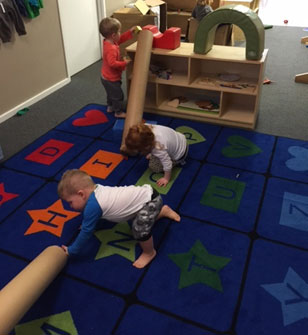
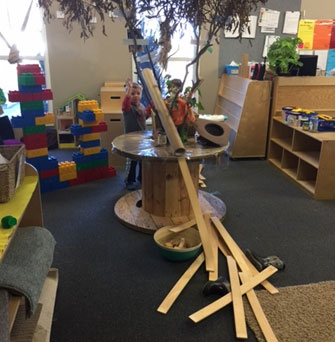
For example, this service made contact with a local picture framer and gathered their used cardboard cylinders for loose parts play.

Here are the toddlers setting up and playing with the cylinders.

This is the 4 to 5 year old children with their cylinders and wooden slats that are from an old bed.


Sewing with children creates calm

Sewing with children creates calm

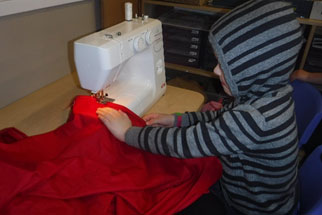
Recently at one service the preschool children have been encouraged to prepare and set the tables at meal times. This involves adding a table cloth, placing the plates and cups on the table and any necessary cutlery. This routine prompted a conversation about buying table cloths to put on the tables. Miss Cherie went to Spotlight and purchased some bright materials to make into tablecloths. From this, the children used the sewing machine to edge the material.

Wow. Wasn’t this an interesting life lesson!

The children took turns sitting at the sewing machine and using the foot pedal to manipulate the speed of the needle. Gemma told Miss Cherie that she sometimes does sewing with her mum to make clothes. Annie, Matthew, Luke, Ryan, Max and Hunter also had a turn. Matthew demonstrated a very steady hand when holding and moving the material. Matthew was able to confidently reassess where the material was sitting each time he put his foot back on the pedal. Ryan told Miss Cherie that sometimes his Ma likes sewing and that she is very good.

This experience allowed the children to learn a new life skill. This skill encourages the use of the children’s fine motor, hand-eye coordination, small object manipulation and persistence to learn new things, but most of all created an environment that was challenging and in turn created calm.

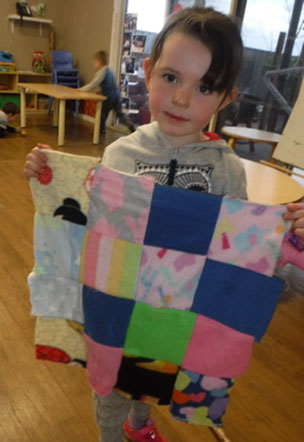
The photo above is a child sewing a table cloth. The photo below is a patchwork cushion cover sewn by a child.

How are children given the opportunity to plan and modify their outdoor and indoor environment at your service?


Set up individual spaces that allow children to show their agency.

Agency is being able to make choices and decisions that influence outcomes. Children have agency when:

  • they make choices and decisions that affect them
  • take the lead in their learning and make choices about the design and outcome of the experience or activity

Children have a sense of agency when they imitate an action they have seen and discover that they can successfully repeat the action.

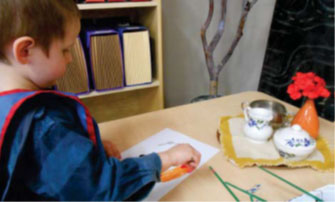
For example, educators at one service set up an art activity where children were invited to look at a bowl of fruit and create a painting in any format they wished. To help each child make their own decisions about the way they would paint their picture, the activity was set up so that one child at a time completed the painting. Each child individually decided how to approach the painting, where to start, which perspective to use, what textures and colours to use and how to compose the painting. They each painted what they each saw, understanding that no one else was there to tell them what to see or how to do it.

“Literacy is the capacity, confidence and disposition to use language in all its forms.” EYLF 2009

Here’s what Educator Penny said:

“Over the past weeks we have been exploring different forms of art and the process of art making and the meaning art can give. We have been looking at book illustrations and how they give meaning to the words of books.

To extend the concept of looking and creating artistic communication I intentionally added the process of ‘still life’. I combined “Biggest Morning Tea” and decided to incorporate a tea setting for the ‘still life’.

One concern of mine has been trying to eliminate the ‘same sameness’ when it comes to children participating in a similar artist or craft event. I was trying to think of ways to allow the children to see the same objects but create their own meaning.

I decided to set the still life up as a single child process which I thought would remove the group creating the same output.

Each child sat and didn’t understand it was a painting exercise. When I asked them to look at the still life they looked through the objects and to the wall at a picture. I ensured no one else was there to tell them what see or how to do it.

I needed to say “what can you see?”

Once they identified what they saw I asked “can you paint what you see?” They were hesitant to start painting.

I changed the question to “Can you paint one thing at a time”?

What interested me was the children had such a clear idea and as soon as they said it they could see.

When I broke it down they were able to process the parts of the ‘still life’ and start painting. One child painted from an above.

Another painted the middle object first, then the side objects. For me this showed a great awareness of composition.

What do you see first  – “red flowers”  – so they painted from the back (red flowers) to the front.

One child talked about the different texture, the wooden tray, and the cloth on top and the layers. He painted the representation of layers.

I limited the colours, but now reflecting after the experience this is something I will be investigating more as “there isn’t the right grey” said Dayman, where is the silver?”

“We haven’t got grey” I said. Dayman mixed the white with the black and made his silver. Dayman knew exactly what colours were needed to mix and achieve silver.

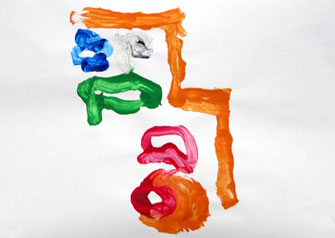
Peter painted the stripy artwork. I doubted his ability as he is a toddler. I was just about to brush him away and he did the red stripe last.

I pointed to the colour and he said “it’s the flowers”. As I pointed to another colour he said “blue pots.” The stroke of yellow was for the yellow fabric he said.

It amazed me how some children were accurate in their representation of the image of the pot.


It took me four years to paint like Raphael, but a lifetime to paint like a child. Pablo Picasso

I love how confident they are with their paintings. I was amazed how children can see three ways at once.  They could see it from the top, side and front all at once and confidently described and painted it.

The biggest problem is us as I nearly shooed Peter away. I’m embarrassed to say it. I doubted him, but now I like his artwork the best.

I wonder what would happen if the children selected their own objects from home and created their own ‘still life’ painting. Does it need to be a painting? What other wonderful ways and techniques could represent the ‘still life’?”


Exploring agency to create calm

Children’s Agency creates calm

Children actively construct their own understandings and contribute to others’ learning. They recognise their agency and capacity to initiate and lead learning and their rights to participate in decisions that affect them, including their learning.

Sense of Agency

The EYLF explains agency is being able to make choices and decisions, to influence events and to have an impact on your world (EYLF page 45). A child with a sense of agency is someone who takes ownership of the thoughts, intentions and actions they generate. A child’s sense of agency is central to how they perceive experiences and their role within society.

The Guide to the National Quality Standards says assessors may look at how:

  • educators support play experiences initiated by children
  • educators allow children to direct their own play experiences with their peers
  • children begin to initiate negotiating and share behaviour
  • children show leadership, make decisions and follow directions given by other children

Agency can be a difficulut concept for educators. Below is an example of an educator’s discussion with an assessor explaining agency.

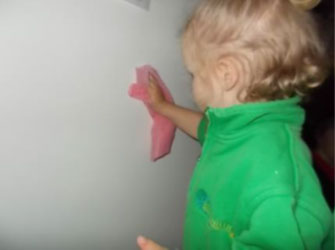
“We get excited when children make choices and celebrate their achievements. We have looked at ourselves and asked the questions, “do we do too much for children? Do we get in their way with our adult routine?” We see agency is aligned with identity and how they fit into the world. When you take parents’ perspectives into account, children do more then we expect they can and working with parents to promote their agency is great. For example, we have children taking control of their room by cleaning, setting up for lunch, setting their beds and running the room.

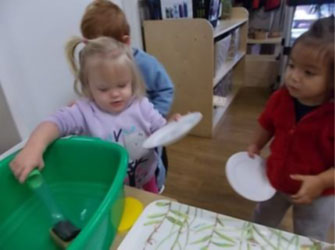
After morning tea the children washed their own plates, showing us just how much they enjoy taking responsibility and using the kinds of equipment they see grown-ups using all the time. They even waited patiently to have their turn. Olivia enjoyed the activity so much she got extra plates off the trolley to wash. Perhaps we could use her in the kitchen.

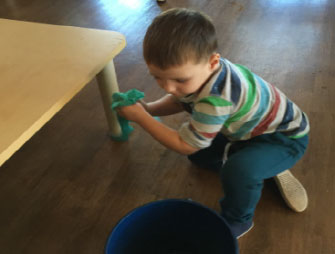
Friday means cleaning day so we used the opportunity to get the kids involved with the jobs. Skirting boards and chairs were all scrubbed. The children enjoyed the activity and it helps them to feel like they belong when they are given real responsibility as well as teaching them to care for their environment.”

How will you help enable children to have a sense of agency?


How do I create a calm environment?

Routines create calm environments

What is your room’s routine? Is it written down so all educators and older children have a daily reference. 

Does it include time for:

  • Planned physical activities
  • Routines which make transitions smooth and predictable for children
  • Routines which include spontaneous or intentional teaching to promote learning outcomes eg when we clean the tables we go round and round in a circle, let’s help our friends and pick up 3 blocks each
  • Planning with the children to ensure activities are based on their interests or weekend activities
  • Helper charts which are referred to and used during the day
  • Free play inside and outside
  • Talking with children about what they have learnt today and what they liked/didn’t like
  • Completing portfolio documentation with children (children talk and write, educators record and underwrite for young children)
  • Writing the program with the children
  • Packing up/cleaning with the children
  • Singing, dancing, dramatic/imaginary play
  • Looking after plants/animals
  • Small and large group activities
  • Several different learning activities to maintain children’s interest/engagement

If you don’t have a written room routine, try writing one in half hour or one hour blocks. Make sure you cover all of the activities above, then implement and refine after reflecting with colleagues. If you do have a clearly articulated routine, what areas can you improve? Reflect with other room educators and focus on at least one area.

We often find that routines are seen as parts of the day where things have to happen, but unfortunately learning is often not one of them. In these cases routines are adult directed with specific objectives in mind, so that learning can start again when they’re finished. Wouldn’t it be so much better if we used routines to promote learning outcomes? There is no set time or place for learning. It can happen anywhere and anytime, especially for children when so many activities and experiences are new.

Assistant Professor Caroline Fewster says the challenge is to design routines and transitions with children rather than for children, creating a sense of community. This supports children to become progressively independent, develop their knowledge and skills and become members of a group.

She says “..generally we ask children to pack away play materials as a group and sometimes only four or five children actually ‘pack away’. (This may) be unfair to a small number of children and create a lot of packing away for …educators. Instead of expecting all children in the group to pack away…, each child could have a more precise role…Children may work together to complete a task… they have chosen themselves. A democratic pedagogy would advocate giving choices to children…”

Choices could include things like:

  • designing the morning tea table in a small team
  • setting the table
  • folding paper napkins for meal/snack times in many different ways
  • setting out the beds together with staff
  • dusting shelves with a fun duster
  • feeding fish each day
  • listening to a small radio or going on-line for the weather forecast to be able to tell the group this important information
  • using small baskets to collect a few items from the floor
  • watering plants each day
  • recording rainfall in a rain gauge
  • feeding food scraps to animals
  • putting food scraps in compost
  • making play dough, selecting the colour and texture each week
  • packing bikes, balls etc away
  • planning sitting arrangements for group time – children can cut out pictures and match them to each child’s name, to give each child a place to sit in the group
  • photographing routines to provide visible cues for children about what is expected of them
  • creating a ‘Packing-up Message Box’ – with messages for children to guide the packing up system – photo messages can guide the actual task.

Source Fewster C (2010) Designing routines and transitions with children in early childhood settings.

Consider designing a routine roster with photos of the activities, then allocate names to the jobs after discussing with children.  eg

Checking weather forecast Names of children
Feeding animals
Watering plants
Making play dough
Packing up

How might designing routines with children increase their interest and co-operation?


Case study – Toddler Liam the non-listener, climber, hitter, pusher, swearer……

Meeting children’s needs and interests

Are you listening to children to create the curriculum? Discover children’s interest to enhance positive behaviour and learning.

Case study – Liam the non-listener, climber, hitter, pusher, swearer……

Child misbehaves so the educator gives the child a clock, sits him in a space away from the other children and tells him to watch the second hand of the clock until it goes around. She tells him to think about his behaviour while watching the clock. The child is two years of age. Do you think this approach has worked?

A different approach to the clock – Liam – the architect and builder

Step 1 Find out what really interests the child

Step 2 Create curriculum and experiences to develop this child’s interest

Step 3 Scaffold the child’s knowledge as an intentional teacher

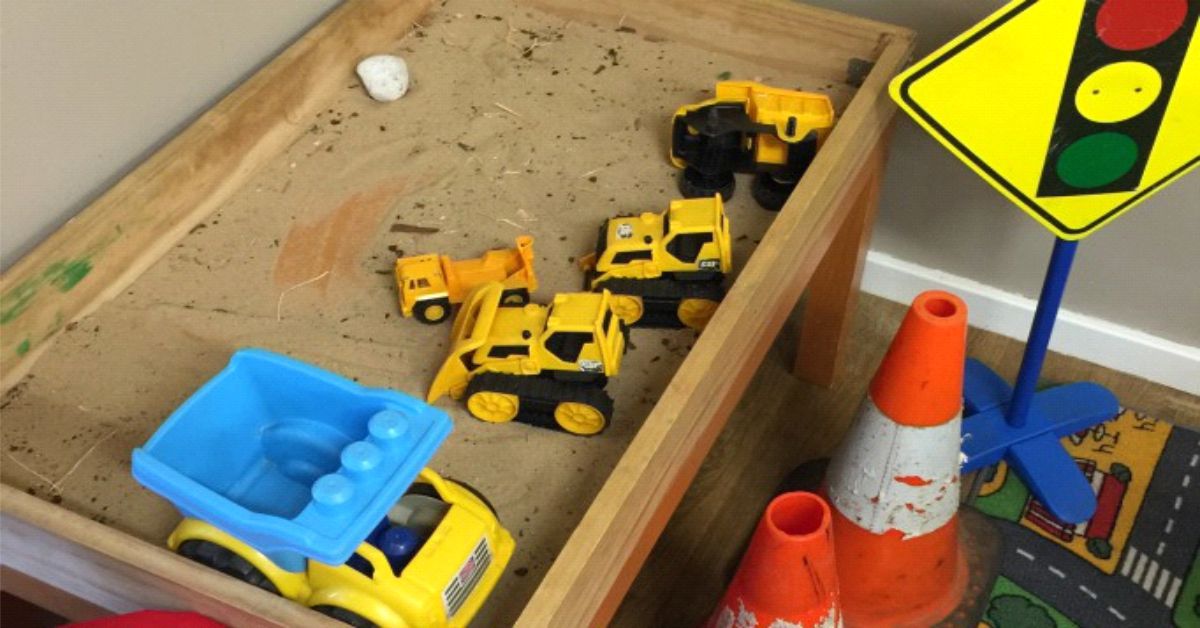
The wonderful educators Tegan and Mahalia set up the play experience below to extend upon a child’s interest in ‘diggers’ and construction. This process allows us to watch, join in and contribute to the play, but more importantly the children will show us what they know, can do and understand about construction.

This in turn will allow us to plan and extend the children’s knowledge in a meaningful way.

Extending Play in a meaningful way

Tegan built on children’s interest in the construction activities happening next to the service. Tegan asked, “Does anyone know what has to happen before construction begins on a building?”

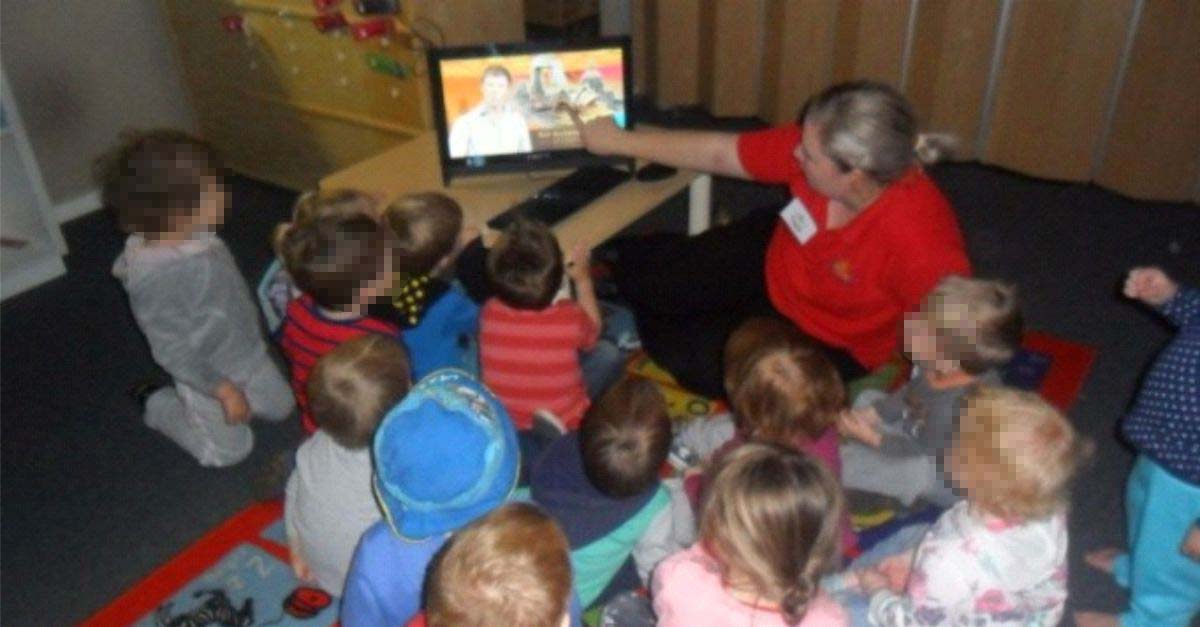
The toddlers shrugged and some of them said “no.” Tegan showed them a video all about architects. “The buildings have to be designed first,” she explained. “An architect is what we call a person who designs buildings.” As the children watched the video their faces lit up with excitement and wonder! (Socio-cultural theories)

Liam expressed his desire to further his learning about architects. “Would you like to see some sketches done by architects Liam?” Tegan asked. “Yes!” he replied. As they searched for sketches Liam picked the ones he wanted printed.  Tegan saw an opportunity to extend Liam’s numeracy skills and asked, “What do you think these numbers mean?”

Liam shrugged his shoulders and replied, “Don’t know.” “Well they tell the builder how high to build the walls,” said Tegan. “Oh, very high!” he replied. “Do you think we could draw like an architect?” Tegan asked. “Yeah!” Liam yelled as he fist pumped his hand in the air.

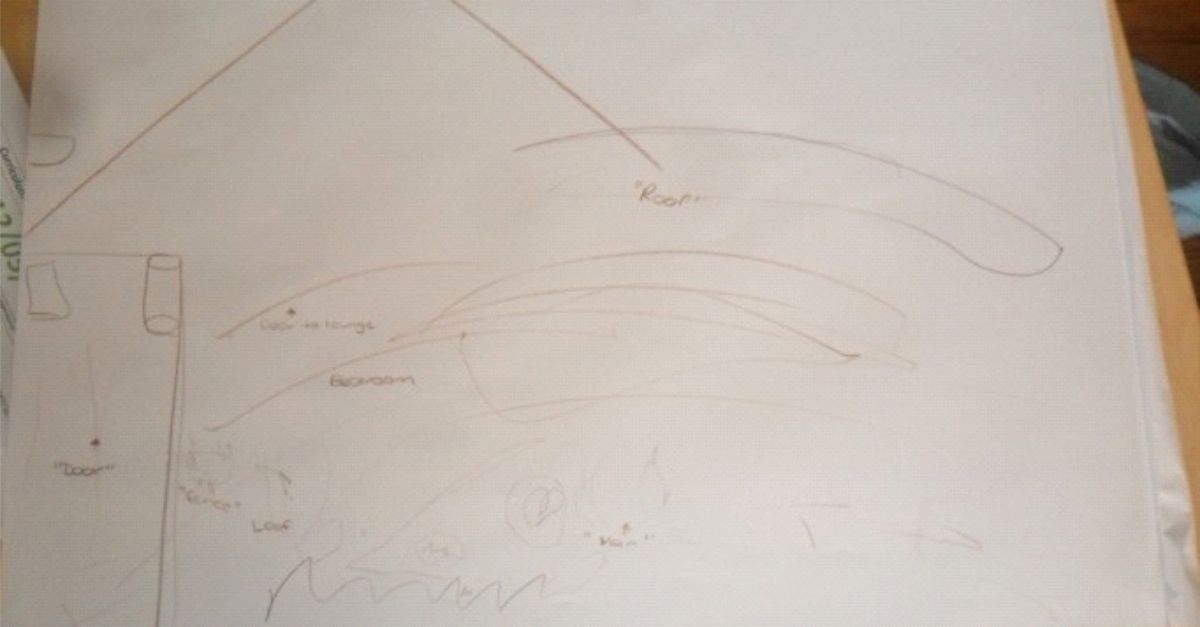
Tegan handed him the sketch pad and placed the architect’s drawings next to him. Tegan drew the lounge room then Liam began by drawing the door for the lounge room. As he drew the different aspects of the house he referred back to the architect’s drawing as a guide.

One morning the toddlers followed on from their enjoyment of construction over the past week. Tegan brought Liam’s drawing over to a table with plasticine and small wooden sticks. Aiden, Liam, Harper, Scarlette, Lachlan, Sophia, Charlie and Bronte were excited to discover what Tegan was doing.

They sat down at the table as Tegan explained what the drawing was all about. “This is Liam’s plan of a house. This is the lounge room and this over here is the door to the lounge room.” She continued to explain the different aspects for the building as Liam relayed them to her the day before. “Do you think we could build some houses?” Tegan asked “Yeah!” called Scarlette and Harper.

“Okay, so what do you think we need to build first?” Tegan asked. See how Tegan is skillfully assessing the children’s knowledge.

“Roof!” called Liam. “Do you think a roof could stand all on its own?” Tegan questioned.

“Nah” Liam replied with a smile on his face. Tegan placed an architect’s sketch of a house on the table and pointed at the walls of the house. “What do we need to build the roof so it has something to sit on?” she asked. “Wall!” shouted Harper. “Yes, that’s right!” praised Tegan.

The children used concentration and patience as they slowing placed their pieces of wood into the plasticine, making sure it resembled the house they were trying to build. Harper referred back to the picture every so often to make sure she was still on track.

“What part of house is this?” Tegan asked as she pointed to one of the sticks Harper had placed on the outside of her plasticine. “Wall” Harper replied. “That’s great Harper. What else do you think you need to build?” Tegan asked. Harper glanced back at Liam’s picture and laughed. “Door!” she giggled.

The houses look wonderful! We can’t wait to discover what else we can discover about construction.

Painting with a purpose

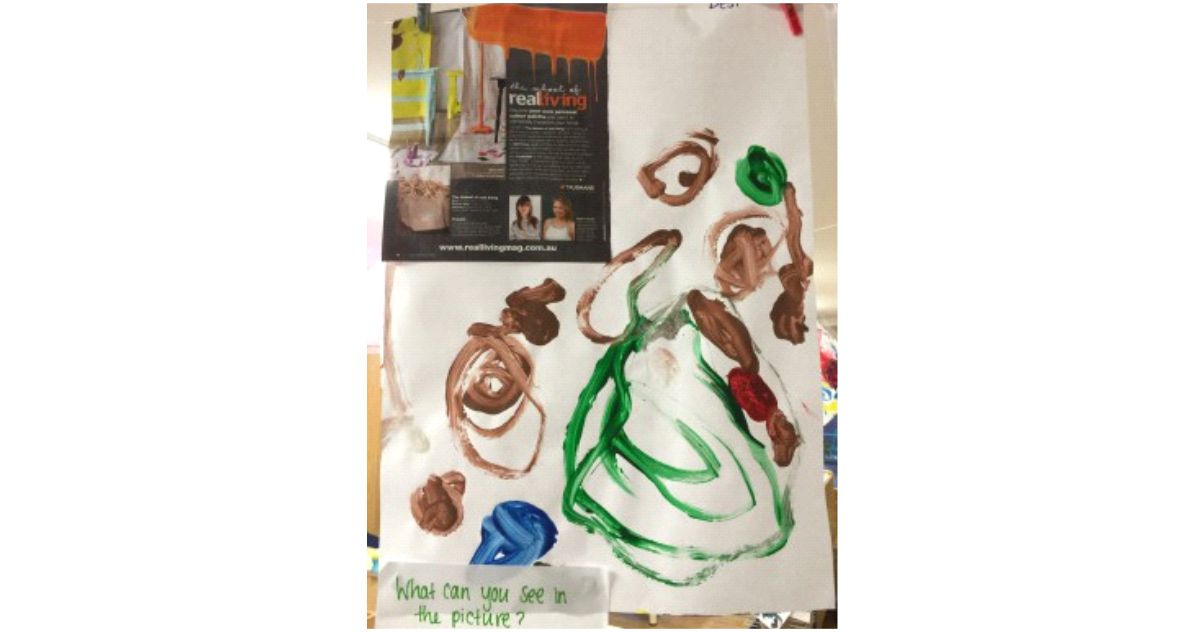
In the photos below you can see how the educators skilfully explored and extended children’s knowledge about architecture and design through a purposeful painting activity.

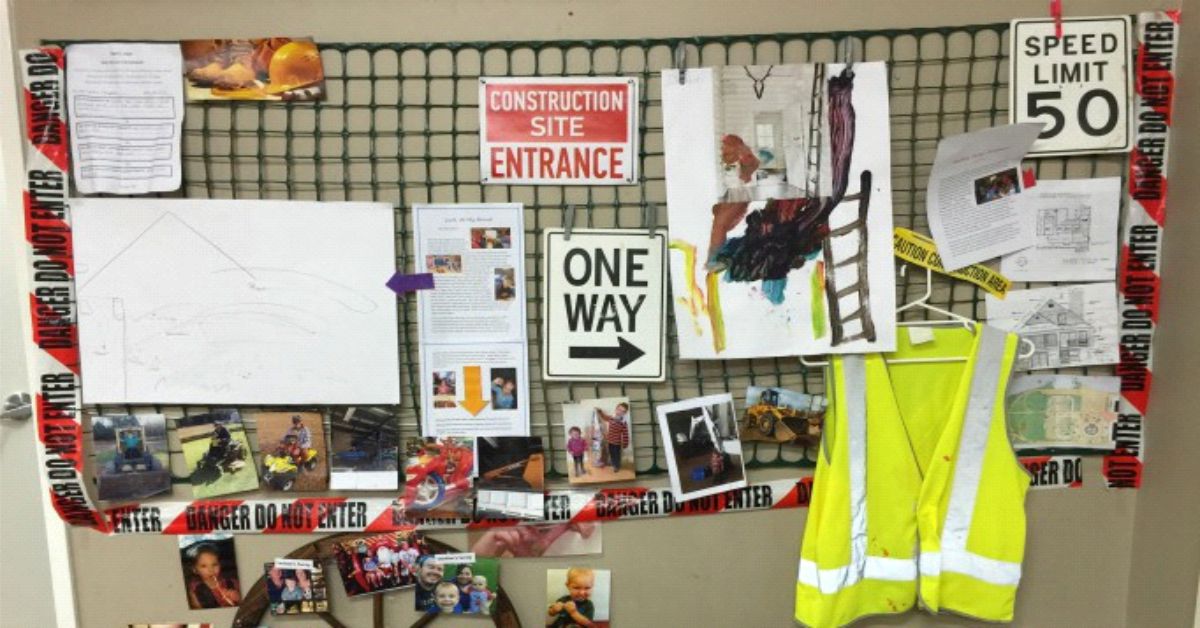
Curriculum display

Here is a display of the learning and samples of documentation. The educators were able to show the parents what they had been learning about and invite them to assist in extending learning further. “Oh that makes sense now,” said a mother. “We have been talking about building a new house at home.”


Case study – Jackson the non-listener, swearer, rude…

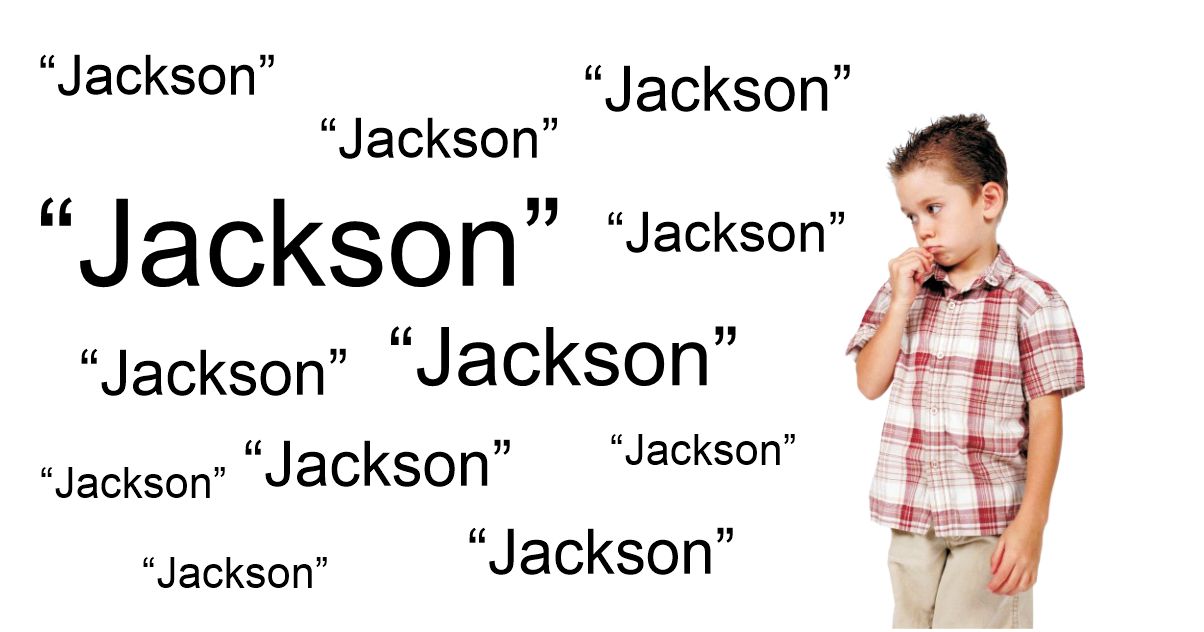
Which child’s name is used the most in your room?

Why? Is it because you must instruct this child the most, usually in a way that is moving them on from an inappropriate behaviour? Try this method below to change the behaviour in your room.

When we talk about behaviour we say we need to meet the child’s needs, but what does that really mean? The steps to meeting children’s needs are:

  1. Know the child from many different perspectives
  2. Write ideas to create curriculum for this child
  3. Implement these ideas
  4. Evaluate and adjust
  5. Repeat

Case study 3 Jackson the non-listener, swearer, rude……

To meet Jackson’s needs we need to know him and create curriculum just for him.

We need to look at this from:

  • Jackson’s Perspective
  • Parent’s Perspective
  • Educator’s Perspective
  • Director’s Perspective

Step 1 what do we know about Jackson?

Jackson:

  • comes to the service 5 days a week
  • lives with his mother and big sister
  • loves trucks, diggers and heavy machinery
  • has a room full of toy trucks, diggers and heavy machinery
  • has many pets including birds of all different types
  • went to see the snow on the weekend
  • loves spending time at Pop’s farm
  • sings with a microphone at his Grandparent’s place
  • is great around animals. I’ve seen him walking with cows and sheep
  • knows a lot about hand raising animals
  • loves fixing mechanical things with his Pop
  • finds building easy. He loves to build and fix things
  • helped his Pop and Mum build their bird cage at home
  • loves to climb. He climbs trees, the tyre tower, on and off the tractor
  • has lots of energy.
Step 2 - Write ideas to create curriculum for this child
What we know Comments and Ideas
Jackson comes 5 days a week Is Jackson bored? Is our equipment really interesting to him? Has he seen it all before? Is Jackson given a voice on what he wants to do? Have we asked him? What could Jackson teach us and the other children?
Jackson lives with his mother and big sister Could we go for a home visit?
Jackson loves trucks, diggers and heavy machinery What does Jackson know about this? We need 5-7 cm ofsoil removed from our mud patch and taken over to the trees in the corner and built up so the chooks don’t get out. Could Jackson be in charge of that? Make a plan, get him to organise, write it, draw it and implement it. Make a big deal out of it.
Jackson has many pets including birds of all different types What can Jackson teach the other children about birds and their care? Could he run lessons in the class to do this? His mum could help prepare it at home with him.
Jackson went to the snow on the weekend I want to know everything about snow -how it is made, how high it has to be before it falls, where they saw it? How could they make snow?
Jackson loves spending time at Pop’s farm What do they do on the farm that we could do here in the centre? For example using a wood work bench and tools. Could we introduce that? Ring Pop to find out more about Jackson and his farm skills we could implement here. What would happen if we asked Pop for help? What could he help with?
Jackson sings with a microphone at his Grandparent’s place We have a karaoke machine and mic in the storeroom. Open mic night here we come.
I heard from a preschool that use a mic at group time and each child speaks into it, one at a time, building talking and listening skills. What a great literacy project, following words on a screen to sing.
Jackson is great around animals. I have seen him walking with cows and sheep Can Pop bring in an animal and we get Jackson and Pop to tell the other children all about it and how to care for it? If we don’t ask we will never know.
Jackson loves fixing mechanical things with his Pop Why haven’t we got old machinery and lawn mower motors out to fix and pull apart? What would happen if we again asked Pop for help or other fathers who could have motors etc.
Building is easy for Jackson. He loves to build and fix things What could he build with a plan and real material? Who knows? A new playground? We sure do need it.
Jackson loves to climb. He climbs trees, the tyre tower, on and off the tractor Where could we go to climb? What could we build to climb? How would we involve Jackson in designing the best ever climbing thing. Could he build a ladder to fill the parent pockets with information?
Jackson has lots of energy Do we need to add a heap more exercise 2 to 3 times a day to wear him out? Should we introduce heavy things to move around, like a sled?

Step 3 Implement these ideas.

Remember the guiding principle is ‘Meeting the Child’s needs.” Jackson’s needs are he wants to be a part of this learning environment and do what the adults are doing. Jackson needs to:

  • Be listened to. He needs to tell you and everybody how much he knows about his world
  • Be a teacher. He wants to show and help others understand about animals and farms because he gets so much pleasure from being on the farm and hanging out with Pop
  • He is always helping Pop and his Mum do things and fix things so he wants to show you how good he is at that.

Jackson to give the class lessons

Get Jackson to give a lesson about what he knows egrRaising lambs, cows, fixing bikes etc. Also at the same time get Jackson’s friend who has a huge interest in pigs to talk about them.

The lesson needs to be 1 minute of Jackson talking, 1 minute with the group of children and educators asking questions and sharing knowledge. This can continue for as long as needed, but ensure you keep going around in one minute blocks. This will encourage turn taking.

At this time educators write down what the children know.

Jackson says “sheep need help because their mother loses them.” Jonty says “the lamb’s wool is soft.” And it goes on and on.

After the lesson add pictures and get Jackson to display the documentation eg hang them in the hallway. Remember he needs to be in control of this lesson, putting it together and displaying it. Jackson and friend are to then take a friend, one at a time, to the display and teach them more about the lambs and pigs. For example Jackson takes Charlotte to learn more about lambs.

Then welcome them back. “Thanks Jackson for bringing Charlotte back. Now Charlotte can you tell me what Jackson taught you about the lambs? Great teaching Jackson. Ask another friend to go out and learn more about lambs with you.”

Repeat the process. This will create trusting relationships and Jackson will have a sense of achievement and a sense of your approval.

Idea to ensure his need for helping is met. Getting the playground ready.

You stand near the door for supervision.

Jackson will be in the yard by himself, but you will be able to see him at all times.

Jackson gets the bikes out of the shed one at a time.

Jackson checks bikes for spiders.

Jackson cleans bikes ready for use by the other children.

Words you need to say

“Jackson, get five bikes out of the shed.  You need to get one at a time. Great work Jackson, this will be a great help to me.

Fantastic, one bike, four to go. (count down and repeat)

Check it for spiders. Make sure it’s a proper look. You know how they can get into small spaces.

Great work Jackson. You are good at looking for spiders. Keep going, 3 bikes to go.

Now you need to wipe and clean the bikes ready for the others to play on. Great.”


Case study – Aiden the non-listener, yelling, swearer……

The wild ones – children swearing

There was a call for help from an educator. What was the problem? Certain children were difficult to manage and entering the room this appeared to be correct. The educators said Wednesday’s are difficult in the preschool room. Why? The combination of certain children makes it difficult along with the skill set of the educators in the room.

I removed the ring leader to have a chat. Aiden aged 4 didn’t like it in the room with the some of the educators. I proceeded to use a ‘Child Conference’ process which can be found in the Mosaic Approach book by Alison Clark and Peter Moss. I asked these questions.

  • Why do you come to school? (long day care but the children call it school)
  • What do you like best?
  • What don’t you like about being here?
  • Who are your favourite people?
  • Who don’t you like?
  • What do the grown-ups do at school?
  • What should the grown-ups do at your school?
  • Where is your favourite place in the school?
  • Which part of the school don’t you like?
  • What do you find difficult?
  • What is the food like?
  • What has been the best day at school?

Very interesting answers were revealed. Basically, the children were not listened to and were forced to do things they didn’t want to do. This led to a rebellion and our wonderful 4 year old leader told Eden the educator to F&#*K OFF.

Eden was angry and thought no child should speak to her like that. I said “if he had more words and better use of them would it still be F&#*K OFF?”

After reflecting further and removing the adult concept that the child should never speak like this (which I agree with) we thought the Rebellion Leader may have wanted to say other words to express how he felt. For example:

“I come here 5 days a week and I would like more choices to do what I want.”

“I haven’t finished playing over here. When I’m finished I’ll pack up and join your group, but give me 5 more minutes.”

“I know it’s raining, but really, do we need to be stuck inside. I live on a farm and I like it outside, just like my dad. He works outside in the rain on the farm.”

“I get really angry when I’m stopped abruptly. Can you ease your requests in with some warning?”

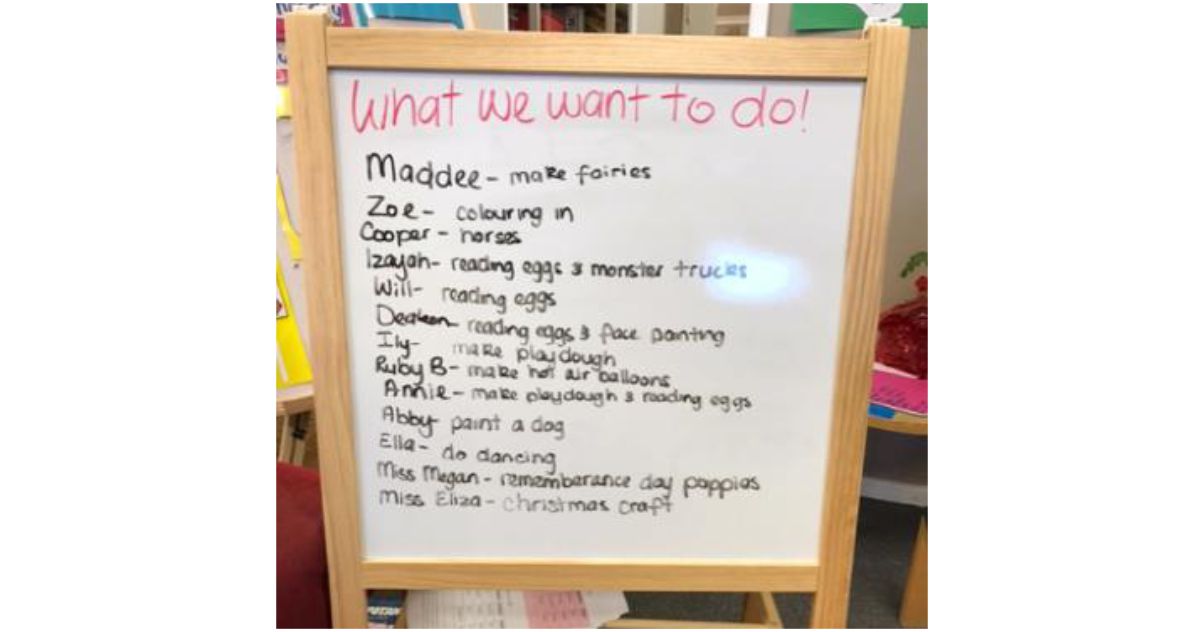
To solve this problem the educators decided to give the children more choice. This was simple. Get an ‘A’ frame board and write down what the children want to do.

From here the children selected their activities and did what they wanted. Picture above is the end of the day where the choices are rubbed off when complete.

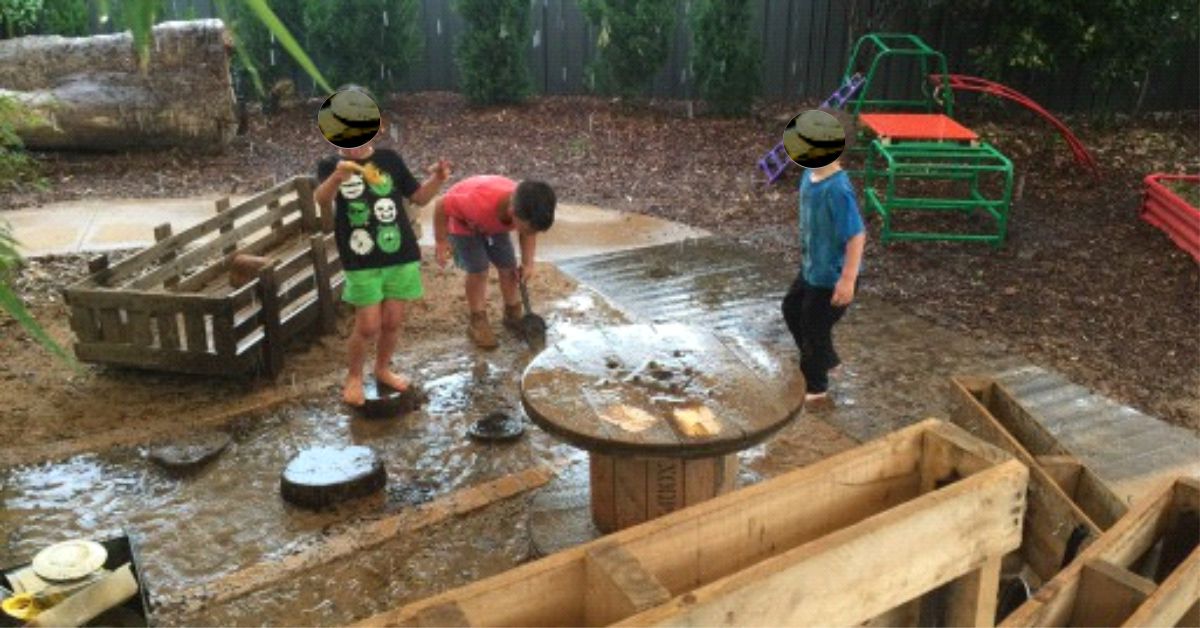
The “Wild Ones” decided they wanted to play in the rain. What do we do then? Was this fun? YES. Was it all perfect and ran smoothly? NO

Reflecting

What went wrong? Everything was great and a water fight began and lasted until they started to throw pots at each other. Eden stopped this quickly and the fun continued. After a while the children decided it was time to come in. Off to the bathroom they went and made a huge mess with water and wet clothes. Was this great for the other room who shared the bathroom? NO. Eden and the boys went to the laundry and washed their clothes and changed into their clean set.

The following day the boys wanted to do the same. Perfect time to use our reflections to adjust practice. Rules needed to be set. The boys could describe exactly the problem for others if the bathroom floor was wet. The bathroom door was locked so the children from the outside couldn’t get in and the fun began.

New parent turned up for a tour

As the fun was in full swing a new parent and daughter turned up for a tour of the service and discovered the Wild Ones and ….

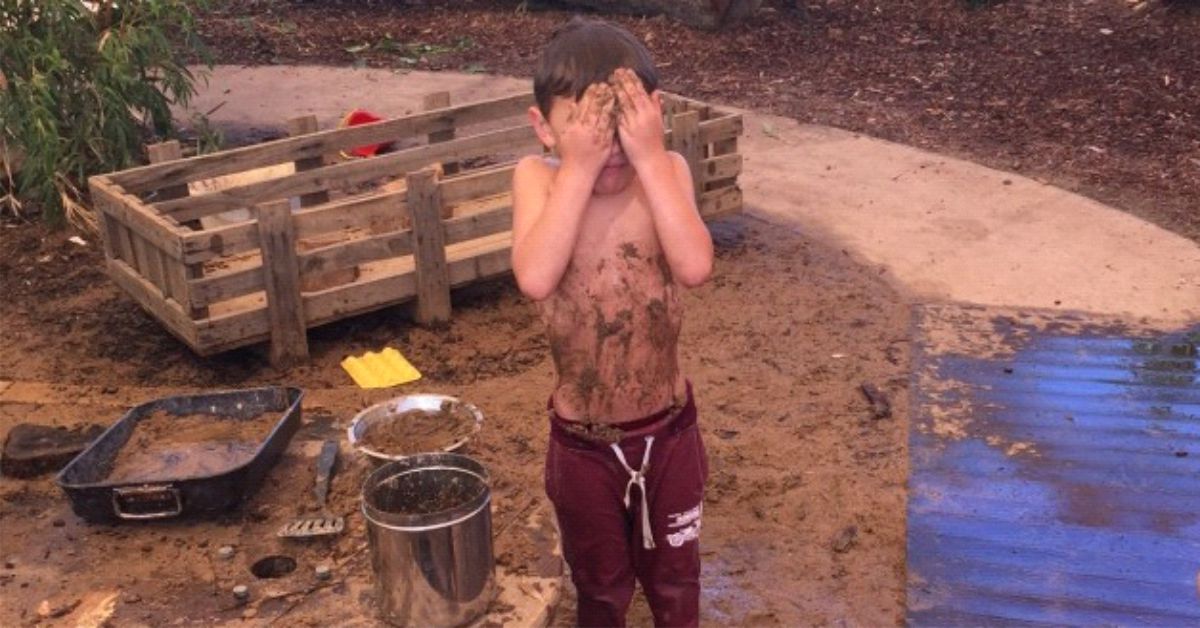
Mud Monsters started
to appear.

This was a great opportunity to sell the service. Why we are different, firstly I explained that this may look a little wild, but we allow our children to follow their interest and we are capable of washing and drying clothes so they don’t have to worry. I described how we met the needs of children and sometimes these needs included children exploring the outdoor environment and from somewhere in the deep part of my brain the EYLF came to me and I quoted to this parent:

“Outdoor learning spaces are a feature of Australian learning environments. They offer a vast array of possibilities not available indoors. Play spaces in natural environments include plants, trees, edible gardens, sand, rocks, mud, water and other elements from nature. These spaces invite open-ended interactions, spontaneity, risk-taking, exploration, discovery and connection with nature.” EYLF

Or close to it.

The most important part with this parent was walking into the preschool room from the outside and having all the other children actively engaged in all the activities they wanted to do. This justified to the parent why it’s important to allow these children to have fun, explore, go a little wild because they were not difficult to manage outside and allowed the space inside for the other children to do what they wanted to do. This parent could see we could manage our children which in turn gave space for children like her daughter to learn and be in an environment that wasn’t struggling with others.

Further learning continued and we explored cultures that like mud.

This is a work in progress. It would be easy to shut it down after the bathroom water and clothes explosion, but that is what reflection is all about, reflecting on what could be different and together setting the rules.

Further reflections

How many times do we try to control some children in environments they are not suited for?

Reflecting on your values

Megan needed to reflect on what she thought was important for children. Previously she had success when following the children interest, she was great, but when she didn’t she got angry because the children don’t do what they wanted to do. But why should the educator be dominating children’s choices?

Where is the child’s agency? Children come to us with an inbuilt knowledge of what is culturally acceptable when they are a part of the process. Remove them from the process and you will have a bad day, just like Megan, Eliza and Eden were having on Wednesdays.

The underlying process is building relationships. The relationship strengthens when involving the children and all you will need to do with your behaviour guidance is look disappointed and say “is that a good choice?” When relationships are not built, they will not care if it is a good choice or not.

The confronting reflection

Children are smart and know what they are doing. I’ve seen children push out teachers. I first saw it in high schools. If there was a bad teacher the children wouldn’t select the elective until the hours dropped and the teacher was transferred out of the school.

Secondly, in early childhood we are quick to judge the child as having the problem, but I’ve seen children push out teachers. This year Aiden pushed out an ex- teacher. She never wanted to do what the children wanted. She wanted to do what she thought was best. Aiden became loud and uncontrollable for her and stressed her out. From my perspective, she never took my advice and continued to attempt to control Aiden and the room. Aiden won.

Aiden was in the process of pushing out Megan and Eden. They are the ones who must change. After a few days of a new practice it appears to be working. I wonder if the educators will continue or go back to their old ways until they leave stressed out?


Have you tried a ‘Home Visits’ to help with behaviour issues?

Home Visits

Some services implement home visits to foster relationships with parents and children. At one service they offer home visits to all families. Each visit takes 45-60 minutes and is carried out by two educators who have a set list of questions to ask. This ensures they find out about the child’s family, routines, favourite songs and activities. Some of the benefits include:

  • improved relationships with parents – educators get to know parents outside the service which allows parents to explain home routines and gives educators an opportunity to collect a wealth of information about their family
  • improved relationships with children – educators engage with children in their own home
  • greater insight for reflective practice – educators have improved understanding of children’s behaviour and learning
  • provision of more enriching educational program based on extension of activities undertaken at home
  • helping new children settle on their first day. Children have already had an opportunity to meet an educator and play with them in their own familiar space.

After a home visit most of the behaviour issues disappear.